
information centre / Industry Information / Zirconia ceramic plungers versus metal plungers: how should the choice be made based on pump and valve operating conditions?
Zirconia ceramic plungers versus metal plungers: how should the choice be made based on pump and valve operating conditions?
Introduction
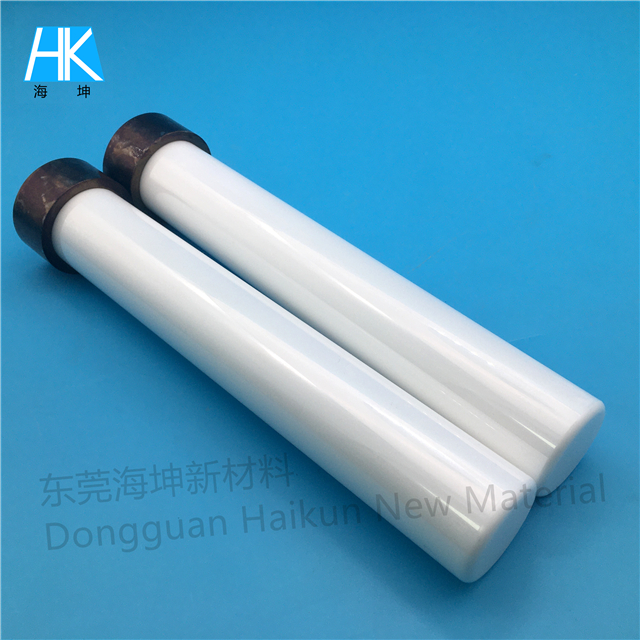
In equipment such as metering pumps, plunger pumps, and reciprocating pumps, the plunger—despite being a small component—plays a critical role in sealing, wear resistance, operational stability, and service life. Traditional metal plungers have long been widely used due to their high strength, ease of machining, and relatively controllable costs. However, under demanding operating conditions—such as high-frequency reciprocation, prolonged friction, exposure to corrosive media, or requirements for high purity or electrical insulation—metal plungers may suffer from issues like wear, corrosion, surface scratching, and shortened maintenance intervals. In such scenarios, zirconia ceramic plungers have emerged as a compelling alternative. So, what exactly are the differences between zirconia ceramic plungers and metal plungers, and how should one choose the right option for pump and valve equipment?
Quick Links
Contact Us
Live
E-mail:sales01@hkceramic.com
1. Why are the material requirements for pump and valve plungers becoming increasingly stringent?
A plunger is not merely a simple “cylindrical component.”
In actual operation, the plunger typically undergoes continuous high-speed or high-frequency reciprocating motion while interacting with seals, the cylinder block, or guiding structures.
Consequently, the material used for the plunger must address a combination of challenges:
① Long-term friction and wear
The plunger undergoes repetitive motion, subjecting its surface to continuous friction; long-term operation may result in dimensional changes.
② Corrosive media
When handling media such as acids, alkalis, salt solutions, or chemical reagents, the material’s inherent corrosion resistance is critical.
③ High-frequency reciprocating motion
Frequent start-stop cycles and high-speed reciprocation increase the frequency of friction and impose stricter requirements on dimensional stability.
④ Sealing interface
A stable fit must generally be maintained between the plunger and the sealing components. Significant wear, scratching, or corrosion on the plunger surface can compromise sealing performance.
⑤ Special cleanliness and insulation requirements
In certain applications—such as the chemical industry, laboratories, semiconductor manufacturing, and precision equipment—factors such as metal ion contamination and electrical insulation requirements must also be considered.
Therefore, the selection of plunger material cannot be based solely on “high strength”; it requires comprehensive consideration of:
Wear + Corrosion + Fit precision + Medium + Speed + Pressure + Temperature + Sealing method
2. What is the difference between zirconia ceramic plungers and metal plungers?
Zirconia ceramics and metals belong to completely different material systems.
The primary advantages of metal plungers include:
High strength;
Good toughness;
Mature manufacturing processes;
Ease of adjusting dimensions and structural design;
Good adaptability for machining complex structures;
High load-bearing capacity in certain metal materials.
Zirconia ceramic plungers are characterized by:
High hardness;
Excellent wear resistance;
Good fracture toughness;
Corrosion resistance;
Electrical insulation;
Chemical stability;
Suitability for manufacturing high-precision, wear-resistant components.
It is worth noting that:
Zirconia is not the material with the highest hardness, nor can it be simply assumed to be invariably more wear-resistant than all metals.
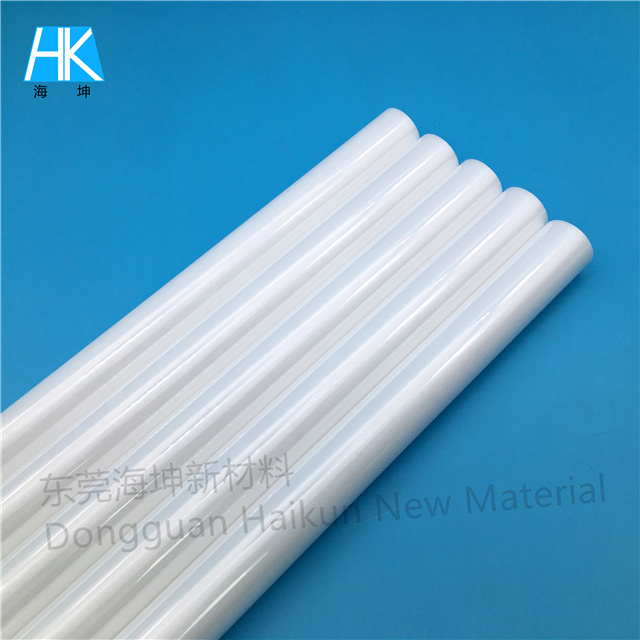
The actual service life of the plunger depends on the combination of the friction pair components.
For example:
Plunger material + seal material + medium + pressure + movement speed + lubrication condition + surface roughness
…will all affect the final wear outcome.
Therefore, the correct perspective is not that “ceramics will inevitably replace metals,” but rather:
Zirconia ceramic plungers offer greater practical value when operating conditions demand superior wear resistance, corrosion resistance, electrical insulation, and long-term dimensional stability.
3. Core advantages of zirconia plungers: a combination of wear resistance, corrosion resistance, and toughness.
Why do many pump and valve systems consider using zirconia plungers?
The primary reason is not any single performance characteristic, but rather the excellent balance it strikes across multiple performance attributes.
1. Excellent Wear Resistance
Zirconia possesses high hardness; given a proper friction pair design and appropriate operating conditions, it can reduce surface wear caused by the long-term reciprocating motion of the plunger.
For equipment requiring continuous, long-term operation, reduced wear translates to:
Minimal dimensional changes → More stable fits → Potential for extended maintenance intervals.
Of course, the actual service life regarding wear resistance must still be verified based on specific operating conditions.
2. Superior toughness compared to many traditional ceramics
One of the key material characteristics of zirconia is transformation toughening.
Compared to some traditional high-hardness ceramics, zirconia exhibits relatively high fracture toughness.
This is particularly important for components such as plungers, which must withstand reciprocating motion and localized contact stresses.
This is because components in actual equipment do not necessarily experience only ideal axial loads; they may also be subjected to:
eccentric loading;
micro-vibration;
assembly stress;
instantaneous impact;
local contact stress.
Therefore, the selection of material for the plunger cannot be based solely on hardness.
3. Excellent corrosion resistance
This is a significant advantage of zirconia plungers in certain pump and valve operating conditions.
When exposed to acids, alkalis, salt solutions, or certain chemical media over extended periods, metal materials may undergo corrosion, pitting, or surface damage.
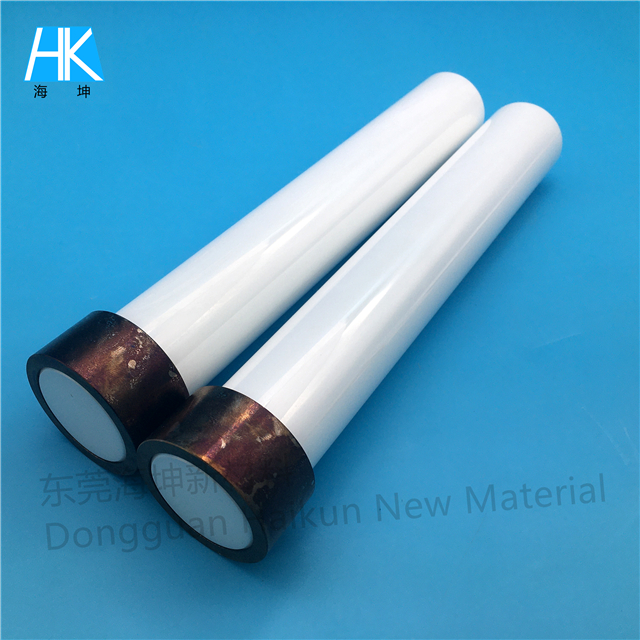
Zirconia is an engineering ceramic with excellent chemical stability, offering good corrosion resistance within its applicable range of media.
In particular, when equipment is subjected to a combination of two failure factors—
“friction/wear” and “chemical corrosion”—
one cannot rely solely on material hardness.
4. Electrical Insulation Properties
Zirconia is an electrically insulating ceramic.
Therefore, when pump and valve components require a combination of:
wear resistance + corrosion resistance + electrical insulation,
zirconia plungers offer insulation characteristics that are difficult to achieve with metal materials.
4. Under what circumstances are zirconia plungers a more worthwhile consideration?
Not all pumps and valves require the use of zirconia.
Based on actual operating conditions, the following types of applications are particularly worth evaluating.
Scenario 1: High-frequency reciprocating motion
Plungers subject to prolonged, high-frequency reciprocating motion require excellent surface wear resistance and dimensional stability.
In such cases, zirconia plungers are a strong candidate for consideration.
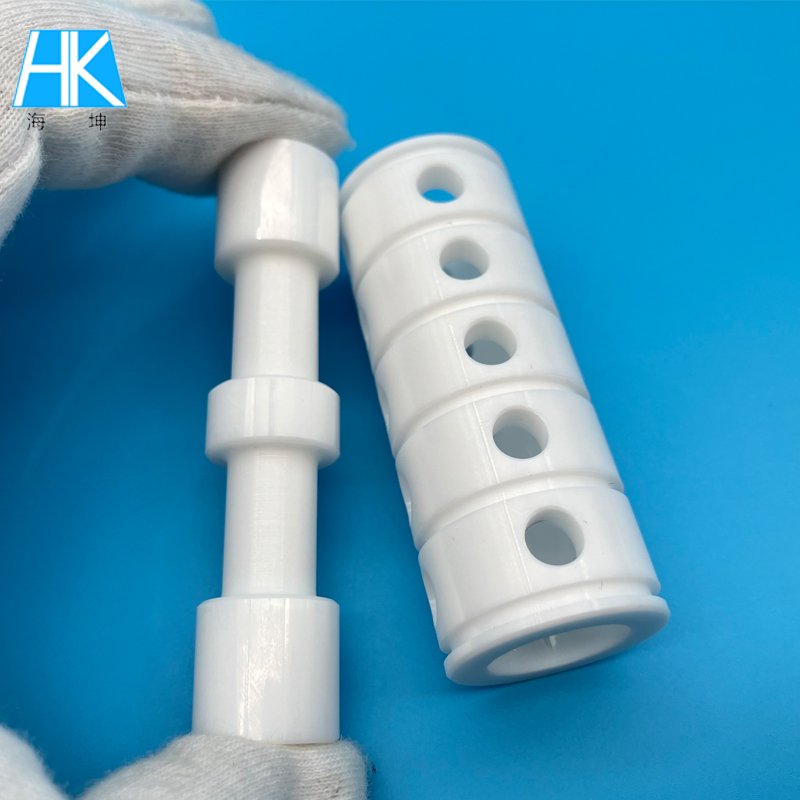
Operating Condition 2: Corrosive Media
For example, when the equipment comes into contact with certain acids, alkalis, salt solutions, or chemical media.
If corrosion issues arise with metal plungers, consider evaluating corrosion-resistant ceramic materials as an alternative solution.
Scenario 3: Simultaneous wear and corrosion
This represents a particularly valuable application scenario for zirconia.
For issues involving only wear, a variety of wear-resistant materials can be considered;
For issues involving only corrosion, there are also numerous corrosion-resistant materials available;
However, when wear, corrosion, and the need for precision fit coexist, material selection must be based on comprehensive performance.
Scenario 4: Requirement for Electrical Insulation
If the equipment imposes restrictions regarding electrical conductivity, metal plungers face inherent material limitations.
In this case, insulating ceramics—such as zirconia—can serve as alternative materials.
5. Zirconia Plunger vs. Metal Plunger: Which One Should You Choose?
The two materials can be evaluated under actual operating conditions.
| Comparison items | Zirconia ceramic plunger | Metal plunger |
|---|---|---|
| Wear-resistant | Good performance depends on the matching of the friction pair. | Depends on the metal grade and surface treatment. |
| toughness | Relatively good among ceramics | Usually possesses a distinct advantage. |
| Corrosion-resistant | Good; it depends on the specific medium. | Depends on the metal and surface treatment. |
| Electrical insulation | Clear advantages | Usually a conductor |
| Dimensional stability | good | Depends on material, temperature, and wear. |
| Machining of complex structures | Precision ceramic machining is required. | Well-developed processing capabilities and strong adaptability |
| Impact-resistant fault tolerance | Attention must be paid to the brittleness of the ceramic and the structural design. | Usually has an advantage |
| cost | Usually higher | A wide range of materials with significant cost variations. |
| Applicable areas | Special operating conditions involving wear resistance, corrosion resistance, insulation, etc. | General-purpose, high-load, complex structure, etc. |
Therefore, the actual selection process can follow a simple principle:
If the priorities are:
High-frequency friction + corrosion resistance + electrical insulation + long-term dimensional stability
→ You might focus on evaluating zirconia ceramic plungers.
If the priorities are:
High impact + high load-bearing capacity + complex structure + ease of machining
→ Metal plungers may be more suitable.
If both are present:
Further design regarding materials, structure, sealing, and friction pair combinations should be conducted, rather than simply substituting materials.
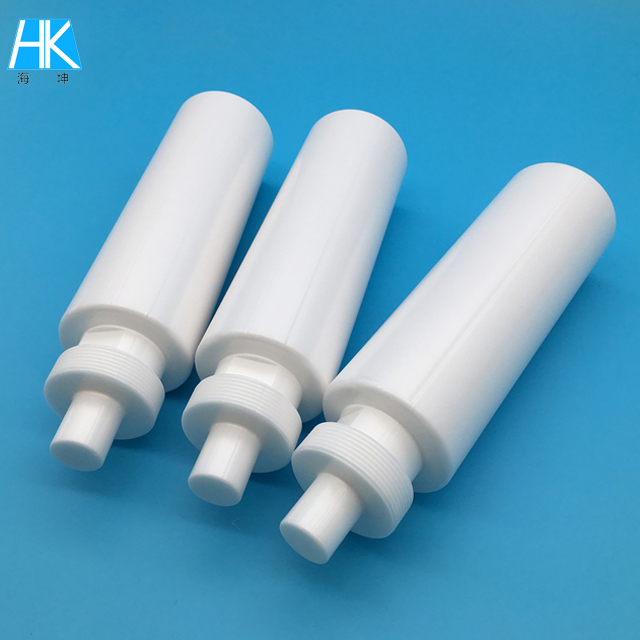
6. Haikun Precision Ceramics: Custom manufacturing of zirconia plungers based on drawings or samples.
For the practical application of zirconia plungers in pump and valve equipment, dimensional accuracy, roundness, cylindricity, and surface roughness—as well as compatibility with seals—are just as important as the choice of material.
Therefore, a zirconia plunger is not simply a case of “replacing a metal plunger with a ceramic one.”
The process from raw material to finished part involves multiple stages:
Material selection → Forming → Sintering → Precision machining → Grinding/Polishing → Dimensional inspection
Dongguan Haikun New Materials Co., Ltd. specializes in the customization of industrial ceramic components. We provide custom manufacturing of precision ceramic parts—including zirconia, alumina, and silicon nitride—tailored to customer drawings, samples, and specific operating conditions.
Customizable:
Zirconia ceramic plungers
Zirconia ceramic valve cores
Zirconia ceramic pistons
Zirconia ceramic bushings
Zirconia ceramic seals
Zirconia ceramic sliders
Various precision non-standard ceramic structural components
If your pump or valve equipment faces issues such as rapid plunger wear, metal corrosion, insufficient seal lifespan, medium contamination, or the need for electrical insulation, please provide us with the product drawings, operating medium, working pressure, reciprocating speed, temperature, and sealing method.
Haikun Precision Ceramics assists in matching materials and structural designs to actual operating conditions, while offering services for custom manufacturing based on drawings or samples, non-standard customization, and precision machining.
Zirconia is not intended to replace all metal plungers; rather, it offers a more suitable material solution for specific pump and valve applications.
Haikun Precision Ceramics | Dedicated to the customization of precision industrial ceramic components—ensuring materials are truly matched to operating conditions.
Relevant information