Industry Information

Welcome to the Advanced Precision Ceramics Industry Applications Overview Page! Here, you’ll explore the extensive applications and innovative solutions of advanced precision ceramics across various industries. Renowned for their exceptional wear resistance, high temperature tolerance, insulation, and chemical stability, advanced precision ceramics play a crucial role in electronics, chemical engineering, aerospace, automotive, and other fields.We showcase fascinating industry application cases, covering everything from wear-resistant components in high-temperature environments to insulation materials for electronic devices. Through our summary page, you’ll stay updated on the latest advancements in advanced precision ceramics technology, industry trends, and innovative application examples, helping you stay ahead in the industry and expand your business horizons.Whether you’re an industry professional, technical expert, or researcher, we look forward to sharing insights into the future applications of advanced precision ceramics and exploring new directions in industry development together. Let’s work hand in hand to create a smarter and sustainable future!
Why does the semiconductor industry need to use industrial ceramics?

Category:Industry Information
Does the semiconductor industry need industrial ceramics? The answer is yes! With the rapid development of the semiconductor industry, from wafer manufacturing and packaging testing to power devices and RF modules, the high-temperature, high-power, and high-frequency operating conditions place extremely high demands on materials. In these critical processes, industrial ceramics have become an indispensable material for semiconductor equipment and electronic components.

What are some thermally conductive industrial ceramic materials used in automobiles?

Category:Industry Information
With the rapid development of new energy vehicles, electric drive systems, and high-power electronic technologies, the automotive industry is placing increasingly higher demands on material performance. Especially in battery, electronic control, motor, and high-temperature engine systems, "heat dissipation" has become a crucial factor affecting overall vehicle performance and lifespan. Against this backdrop, thermally conductive industrial ceramic materials are being adopted by an increasing number of automotive component manufacturers. So, what are some common thermally conductive industrial ceramic materials used in automobiles? And in which components are they applied? This article provides a comprehensive overview.

What are the classifications of insulating ceramics? This article provides a comprehensive understanding of the different types and applications.

Category:Industry Information
In modern industry, insulating ceramics are widely used in electronics, communications, automotive, medical, and energy fields due to their excellent electrical insulation, high-temperature resistance, and mechanical properties. Whether in power equipment or precision electronic components, insulating ceramics play a crucial role. So, what are the different classifications of insulating ceramics? And what specific applications are they suitable for? Today, we will answer these questions for you.

What are the classifications of high-precision structural ceramics? Understanding mainstream materials and applications.

Category:Industry Information
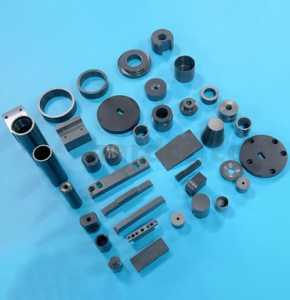
With the rapid development of industries such as semiconductor equipment, new energy vehicles, precision machinery, medical devices, and automation, the limitations of traditional metal materials in terms of wear resistance, insulation, corrosion resistance, and high-temperature stability are gradually becoming apparent. Therefore, more and more companies are adopting high-precision structural ceramics to replace metals or engineering plastics in the manufacture of high-performance core components. So, what are the classifications of high-precision structural ceramics? And what application scenarios are different ceramic materials suitable for? This article will provide a systematic analysis.

What are the classifications of zirconia structural ceramics?

Category:Industry Information
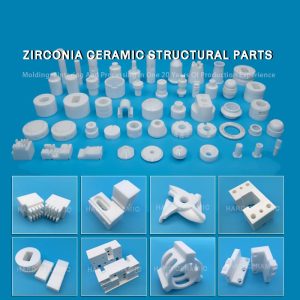
Among specialty ceramic materials, zirconia structural ceramics (ZrO₂ ceramics) are widely used in machinery, medical, electronics, and new energy fields due to their high strength, high toughness, and excellent wear resistance. However, many customers encounter a problem when selecting a type: what are the classifications of zirconia ceramics? What are the differences between the different types? In fact, zirconia ceramics can be divided into several categories based on the type of stabilizer, crystal structure, and performance characteristics. Different types are suitable for completely different application scenarios.

What is the price of alumina ceramics?

Category:Industry Information
In the procurement of precision ceramics, many customers are primarily concerned with: How much does alumina ceramic cost? Why are there such large price differences? In fact, alumina ceramics do not have a fixed price like standard industrial products. Their price varies significantly depending on factors such as material purity, processing difficulty, size specifications, and order quantity. This article will provide a comprehensive understanding of the price composition and influencing factors of alumina ceramics from a practical engineering perspective.

What are the processing methods for alumina ceramics? Learn the complete process flow in one article.

Category:Industry Information
In the field of precision ceramics, alumina ceramics (Al₂O₃) are widely used in electronics, power, machinery, semiconductor and other industries due to their high hardness, wear resistance, high temperature resistance and good electrical insulation properties. However, many customers have a question when selecting alumina ceramics: how are such hard alumina ceramics processed into various precision parts? In fact, the processing of alumina ceramics is not a single process, but a complete process system encompassing forming + sintering + precision machining. Let's take a systematic look below.

What are the common sizes for ceramic substrates? How should they be selected for different applications?

Category:Industry Information
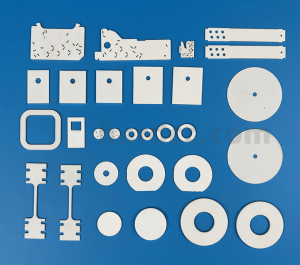
In the fields of electronic packaging, power modules, LED lighting, and semiconductor equipment, ceramic substrates are widely used in various high-reliability electronic devices due to their excellent thermal conductivity, insulation properties, and high-temperature stability. However, during actual procurement or design, many engineers encounter a question: What are the common sizes of ceramic substrates? Are there standard specifications? In fact, ceramic substrates have both common sizes and can be customized according to application requirements. Below, we will provide a detailed introduction from three aspects: commonly used industry specifications, the size range of different materials, and customization capabilities.