Industry Information

Welcome to the Advanced Precision Ceramics Industry Applications Overview Page! Here, you’ll explore the extensive applications and innovative solutions of advanced precision ceramics across various industries. Renowned for their exceptional wear resistance, high temperature tolerance, insulation, and chemical stability, advanced precision ceramics play a crucial role in electronics, chemical engineering, aerospace, automotive, and other fields.We showcase fascinating industry application cases, covering everything from wear-resistant components in high-temperature environments to insulation materials for electronic devices. Through our summary page, you’ll stay updated on the latest advancements in advanced precision ceramics technology, industry trends, and innovative application examples, helping you stay ahead in the industry and expand your business horizons.Whether you’re an industry professional, technical expert, or researcher, we look forward to sharing insights into the future applications of advanced precision ceramics and exploring new directions in industry development together. Let’s work hand in hand to create a smarter and sustainable future!

Classification
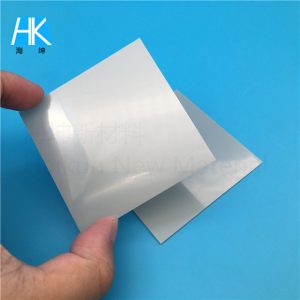
Which is more wear-resistant, alumina ceramics or zirconia ceramics? This article explains the real differences.

Category:Industry Information
In the fields of industrial machinery, seals, pumps, valves, nozzles, and bushings, one of the most important performance concerns for companies is: which has stronger wear resistance – alumina ceramic or zirconia ceramic? Although both are high-performance engineering ceramics, their wear resistance differs. If you're unsure which to choose, this article will clarify everything for you.

How can you distinguish between APC and PC ceramic ferrules?

Category:Industry Information
In the field of optical communication and fiber optic connectors, ceramic ferrules are key components that determine the stability and insertion loss performance of fiber optic connections. However, in actual selection and use, many people encounter the question: what are the differences between APC and PC ceramic ferrules? And how can they be quickly distinguished? This article will systematically help you differentiate between APC and PC from four aspects: appearance, structure, optical performance, and application scenarios.

Six common industrial ceramic materials and their applications

Category:Ceramic material, Industry Information
With the rapid development of the automobile manufacturing, semiconductor, new energy, and high-end equipment industries, industrial ceramic materials, due to their outstanding properties in high temperature resistance, wear resistance, corrosion resistance, and electrical insulation, are gradually replacing traditional metal materials and becoming an important basic material for modern industry. The following are six common industrial ceramic materials that are currently the most widely used and mature in the industrial field.
Zirconia ceramic structural components

Are zirconia ceramic parts easy to machine? The key lies not in the material, but in the process.

Category:Industry Information
In the field of precision ceramics, zirconia is often labeled with two tags: "excellent performance" and "difficult to process." So the question arises—are zirconia ceramic parts actually easy to process? The answer is: 👉 The material itself is difficult, but with the right processing techniques, it's not.

The relationship between ceramics and semiconductors—why is there no real semiconductor manufacturing without ceramics?

Category:Industry Information
When people talk about semiconductors, they often think of chips, silicon wafers, and manufacturing processes, but rarely notice a "behind-the-scenes hero"—precision ceramics. In fact, from wafer manufacturing to packaging and testing, from equipment operation to long-term stability, ceramic materials are present throughout the entire semiconductor industry chain. It can be said that without high-performance ceramics, there would be no highly reliable semiconductors.

The characteristics and uses of special ceramics – why is high-end manufacturing inseparable from them?

Category:Industry Information
In high-end manufacturing fields such as new energy, semiconductors, aerospace, and medical devices, a material is quietly replacing metals as the preferred choice for core components—specialty ceramics. Unlike metals, they don't have a visible weight, yet they play a crucial role under extreme operating conditions. So, what are the characteristics of specialty ceramics? And where can they be used?

Which is more wear-resistant, silicon nitride ceramic products or high-chromium products?

Category:Industry Information
In high-wear environments such as mining, metallurgy, pumps and valves, chemicals, and machinery, **wear resistance** almost entirely determines the lifespan and maintenance costs of equipment. For a long time, **high-chromium alloys (high-chromium cast iron)** have been considered the "old-school material" in the field of wear resistance. However, in recent years, more and more companies have begun to use silicon nitride ceramic products (Si₃N₄) to replace high-chromium products. So the question arises: 👉 Which is more wear-resistant, silicon nitride ceramic products or high-chromium products? The answer is far more technical than simply "which is harder."

Which is better for heat dissipation: ceramic heat sinks or aluminum heat sinks? A real comparison tells you the answer.

Category:Industry Information
In today's world where electronic products are constantly striving for higher power, smaller size, and greater stability, the importance of heat dissipation materials has risen to the core of product lifespan and performance. In the past, most companies were accustomed to using aluminum heat sinks. However, in recent years, a new trend has emerged: more and more mid-to-high-end companies are turning to ceramic heat sinks (alumina/aluminum nitride). So, are ceramic heat sinks reliable? Compared to aluminum heat sinks, which is better? Below, we'll use real data and practical applications to tell you the answer.