Industry Information

Welcome to the Advanced Precision Ceramics Industry Applications Overview Page! Here, you’ll explore the extensive applications and innovative solutions of advanced precision ceramics across various industries. Renowned for their exceptional wear resistance, high temperature tolerance, insulation, and chemical stability, advanced precision ceramics play a crucial role in electronics, chemical engineering, aerospace, automotive, and other fields.We showcase fascinating industry application cases, covering everything from wear-resistant components in high-temperature environments to insulation materials for electronic devices. Through our summary page, you’ll stay updated on the latest advancements in advanced precision ceramics technology, industry trends, and innovative application examples, helping you stay ahead in the industry and expand your business horizons.Whether you’re an industry professional, technical expert, or researcher, we look forward to sharing insights into the future applications of advanced precision ceramics and exploring new directions in industry development together. Let’s work hand in hand to create a smarter and sustainable future!

Classification
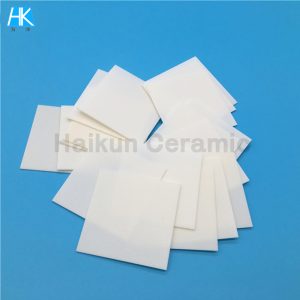
What factors affect the heat dissipation performance of aluminum nitride ceramic plates?

Category:Industry Information
The heat dissipation effect of aluminum nitride ceramic sheets is not determined by a single factor, but is the result of the combined effects of material properties, structural design and application conditions.

High temperature resistance, insulation, high purity – 99.7 alumina ceramic tube, a stable choice for scientific research and industry

Category:Industry Information
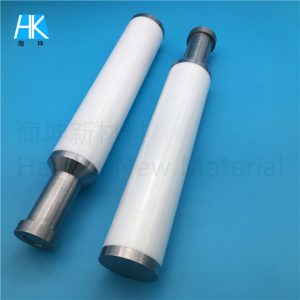
In high-end industrial and scientific research fields, alumina ceramic tubes have become indispensable components in numerous devices due to their excellent high-temperature strength, insulation properties, and corrosion resistance. Among these, 99.7% high-purity alumina ceramic tubes (99.7% Al₂O₃ Tubes), with their higher purity and density, demonstrate unparalleled stability and reliability in high-temperature, high-pressure, and highly corrosive environments.

Applications and advantages of silicon nitride ceramic cutting tools

Category:Industry Information
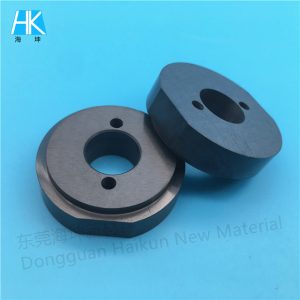
Silicon nitride (Si₃N₄) is an important structural ceramic material with unique physical and chemical properties. Its basic structural unit is the [SiN₄] tetrahedron, with a silicon atom at the center and four nitrogen atoms at the vertices, forming a continuous and strong three-dimensional network structure.

Alumina ceramic sintering process, alumina ceramic sintering methods

Category:Industry Information
What are the conventional sintering methods for alumina ceramics? Conventional sintering methods cannot meet the requirements for producing transparent alumina ceramics. Common sintering methods for producing transparent ceramics include: a. atmosphere and vacuum sintering, b. hot isostatic pressing sintering, and c. spark plasma sintering. What are the conventional sintering methods for alumina ceramics?

The future choice of high-performance materials: zirconia ceramic parts

Category:Industry Information
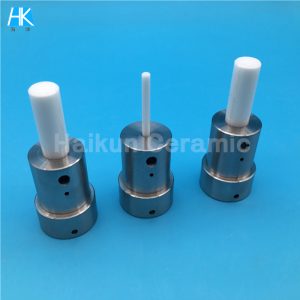
In high-end manufacturing, the performance of materials often determines the quality and reliability of products. In recent years, zirconia ceramic components have been widely used in many industrial fields due to their excellent mechanical properties, excellent corrosion resistance and outstanding wear resistance.

Silicon Nitride Ceramics: The Future Star Of High-performance Materials

Category:Industry Information
With the rapid development of industry and technology, the demand for high-performance materials is growing. Silicon nitride ceramics (Si₃N₄) have become a "star material" in the fields of aerospace, electronics, and medical due to their unique physical and chemical properties. This article will deeply analyze the characteristics, application scenarios, and market potential of silicon nitride ceramics to help you understand the core value of this material. Ingredients: The Al2O3 content is usually 75%~99.9%. The higher the purity, the better the performance (such as 99.6% high-purity alumina ceramics).Classification: According to the purity, it is divided into ordinary type (75%~95%) and high-purity type (≥99%).

Alumina Ceramics: Characteristics, Applications And Future Development Trends

Category:Ceramic material, Industry Information
Alumina ceramics (Al2O3 ceramics) are inorganic non-metallic materials with α-alumina as the main crystal phase. Due to its high hardness, high temperature resistance, good insulation and other characteristics, it is widely used in electronics, machinery, chemical industry, medical and other fields. Ingredients: The Al2O3 content is usually 75%~99.9%. The higher the purity, the better the performance (such as 99.6% high-purity alumina ceramics). Classification: According to the purity, it is divided into ordinary type (75%~95%) and high-purity type (≥99%).

Boron Nitride Ceramics: Properties, Preparation and Application Prospects

Category:Industry Information
Boron Nitride (BN) ceramics are an advanced ceramic material with unique structure and excellent properties. Due to its high thermal conductivity, excellent electrical insulation, chemical stability and high temperature stability, boron nitride ceramics have shown broad application prospects in the fields of electronics, metallurgy, aerospace, etc. This paper reviews the structural characteristics, main properties, preparation process and application of boron nitride ceramics, and explores the future development direction.