
information centre / Industry Information / What are the advantages and disadvantages of hot-pressed silicon nitride ceramic substrates? Why are they suitable for high-reliability electronic packaging?
What are the advantages and disadvantages of hot-pressed silicon nitride ceramic substrates? Why are they suitable for high-reliability electronic packaging?
Introduction
In the fields of power electronics, automotive electronics, semiconductors, and high-end equipment, ceramic substrates not only need to possess excellent insulation and thermal conductivity, but also must withstand temperature changes, mechanical stress, and long-term reliability tests. Among many ceramic substrate materials, silicon nitride ceramic substrates, with their high strength, high toughness, good thermal conductivity, and excellent thermal shock resistance, are gradually becoming an important material for high-reliability power modules. Hot-pressed silicon nitride ceramic substrates, in particular, achieve a dense structure through high-temperature and high-pressure sintering, exhibiting significant advantages in mechanical properties and reliability. So, what are the advantages of hot-pressed silicon nitride ceramic substrates? What are their shortcomings? What applications are they suitable for?
Quick Links
Contact Us
Live
E-mail:sales01@hkceramic.com
1. What is a hot-pressed silicon nitride ceramic substrate?
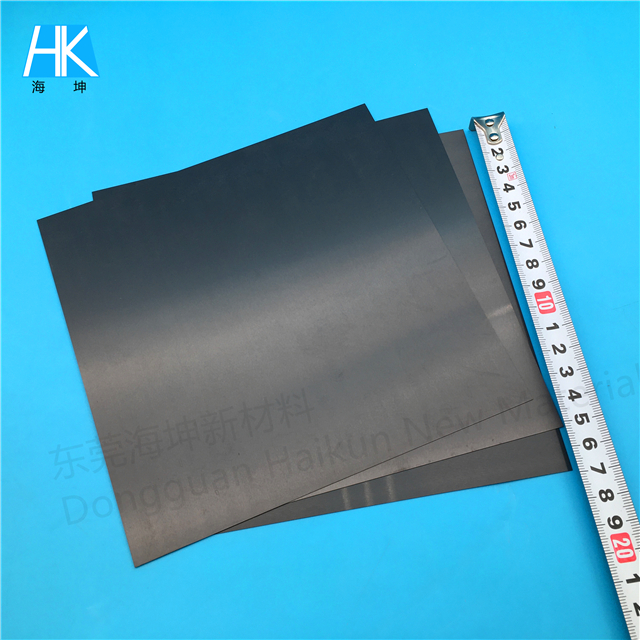
Hot-pressed silicon nitride ceramic substrates are made by sintering silicon nitride (Si₃N₄) powder under high temperature and pressure to form a high-density ceramic structure.
Compared to ordinary ceramic substrates, the hot-pressing process effectively reduces internal porosity and improves the material’s density and mechanical properties.
A typical process includes:
Silicon nitride powder → Batching → Molding → Hot-pressing sintering → Precision machining → Grinding/polishing → Inspection
After hot-pressing sintering, silicon nitride ceramics typically possess:
High flexural strength
High fracture toughness
Good thermal conductivity
Low coefficient of thermal expansion
Excellent thermal shock resistance
Good electrical insulation properties
Therefore, they are particularly suitable for ceramic substrate applications requiring high mechanical reliability and thermal cycling life.
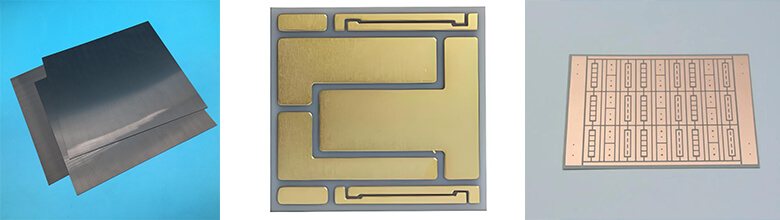
2. What are the advantages of hot-pressed silicon nitride ceramic substrates?
1. High strength and high toughness
This is a significant advantage of hot-pressed silicon nitride ceramics.
Silicon nitride itself is a high-performance structural ceramic, and the hot-pressing process achieves high density and excellent mechanical properties.
Typical flexural strengths can reach:
Around 600 MPa
The actual performance will vary depending on the grade, formulation, and process.
Compared to some traditional ceramic substrates, silicon nitride can better withstand:
mechanical stress
thermal stress
vibration
temperature cycling
Therefore, it is ideal for high-reliability power electronics.
2. Excellent thermal shock resistance
Electronic devices frequently undergo the following process during operation:
Start-up → Heating → Operation → Cooling → Restart
This repeated temperature change generates thermal stress.
If the ceramic substrate has insufficient thermal shock resistance, the following may occur:
Cracks
Warping
Delamination
Failure
Silicon nitride has a low coefficient of thermal expansion and high fracture toughness, thus exhibiting excellent thermal shock resistance.
This is also a significant advantage of silicon nitride ceramic substrates over some traditional ceramic substrates.
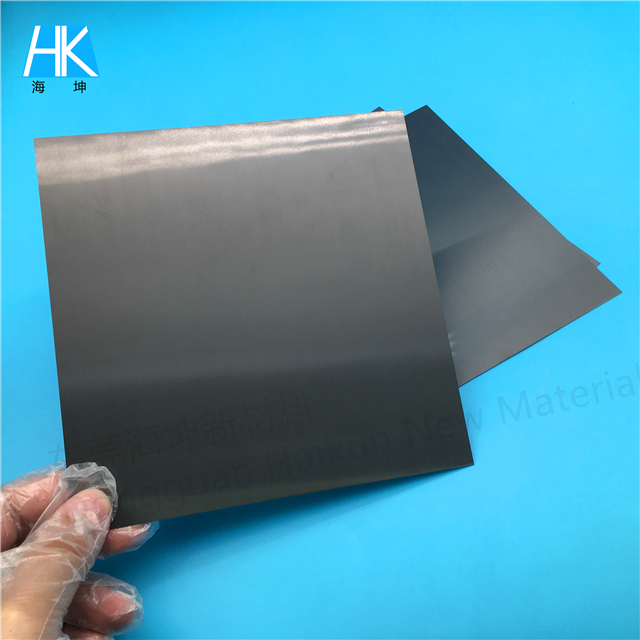
3. What are the thermal conductivity and insulation properties of hot-pressed silicon nitride ceramic substrates?
1. It combines thermal conductivity and insulation.
Power electronic devices generate a significant amount of heat during operation.
Ceramic substrates need to address two issues simultaneously:
It quickly transfers heat away while preventing the flow of electricity.
Silicon nitride ceramics possess the combined properties of:
electrical insulation and thermal conductivity.
Depending on the material grade and sintering system, the thermal conductivity of silicon nitride ceramics can typically reach:
Approximately 20–100 W/(m·K)
Some high thermal conductivity silicon nitride materials can achieve even higher levels.
Therefore, they can be used in:
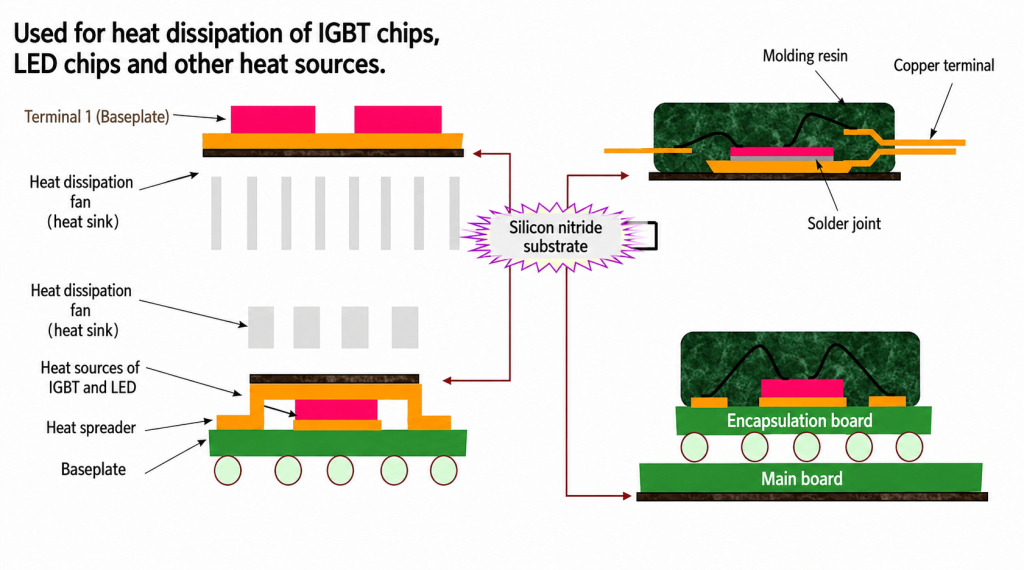
IGBT power modules
SiC power modules
New energy vehicle electronic control systems
Rail transit power modules
Industrial power supplies
High-power electronic equipment
2. The coefficient of thermal expansion is better matched with the chip.
The coefficient of thermal expansion of silicon nitride is typically approximately:
3.1×10⁻⁶/K
The temperature is relatively low.
This gives it good dimensional stability during temperature changes and also helps reduce thermal stress caused by differences in thermal expansion between the chip, metal layers, and ceramic substrate.
This is particularly important for power modules that need to undergo extensive thermal cycling over long periods.
4. What are the disadvantages of hot-pressed silicon nitride ceramic substrates?
Although hot-pressed silicon nitride ceramics have excellent properties, they are not without their drawbacks.
1. High material and manufacturing costs
Compared to alumina ceramics, silicon nitride typically has higher raw material and manufacturing process costs.
Especially the hot-pressing process involves:
high temperature
high pressure
specialized equipment
strict process control
Therefore, the final product price is usually higher than that of ordinary alumina ceramic substrates.
so:
For basic insulation needs, alumina may be more cost-effective; however, for high reliability and long thermal cycling life, silicon nitride is more valuable.
2. The processing is quite difficult.
Silicon nitride possesses high hardness and strength.
Sintered materials are not easily machinable using conventional methods and typically require:
Diamond grinding
Precision grinding
Polishing
Laser processing
If the substrate requires:
Microholes
Steps
Grooves
Irregular contours
High-precision dimensions
High requirements are placed on processing equipment and process control capabilities.
3. Larger sizes and more complex structures are more difficult to process.
The larger the size of the silicon nitride ceramic substrate, the higher the requirements for:
flatness
thickness uniformity
warpage control
internal defects
processing stress
Therefore, large-size, high-precision silicon nitride ceramic substrates require mature forming, sintering, and post-processing technologies.
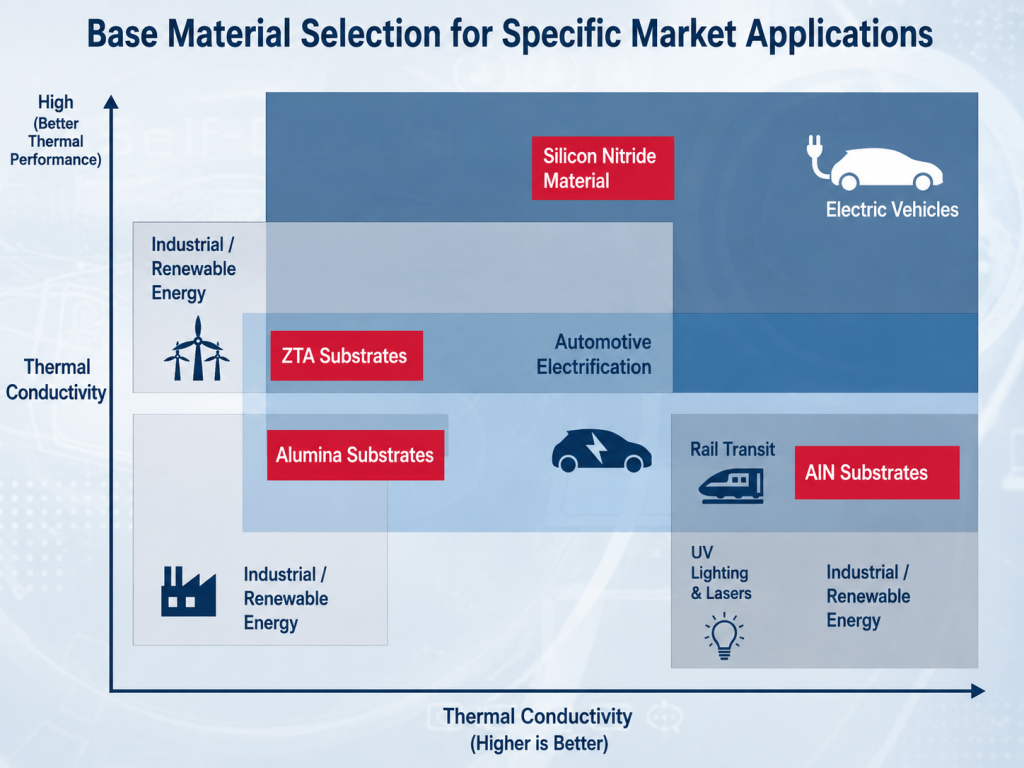
5. What are the differences between hot-pressed silicon nitride and alumina/aluminum nitride ceramic substrates?
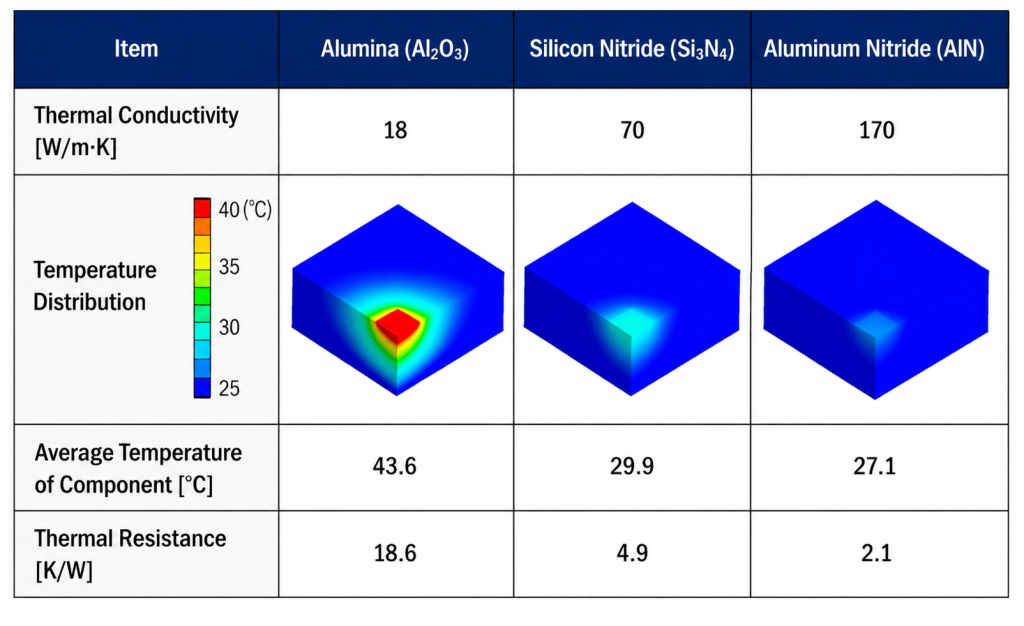
Different ceramic substrate materials have different advantages.
| performance | alumina ceramics | Aluminum nitride ceramics | silicon nitride ceramics |
|---|---|---|---|
| thermal conductivity | ★★★ | ★★★★★ | ★★★★ |
| strength | ★★★ | ★★★ | ★★★★★ |
| fracture toughness | ★★★ | ★★★ | ★★★★★ |
| Thermal shock resistance | ★★★ | ★★★★ | ★★★★★ |
| Electrical insulation | ★★★★★ | ★★★★★ | ★★★★★ |
| cost | ★★★★★ | ★★★ | ★★~★★★ |
| Overall reliability | ★★★ | ★★★★ | ★★★★★ |
More suitable for:
General electronic insulation, general power devices, and cost-effective applications.
Aluminum nitride ceramic substrate
More suitable for:
High thermal conductivity, high insulation electronic packaging.
silicon nitride ceramic substrate
More suitable for:
High-power, high-thermal-cycle, and high-mechanical-reliability applications.
Therefore, it’s not that “silicon nitride is always better than other materials,” but rather that:
different applications require different ceramic substrate materials.
6. What applications are suitable for hot-pressed silicon nitride ceramic substrates?
With the development of new energy vehicles, third-generation semiconductors and high-power electronic devices, the application value of hot-pressed silicon nitride ceramic substrates is becoming increasingly prominent.
① New Energy Vehicles
Applicable to:
Motor controllers
Power modules
SiC power devices
Inverters
On-board electronic control systems
② Power Electronics
Applications:
IGBT Modules
SiC Modules
Power Semiconductor Packaging
Industrial Frequency Converters
Power Supply Modules
③ Rail Transit
Used in high-reliability power electronic modules, requiring high resistance to thermal cycling and mechanical reliability.
④ New Energy Power Generation
Including:
Photovoltaic Inverters
Energy Storage Converters
Wind Power Control Systems
High-Power Power Supplies
⑤ Semiconductors and high-end electronic equipment
For situations where both aspects need to be considered:
Insulation, thermal conductivity, mechanical strength and dimensional stability
The precision structure and packaging components.
Haikun Precision Ceramics: Providing custom processing of hot-pressed silicon nitride ceramic substrates
Haikun New Materials Co., Ltd. specializes in the processing of high-performance industrial ceramic materials and precision ceramic parts, and can provide customized solutions based on customer drawings, material grades and actual working conditions.
Hot-pressed silicon nitride ceramic substrate
Can be customized according to application requirements:
Material Selection
Hot Pressing and Sintering
Precision Cutting
Diamond Grinding
Surface Grinding
Precision Polishing
Microhole Machining
Irregular Shape Machining
Dimensional and Flatness Control
We also provide:
Alumina ceramic substrates | Aluminum nitride ceramic substrates | Silicon nitride ceramic substrates | Zirconia ceramic parts | Precision structural ceramics
We support customization based on provided drawings or samples, small-batch prototyping, and mass production.
Conclusion: Why are hot-pressed silicon nitride ceramic substrates receiving increasing attention in high-reliability electronic applications?
The biggest advantage of hot-pressed silicon nitride ceramic substrates is not simply pursuing a single performance characteristic, but rather achieving:
High strength + high toughness + thermal conductivity + insulation + thermal shock resistance + high reliability
A comprehensive balance.
Its disadvantages are also quite obvious—high cost, difficult processing, and high requirements for manufacturing process.
Therefore, if the product only requires ordinary insulation, alumina ceramics may be more economical; if the focus is on high thermal conductivity, aluminum nitride has a clear advantage; and when the product faces high power, frequent thermal cycling, mechanical stress and long-term reliability requirements at the same time, hot-pressed silicon nitride ceramic substrates are often more valuable for application.
There is no absolutely “best” material, only the choice that is more suitable for the actual working conditions.
For customers requiring high reliability and high precision silicon nitride ceramic substrates, Haide Precision Ceramics can provide customized processing solutions based on specific dimensions, thickness, flatness, roughness, hole positions, and usage environment.
Relevant information