
information centre / Industry Information / Industrial ceramic material selection guide for different working conditions: avoid these selection pitfalls
Industrial ceramic material selection guide for different working conditions: avoid these selection pitfalls
Introduction
Industrial ceramics possess excellent properties such as wear resistance, high temperature resistance, corrosion resistance, insulation, and high strength, and are widely used in industries such as semiconductors, new energy, machinery manufacturing, medical, chemical, and electronics. However, in actual procurement, many customers find that: why do some choose alumina, others zirconium oxide, and still others silicon nitride, aluminum nitride, or silicon carbide when choosing industrial ceramics? The truth is, industrial ceramics are not necessarily “the higher the performance, the better,” but rather the material must be matched according to the actual working conditions.
Quick Links
Contact Us
Live
E-mail:sales01@hkceramic.com
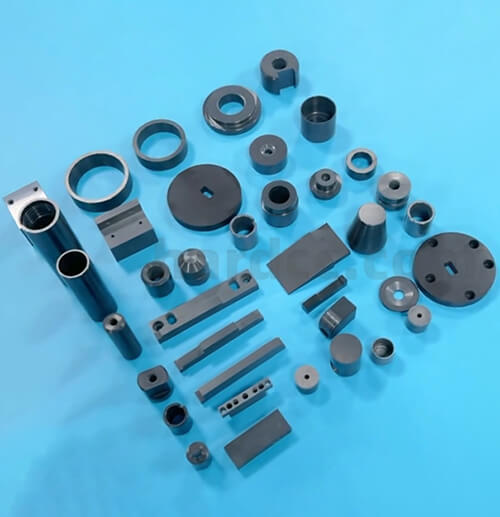
What are the types of industrial ceramic materials? What are the strengths of each material?
There are many types of industrial ceramic materials, among which the most commonly used in engineering applications include:
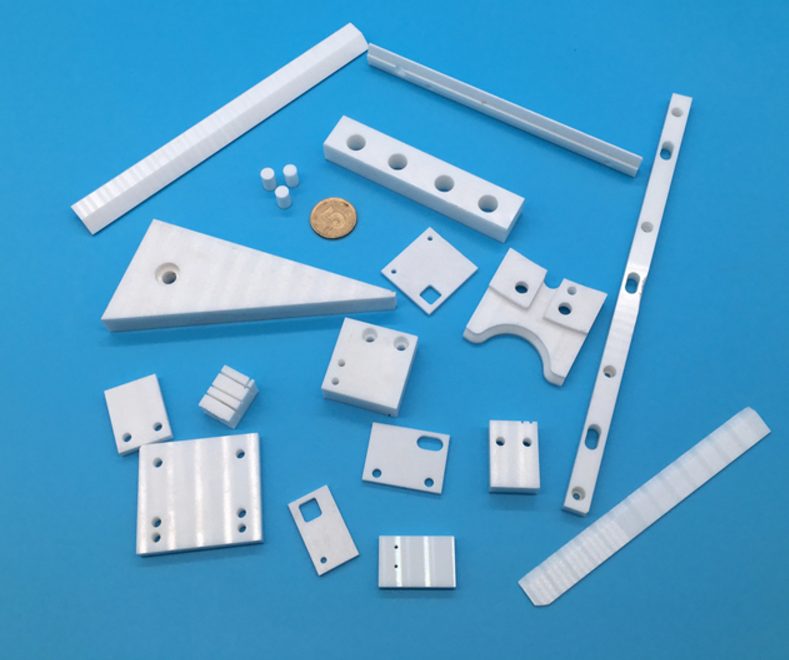
alumina ceramics, zirconia ceramics, silicon nitride ceramics, aluminum nitride ceramics, silicon carbide ceramics, and Macor Ceramic
Their performance characteristics differ.
| Material | Core advantages | More suitable working conditions |
|---|---|---|
| alumina ceramics | High cost performance, wear-resistant, insulating, and high temperature resistant | General-purpose wear-resistant, insulating, and structural components |
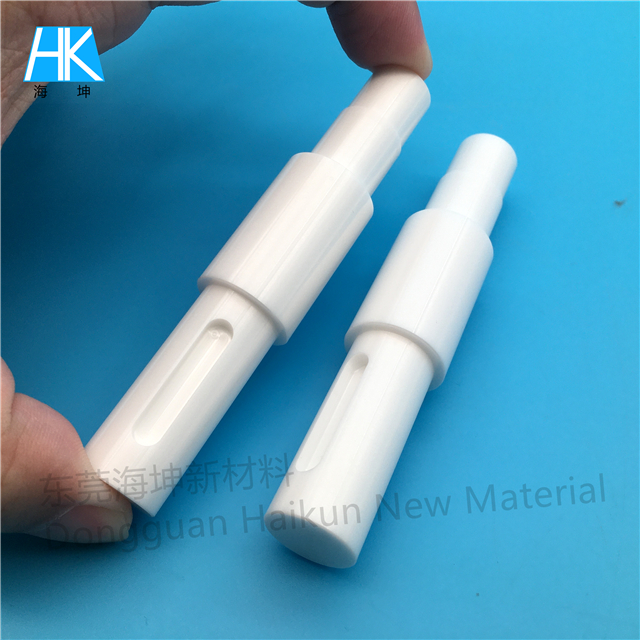
| Zirconia ceramics | High toughness, fracture resistance, and wear resistance | Impact, vibration, precision structural components |
| silicon nitride ceramics | High strength, high toughness, and thermal shock resistance | High speed, high temperature, thermal cycling |
| Aluminum nitride ceramics | High thermal conductivity, high insulation | Power electronics, heat dissipation substrate |
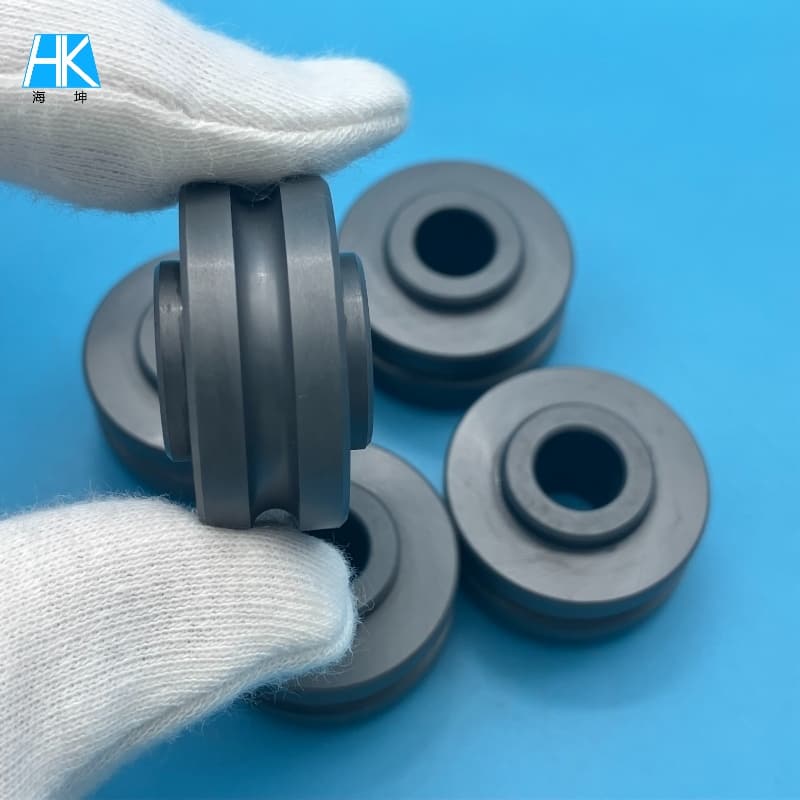
| silicon carbide ceramics | High hardness, high temperature resistance, wear resistance | High temperature, high wear, semiconductor |
| Microcrystalline glass ceramics | Easy to process, low thermal expansion, and insulating. | Precision structure, small batch, complex parts |
It can be simply understood as:
Alumina is judged by its overall cost-effectiveness, zirconium oxide by its toughness, silicon nitride by its overall mechanical properties and thermal shock resistance, aluminum nitride by its thermal conductivity, and silicon carbide by its high-temperature performance and wear resistance.
However, the actual selection still needs to be judged in combination with the specific grade and working conditions.
Myth 1: The higher the hardness of ceramic, the more durable it is?
This is a very common misconception in the selection of industrial ceramics.
Many customers’ first reaction is:
“I want the hardest ceramic, that way it will definitely be the most wear-resistant.”
In fact, hardness is only one of the important factors in wear resistance and cannot represent all the properties of a material.
For example:
Alumina ceramics typically have high hardness and good wear resistance, making them cost-effective in applications such as wear-resistant parts, bushings, and guides.
Zirconia ceramics are generally less hard than alumina, but have significantly higher fracture toughness.
If the product exists:
High-frequency impact
Vibration
Instantaneous load
Edge collision
Stress concentration
Simply pursuing the highest hardness may not be the best solution.
therefore:
Wear resistance is not only determined by hardness, but also by load, friction mode, medium, speed, temperature, and the fracture toughness of the material.
Myth 2: High compressive strength means high impact resistance?
The answer is also: not necessarily.
Industrial ceramics typically have very high compressive strength, but compressive strength and impact resistance are different concepts.
compressive strength
Key focus:
The ability of a material to withstand sustained compressive loads.
Impact resistance
More focus:
The ability of a material to resist the generation and propagation of cracks after being subjected to an instantaneous impact.
This is why some ceramic materials:
are not easily crushed, but may crack upon impact.
If a product needs to withstand:
high-frequency impacts
vibrations
rapid motion
instantaneous loads
it’s not enough to only consider compressive strength; the following must also be considered:
fracture toughness + flexural strength + actual impact conditions.
For example, zirconia ceramics have high fracture toughness, making them generally more advantageous than ordinary high-hardness ceramics in precision structural components requiring impact and fracture resistance.
Silicon nitride, on the other hand, combines high strength, high toughness, and excellent thermal shock resistance, offering significant advantages in high-speed, high-temperature, and complex thermomechanical loading environments.
Myth 3: If the operating temperature is high, should I directly choose the "highest temperature resistant" ceramic?
This is also an easily overlooked issue.
Many customers see:
Silicon carbide is resistant to high temperatures.
It is a misconception that silicon carbide should always be chosen for high-temperature environments.
This is not actually the case.
Selecting industrial ceramic materials requires consideration beyond just the maximum withstand temperature; it also needs to take into account:
Actual operating temperature
Rate of temperature change
Number of thermal cycles
Atmosphere
Oxidizing environment
Mechanical load
Coefficient of thermal expansion
Thermal conductivity
For example:
Alumina ceramics
Exhibit good high-temperature stability, suitable for a wide range of general-purpose high-temperature structures and insulation applications.
Silicon nitride ceramics
Not only do they have high temperature resistance, but they also excel in thermal shock resistance and high-temperature mechanical properties, making them suitable for operating conditions with frequent temperature rises and falls.
Silicon carbide ceramics
Exhibit high hardness, high thermal conductivity, and high-temperature stability, offering advantages in harsh environments such as high-temperature, high-wear, and semiconductor equipment applications.
therefore:
High temperature resistance does not just mean looking at the maximum operating temperature; more importantly, it means whether the material can operate stably over a long period of time under actual temperature changes and working conditions.
Myth 4: The higher the material properties, the better the product?
This is one of the most common problems leading to cost waste in enterprise procurement.
For example, consider a typical insulating support component:
It only requires:
Electrical insulation
A certain level of mechanical strength
Temperature resistance
Dimensional stability
If a more expensive, high-performance ceramic material is chosen directly, it may not significantly increase the product value; instead, it might increase:
Material costs
Processing costs
Procurement costs
In this case, alumina ceramic is often a very competitive choice.
However, if the product is:
High-speed rotation
Silicon nitride ceramics are worth considering.
High-frequency impact
Zirconia ceramics are worth considering.
High thermal conductivity + insulation
Aluminum nitride ceramics are worth considering.
High temperature + strong wear
Silicon carbide ceramics are worth considering.
General wear resistance + insulation + high cost-effectiveness
Alumina ceramics are worth considering.
therefore:
Truly excellent material selection is not about choosing the most expensive material, but about achieving the best balance between performance and cost while meeting performance requirements.
The correct selection of industrial ceramics should begin with the "operating conditions" rather than the "material name".
For professional industrial ceramic selection, it is recommended to confirm the following factors one by one:
① Mechanical Load
The product is subjected to:
Compression
Tension
Bending
Shear
Impact
Vibration
or multiple loads simultaneously?
② Friction and Wear
Needs to know:
Is sliding friction present?
Is particle wear present?
What are the materials used in the grinding process?
What is the operating speed?
Is low friction required?
③ Temperature
The following needs to be confirmed:
Is it room temperature or high temperature?
What is the highest temperature?
Does the temperature change frequently?
Is there any thermal shock?
④ Chemical Environment
For example:
Acids
Alkalis
Salts
Organic solvents
Corrosive gases
Vacuum environment
Different materials have different corrosion resistance.
⑤ Electrical Properties
If applied to the electronics, electrical, or semiconductor industries, the following also need to be considered:
Insulation resistance
Dielectric properties
Breakdown strength
Dielectric loss
⑥ Processing Requirements
Finally, the following also need to be considered:
Dimensional accuracy
Flatness
Roundness
Coaxiality
Surface roughness
Microholes
Threads
Steps
Irregular shapes
Because:
Choosing the right materials doesn’t guarantee that the product can be manufactured.
In particular, high-hardness ceramics such as silicon nitride and silicon carbide require advanced post-processing equipment and technological capabilities.
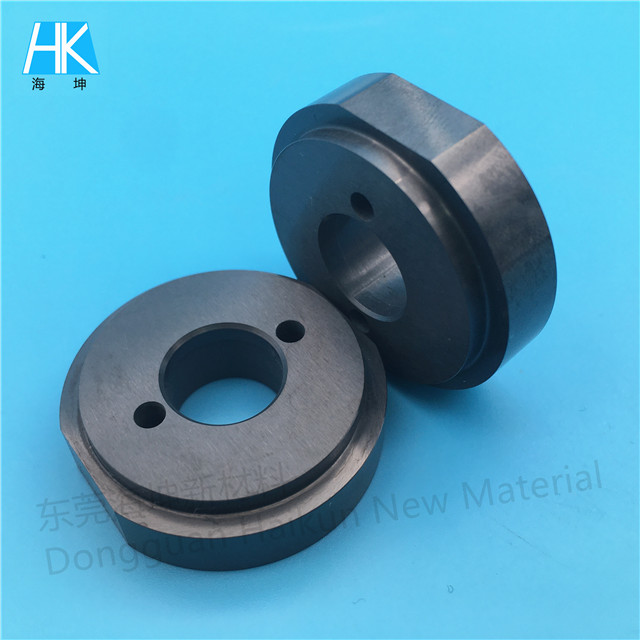
Haikun Precision Ceramics: Providing one-stop solutions from material selection to precision machining.
Shenzhen Haide Precision Ceramics Co., Ltd. specializes in the customization of industrial ceramic materials and precision ceramic parts. We can conduct material analysis and design processing solutions based on customers’ drawings, material requirements and actual working conditions.
Available:
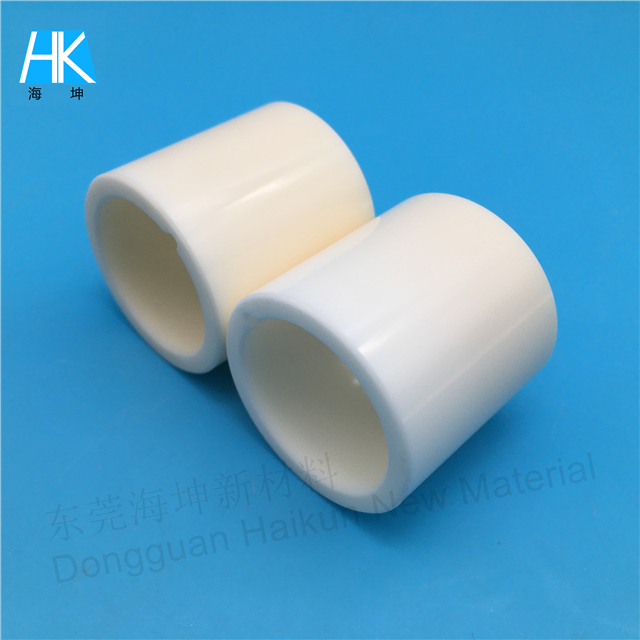
Alumina ceramic
High cost performance, wear resistance, insulation, high temperature resistance
Suitable for general industrial parts, insulation parts, wear-resistant parts, ceramic substrates, etc.
Zirconia ceramics
High toughness, impact resistance, wear resistance
Suitable for ceramic plungers, valve cores, sealing rings, precision structural components, etc.
Silicon nitride ceramics
High strength, high toughness, thermal shock resistance
Suitable for high-speed bearings, precision structural components, high-temperature parts, etc.
Aluminum nitride ceramics
High thermal conductivity, high insulation
Suitable for power modules, heat sinks, and electronic packaging applications.
Silicon carbide ceramics
High hardness, high wear resistance, high temperature resistance
Suitable for high-temperature equipment, semiconductors, mechanical seals, and wear-resistant structural components.
Also offering:
CNC precision machining
Precision grinding
Surface grinding
Precision polishing
Laser cutting
Micro-hole machining
Threading
Irregular shape machining
Customization based on drawings
Small batch prototyping
Mass production
In conclusion, there is no “one-size-fits-all” material in industrial ceramics; there are only more suitable
materials.
The most important principle in selecting industrial ceramics can be summarized in one sentence:
Don’t ask “which type of ceramic is best” first; instead, ask “what operating conditions my product needs to withstand.”
If you prioritize:
Wear resistance + insulation + high cost-effectiveness
→ Alumina ceramics are preferred
If you require:
High toughness + impact resistance + fracture resistance
→ Zirconia ceramics are preferred
If you require:
High strength + high toughness + thermal shock resistance + high-speed applications
→ Silicon nitride ceramics are preferred
If you require:
High thermal conductivity + electrical insulation
→ Aluminum nitride ceramics are preferred
If you require:
High temperature + high hardness + high wear resistance
→ Silicon carbide ceramics are preferred
Whether the material is suitable ultimately requires a comprehensive judgment based on specific temperature, load, speed, medium, lifespan, and processing precision.
Choosing the right materials can reduce product costs; choosing the wrong materials may increase processing costs or even affect the lifespan of equipment.
If you are selecting industrial ceramic parts, you can provide product drawings, dimensions, operating temperature, load, speed, contact medium, and specific working environment. Haide Precision Ceramics can assist in matching suitable ceramic materials and processing solutions based on actual working conditions.
Relevant information