
information centre / Industry Information / What is silicon nitride ceramic? Why is it called the “king of structural ceramics”?
What is silicon nitride ceramic? Why is it called the “king of structural ceramics”?
Introduction
In the field of industrial ceramics, if alumina ceramics are considered the “king of cost-effectiveness” and zirconia ceramics are the “ceramic steel,” then silicon nitride ceramics (Si₃N₄) are undoubtedly recognized as the “king of structural ceramics.” It not only possesses excellent strength and wear resistance but also outstanding thermal shock resistance, high-temperature stability, and fracture toughness, making it one of the most comprehensively performing engineering structural ceramics available. Today, silicon nitride ceramics are widely used in high-end manufacturing fields such as new energy vehicles, semiconductor equipment, aerospace, machinery manufacturing, bearings, and medical devices. So, what exactly is silicon nitride ceramic? And why has it earned the reputation of “king of structural ceramics”?
Quick Links
Contact Us
Live
E-mail:sales01@hkceramic.com
1. What are silicon nitride ceramics?
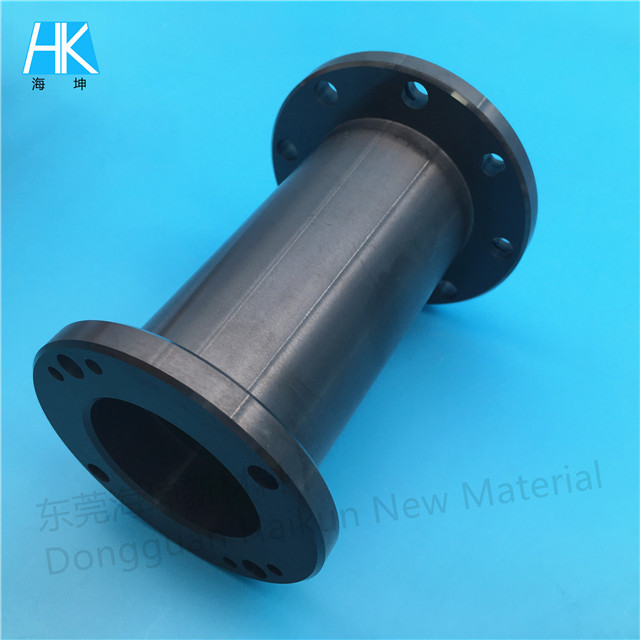
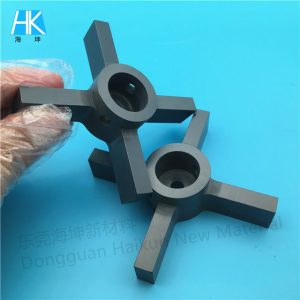
Silicon nitride ceramics (Si₃N₄) are high-performance inorganic non-metallic materials made primarily from silicon nitride powder through high-temperature sintering.
Because silicon nitride is a covalently bonded ceramic with a stable crystal structure, it possesses the following properties:
High strength
High hardness
High toughness
High wear resistance
High temperature resistance
Excellent thermal shock resistance
Good corrosion resistance. Its overall performance is significantly superior to ordinary ceramics, thus it is widely used in high-end equipment manufacturing.
2. Why is silicon nitride ceramic called the "King of Structural Ceramics"?
1. Top-Tier Comprehensive Mechanical Properties Among Engineering Ceramics
Among numerous industrial ceramic materials, silicon nitride possesses exceptionally balanced comprehensive properties.
Typical properties include:
Flexural strength: 600 MPa
Fracture toughness: 6 MPa·m¹ᐟ²
Vickers hardness: 1550 HV
Density: 3.2 g/cm³
It combines high strength, high toughness, and relatively low density, making it an ideal material for high-performance structural components.
2. Excellent Thermal Shock Resistance
This is the most prominent advantage of silicon nitride (thermal shock resistance ≥500 ΔT.℃).
Ordinary ceramics are prone to cracking due to thermal stress under rapid temperature changes.
Silicon nitride ceramics, with their low coefficient of thermal expansion and high fracture toughness, maintain good structural integrity even after rapid heating and cooling.
Therefore, they perform particularly well in the following applications:
High-frequency start-stop equipment
High-temperature furnaces
Engine components
Semiconductor heat treatment equipment
3. High Temperature Resistance and High Strength Retention at High Temperatures
Silicon nitride ceramics are not only resistant to high temperatures, but more importantly:
They maintain high mechanical strength even at high temperatures.
In air, they can operate continuously at approximately 1200℃; in an inert atmosphere, they can withstand even higher temperatures.
Therefore, they are suitable for:
High-temperature bearings
Heat treatment equipment
Combustion system components
High-temperature mechanical structural components
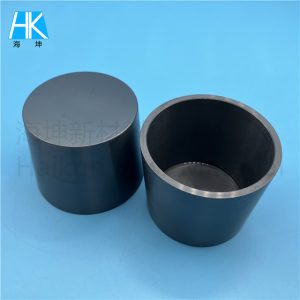
4. High Wear Resistance and Low Friction
Silicon nitride has high hardness and a low coefficient of friction.
Applications:
Ceramic bearing balls
Guide components
Slider blocks
Sealing rings
Effectively reduces wear and extends equipment lifespan.
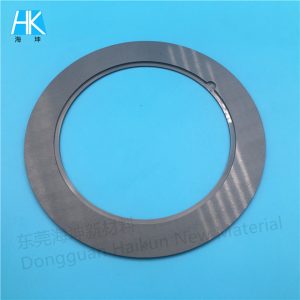
5. Lightweight, suitable for high-speed motion.
Silicon nitride has a density of approximately:
3.2 g/cm³
significantly lower than steel.
Therefore:
It exhibits lower centrifugal force and lower inertia during high-speed rotation, making it ideal for:
High-speed motors
Precision bearings
New energy vehicle drive systems
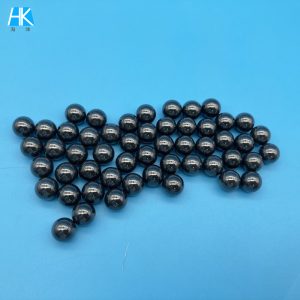
3. Main performance parameters of silicon nitride ceramics
| Performance items | Typical values |
|---|---|
| density | 3.2 g/cm³ |
| flexural strength | 600 MPa |
| fracture toughness | 6 MPa·m¹ᐟ² |
| Vickers hardness | 1500 HV |
| thermal conductivity | 15 W/(m·K) |
| coefficient of thermal expansion | 3.1×10⁻⁶/℃ |
| Long-term operating temperature (air) | 约1200℃ |
These properties make silicon nitride an important representative material of high-end structural ceramics.
4. Main application areas of silicon nitride ceramics
New Energy Vehicles
Typical Products:
Motor bearing balls
Drive system wear-resistant parts
Power module related structural components
Help improve transmission efficiency and service life.
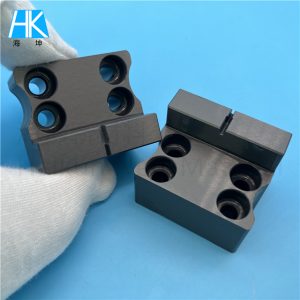
Semiconductor Equipment
Applications:
Wafer Manufacturing Equipment
High-Temperature Process Equipment
Vacuum System Structural Components
Precision Positioning Parts
Meeting high cleanliness and high stability requirements.
Mechanical Equipment
Typical Products:
Ceramic Bearings
Guide Rails and Sliders
Wear-Resistant Seals
Precision Mechanical Parts
Suitable for high-speed, high-load conditions.
Aerospace
Silicon nitride ceramics, due to their high temperature resistance, light weight, and excellent thermal shock resistance, are used in:
Aero-engine components
High-temperature heat-resistant structural components
Precision control components
Medical devices
Used for:
Highly wear-resistant parts
Precision instrument assemblies
Structural components of medical equipment
Possesses excellent long-term stability.
5. What are the differences between silicon nitride ceramics and other industrial ceramics?
| Material | Biggest advantage | Typical applications |
|---|---|---|
| alumina ceramics | High cost performance and good insulation properties | Insulating components, substrates, wear-resistant components |
| Zirconia ceramics | High toughness and impact resistance | plunger, valve core, precision structural components |
| silicon nitride ceramics | Excellent overall mechanical properties and thermal shock resistance | Bearings, structural components, high-temperature equipment |
| Aluminum nitride ceramics | High thermal conductivity, high insulation | Power module, heat sink |
| silicon carbide ceramics | High thermal conductivity, wear-resistant, and high temperature resistant | High-temperature kiln furniture, mechanical seals, semiconductor equipment |
Silicon nitride ceramics typically have significant advantages for applications requiring high-speed operation, high-temperature shock, and complex loads.
Conclusion: Why is silicon nitride ceramic hailed as the "King of Structural Ceramics"?
Silicon nitride ceramics earned this title not because of any single outstanding property, but because they excel in multiple aspects, including:
strength,
toughness,
wear resistance,
high temperature resistance,
thermal shock resistance,
lightweight, and more, resulting in a well-balanced overall performance.
For industrial equipment requiring long-term stable operation and high reliability, silicon nitride ceramics offer longer service life, lower maintenance costs, and higher operating efficiency.
With the development of new energy vehicles, semiconductors, high-end equipment, and the aerospace industry, the application prospects of silicon nitride ceramics will become even broader.
Dongguan Haikun New Materials Co., Ltd.
Focusing on the R&D and precision machining of high-performance industrial ceramics, we offer:
Silicon nitride ceramic products
Silicon nitride ceramic substrates and sheets
Silicon nitride ceramic plungers and fittings
Silicon nitride ceramic guides
Silicon nitride ceramic sealing rings
Silicon nitride ceramic structural parts and components
Processing Capabilities
✔ Precision CNC machining
✔ Internal and external cylindrical grinding
✔ Surface grinding and mirror polishing
✔ Laser cutting and micro-hole machining
✔ Customization based on drawings and samples
✔ Small-batch prototyping and mass production
We are committed to providing high-quality industrial ceramic products and customized solutions for industries such as semiconductors, new energy vehicles, aerospace, machinery equipment, medical devices, and automation equipment.
Relevant information