
information centre / Industry Information / What Is Boron Nitride Ceramic? An Overview of Its Properties, Applications, and Precision Custom Machining
What Is Boron Nitride Ceramic? An Overview of Its Properties, Applications, and Precision Custom Machining
Introduction
Boron nitride (BN) ceramic is an advanced engineering ceramic material primarily composed of boron nitride. Characterized by excellent high-temperature resistance, electrical insulation, favorable thermal properties, and unique lubricating characteristics, BN ceramics are widely used in sectors such as high-temperature industrial processes, electronics and electrical engineering, semiconductors, vacuum equipment, molten metal handling, and precision industrial machinery. Compared to more common ceramics—such as those based on aluminum oxide, zirconium oxide, or silicon nitride—boron nitride ceramics offer distinct performance advantages, making them particularly well-suited for applications that demand high-temperature insulation, thermal conductivity, mold release, or resistance to thermal shock.
Quick Links
Contact Us
Live
E-mail:sales01@hkceramic.com
1. What kind of material is boron nitride ceramic?
Boron nitride is a compound composed of boron and nitrogen atoms, with the chemical formula BN. Depending on its crystal structure, boron nitride is primarily categorized into types such as hexagonal boron nitride (h-BN) and cubic boron nitride (c-BN).
In the field of industrial ceramics, the most common form is hexagonal boron nitride. Its crystal structure, which resembles that of graphite, consists of layers; this grants it excellent self-lubricating properties, ease of machinability, and stability at high temperatures.
Common types of boron nitride ceramics include:
Hot-pressed boron nitride ceramics: Produced via a hot-pressing process, these ceramics feature high density and well-rounded performance, making them suitable for high-temperature insulating components and precision structural parts.
Pyrolytic boron nitride (PBN): Manufactured through processes such as chemical vapor deposition (CVD), this material is characterized by high purity, a layered structure, and superior gas-tightness. It is frequently used in semiconductor, vacuum, and high-temperature equipment.
Composite boron nitride ceramics: These are created by incorporating other materials to enhance specific properties; their exact characteristics depend on the formulation and the manufacturing process employed.
It should be noted that factors such as the preparation method, purity, density, and composite composition significantly influence the performance of boron nitride ceramics. Therefore, the selection of the appropriate material should be based on the specific operating conditions of the equipment.
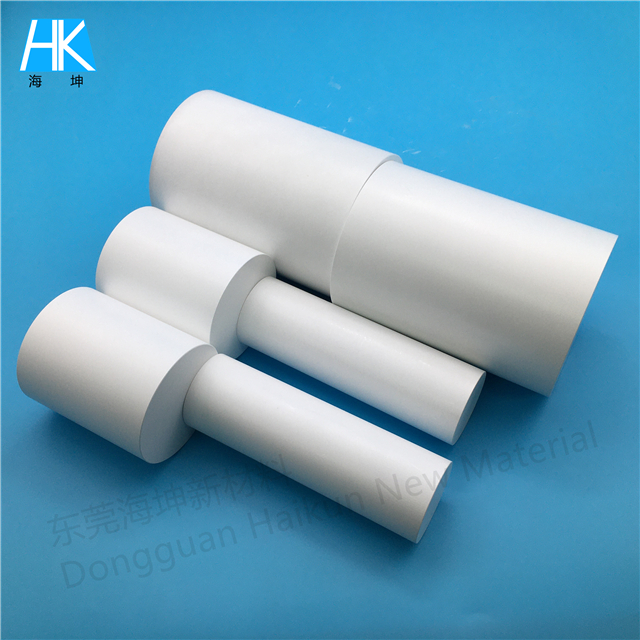
2. What are the performance advantages of boron nitride ceramics?
The value of boron nitride ceramics lies not merely in their high-temperature resistance, but rather in the combination of their diverse properties—enabling them to meet operational requirements that are difficult for conventional metals or traditional ceramics to satisfy simultaneously.
1. Excellent High-Temperature Performance
Boron nitride ceramics exhibit superior high-temperature stability; in suitable environments—such as inert atmospheres or a vacuum—they can be used at temperatures as high as 2000°C.
The actual operating temperature depends heavily on the material type, the surrounding atmosphere, the mechanical stress applied, and the duration of use. It is particularly important to note that boron nitride may oxidize in high-temperature oxidizing environments; therefore, its temperature resistance in an inert atmosphere should not be equated to its long-term service temperature in air.
2. Good Electrical Insulation Properties
Boron nitride possesses excellent electrical insulation characteristics while remaining stable at high temperatures, making it well-suited for use as insulating structural components in high-temperature electrical equipment and electronics manufacturing machinery.
Examples include high-temperature insulating gaskets, insulating supports, and isolation components for heating equipment; the specific material grade can be selected based on the required voltage, temperature, and structural specifications.
3. Unique Self-Lubricating and Mold-Release Properties
Hexagonal boron nitride features a layered crystal structure with relatively weak interplanar bonding, which imparts solid-lubrication characteristics.
Under appropriate operating conditions, boron nitride ceramics can reduce adhesion and friction between materials, making them suitable for high-temperature mold release, isolation, and certain sliding contact applications.
This property is highly valuable in processes such as molten metal handling, glass processing, and high-temperature molding operations. However, actual frictional performance must be evaluated by considering the specific materials in contact, as well as the applied load, speed, and environmental conditions.
4. Good Thermal Conductivity and Thermal Shock Resistance
Hexagonal boron nitride (h-BN) exhibits excellent thermal conductivity; however, this property is highly anisotropic—meaning it varies by direction—and depends on factors such as material purity, density, grain orientation, and the manufacturing process.
In environments subject to rapid temperature fluctuations, specific grades of boron nitride ceramics offer superior thermal shock resistance, making them suitable for applications involving thermal cycling, high-temperature heating, and thermal management.
5. Ease of Precision Machining
Compared to many high-hardness engineering ceramics, certain types of hot-pressed boron nitride possess relatively good machinability. They can be shaped into complex geometries through processes such as precision cutting and grinding.
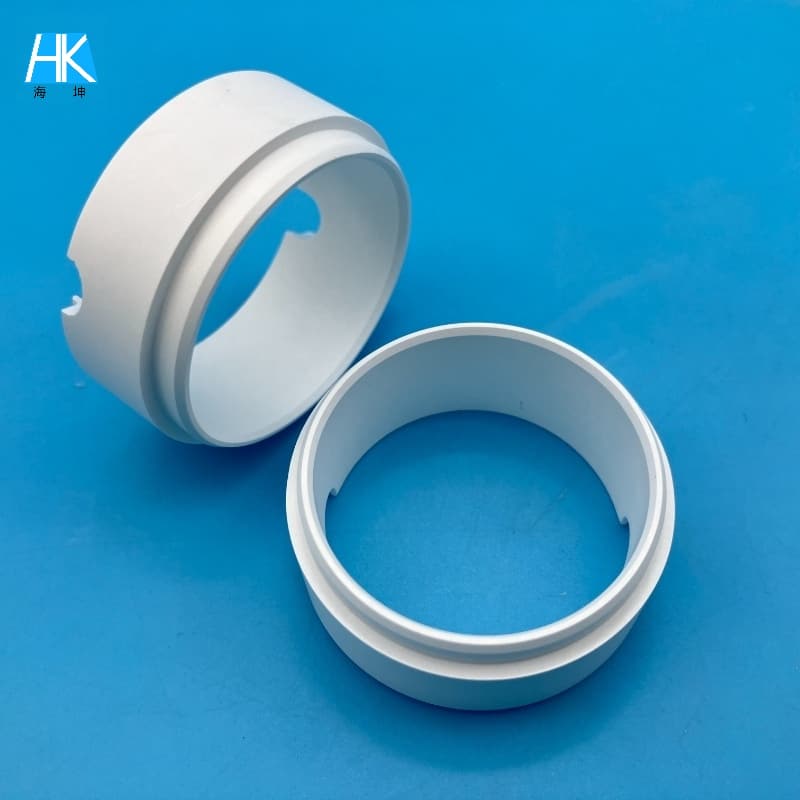
Examples include rings, sleeves, gaskets, spacers, supports, and custom-shaped structural components, all of which can be tailored to meet specific equipment design and installation requirements.
3. In which industries is boron nitride ceramic primarily used?
The applications of boron nitride ceramics are primarily concentrated in environments involving high temperatures, electrical insulation, lubrication, vacuum conditions, or specific thermal requirements.
1. Semiconductor and Electronics Manufacturing Equipment
In semiconductor manufacturing and the production of electronic equipment, certain processes impose stringent requirements regarding material purity, insulation properties, thermal stability, and contamination control.
Boron nitride ceramics can be used for:
High-temperature insulating supports
Isolation components for heating equipment
Internal structural components for vacuum equipment
Ceramic parts for high-temperature processes
For applications requiring high purity, it is necessary to further evaluate parameters such as material impurities, volatile content, outgassing, and cleanliness.
2. High-Temperature Industrial Equipment
In high-temperature furnaces, heat treatment equipment, and specialized heating systems, boron nitride ceramics can be used to manufacture insulating, supporting, and isolating components.
Examples include:
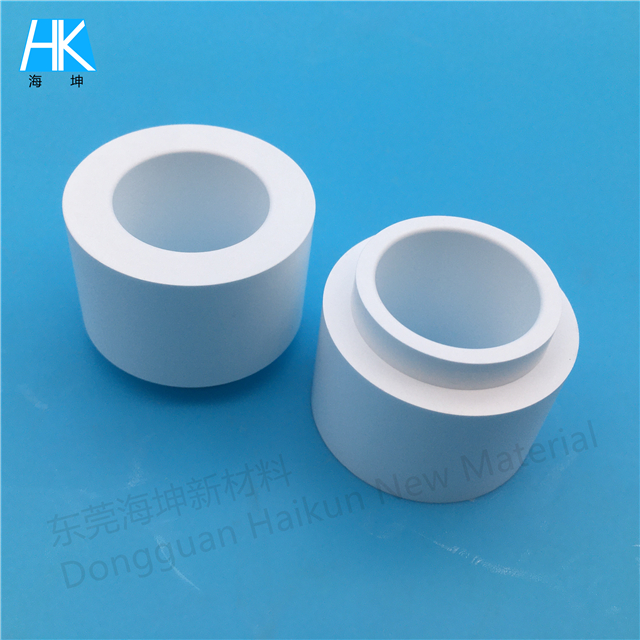
High-temperature insulating sleeves
Ceramic isolation rings
Heater supports
High-temperature positioning blocks
Structural components for use inside furnaces
3. Processing of Molten Metals and Non-Ferrous Metals
Boron nitride exhibits excellent anti-adhesion and mold-release properties, making it suitable for use as a contact or separation material in certain molten metal processing operations.
Common applications include:
Components for guiding molten metal
Mold-release components for metal casting
Separation components for high-temperature metal processing
Parts for specialized metal-processing equipment
However, as the chemical reactivity of different molten metals varies, the suitability of the material must be verified based on the specific type of metal, temperature, atmosphere, and duration of contact.
4. Equipment for Vacuum and Special Environments
In vacuum equipment and systems operating in special atmospheres, boron nitride ceramics can be used to manufacture insulating supports, structural spacers, and high-temperature tooling.
For such applications, in addition to basic mechanical properties, factors such as material purity, outgassing, sealing configurations, and actual operating temperatures must also be considered.
4. What are the differences between boron nitride ceramics and aluminum oxide or silicon nitride?
Different ceramic materials offer distinct advantages. Boron nitride is not the optimal choice for every operating condition; the key lies in whether the material’s properties align with the requirements of the equipment.
| Comparison Items | Boron nitride ceramics | Alumina ceramics | Silicon nitride ceramics |
|---|---|---|---|
| Key Advantages | High-temperature insulation, self-lubrication, and ease of processing | High hardness, insulating, and cost-effective | High strength, thermal shock resistance, and wear resistance potential |
| High-temperature performance | Good; pay attention to the atmosphere. | Superior quality depends on the brand. | Superior quality depends on the brand. |
| Electrical insulation properties | excellent | excellent | Good; it depends on the brand/grade. |
| Thermal properties | Possesses good thermal conductivity and exhibits directionality | Relatively low thermal conductivity | Thermal conductivity varies by grade. |
| Lubrication and Mold Release | Possesses certain self-lubricating properties | Self-lubrication is generally not considered a key advantage. | Self-lubrication is generally not considered a key advantage. |
| Processing Characteristics | Relatively easy to process | Typically requires specialized grinding processes. | Relatively difficult to process |
| Typical Applications | High-temperature insulation, mold release, and vacuum equipment | Structural components, wear-resistant components, insulating components | High-strength structural components, wear-resistant parts, and components subject to thermal cycling |
Material Selection Recommendations:
For applications requiring high-temperature insulation, self-lubrication, or mold-release properties, consider boron nitride ceramics.
For applications requiring high hardness, wear resistance, and cost-effectiveness, consider aluminum oxide (alumina) ceramics.
For applications requiring high strength, fracture toughness, and thermal shock resistance, consider silicon nitride ceramics.
The final choice should be based on a comprehensive assessment of factors including operating temperature, the surrounding medium, applied loads, structural dimensions, and service life requirements.
5. What are the key requirements for the precision machining of boron nitride ceramics?
Although boron nitride ceramics are relatively easy to machine, this does not mean that all structures can be produced using standard machining methods. For precision industrial components, it is still necessary to develop an appropriate machining strategy based on the specific material type, structure, and dimensional requirements.
1. Matching Material Types with Processing Techniques
Hot-pressed boron nitride, pyrolytic boron nitride, and composite boron nitride possess distinct microstructures and machining characteristics; therefore, appropriate cutting, grinding, and finishing processes must be selected based on the specific material type.
2. Control of Dimensional Accuracy and Geometric Tolerances
For components such as sleeves, rings, positioning elements, and parts with complex geometries, strict attention must be paid to dimensional and geometric tolerances—including inner and outer diameters, thickness, flatness, coaxiality, and perpendicularity.
3. Edge Quality and Micro-defect Control
Due to the inherent brittleness of boron nitride, features such as thin walls, sharp corners, narrow slots, and small holes require careful management during machining to prevent edge chipping, cracking, and localized damage.
4. Structural Design and Installation Requirements
In practical equipment applications, it is essential to avoid localized stress concentrations, improper interference fits, and mechanical shocks during installation. For thin-walled or complex, non-standard parts, both the feasibility of machining and operational reliability should be evaluated in advance.
6. Haikun Precision Ceramics: Custom processing of non-standard boron nitride ceramic components
Requirements for the structure, dimensions, precision, and performance of boron nitride ceramic components vary significantly depending on the equipment. Selecting the appropriate material type and tailoring the machining design to the specific operating conditions are crucial steps in ensuring optimal component performance.
Haikun Precision Ceramics specializes in the machining and customization of industrial precision ceramic components. We provide processing solutions for a wide range of engineering ceramic materials, tailored to client drawings, samples, and specific equipment application requirements.
Customizable boron nitride ceramic products include:
Boron nitride ceramic sleeves and pipe fittings
Boron nitride ceramic rings and gaskets
Boron nitride ceramic insulating blocks and support blocks
Boron nitride ceramic spacers and positioning components
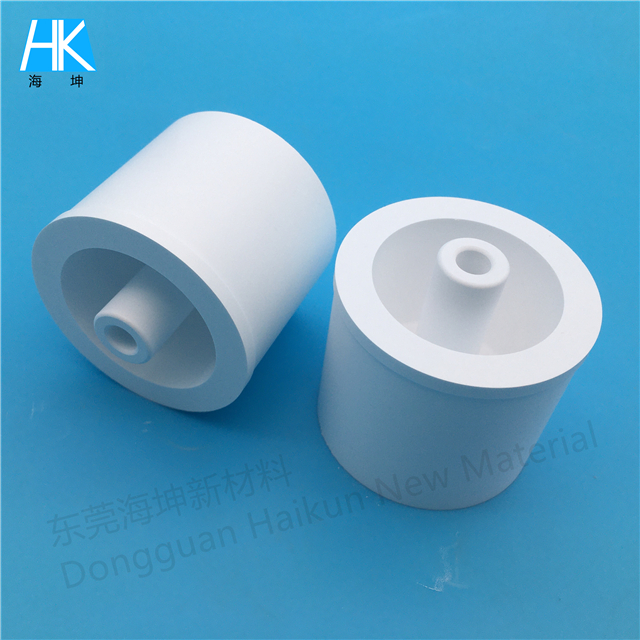
Boron nitride ceramic complex-shaped structural components and non-standard parts
Haikun Precision Ceramics Custom Services:
Evaluate processing solutions based on blueprints or samples
Assist in selecting suitable ceramic materials according to the operating environment
Provide machining for non-standard dimensions and complex, irregular geometries
Control dimensional precision and surface quality to meet product specifications
Support clients through the prototyping and product validation process
If you are looking for boron nitride ceramic materials, or require custom-made boron nitride ceramic sleeves, insulators, supports, or other precision ceramic components, please contact Haide Precision Ceramics.
By providing product drawings, dimensional specifications, and details regarding your operating conditions, you can receive our assistance in evaluating material selection and manufacturing feasibility.
Relevant information