
information centre / Industry Information / Navigating Constraints in Semiconductor Equipment: How to Select Ceramic Fixtures—A Comprehensive Guide from Material Selection to Precision Machining
Navigating Constraints in Semiconductor Equipment: How to Select Ceramic Fixtures—A Comprehensive Guide from Material Selection to Precision Machining
Introduction
In semiconductor manufacturing equipment, processes such as wafer transport, precision positioning, automated loading, inspection, and fabrication impose stringent requirements on the dimensional accuracy, positional stability, and operational reliability of components. Within the internal structures of such equipment—particularly those involving limiting, positioning, and load-bearing functions—conventional metal parts may be prone to issues like wear, metallic particle contamination, electrical interference, or corrosion from specific media. As the demand for greater precision and higher cleanliness standards in semiconductor equipment continues to grow, industrial ceramics—such as aluminum oxide (alumina), zirconium oxide (zirconia), and silicon nitride—have increasingly become the preferred choice for various precision jigs and limiting components. How, then, should one select limiting jigs for semiconductor equipment? Which ceramic materials are best suited for specific structural applications? And what considerations are essential during the precision machining process? This article provides an analysis based on four key aspects: equipment application, material properties, structural design, and machining requirements.
Quick Links
Contact Us
Live
E-mail:sales01@hkceramic.com
1. Why do semiconductor manufacturing tools require precision ceramic positioning fixtures?
Limit fixtures within semiconductor equipment are primarily used to constrain the range of motion of components, establish the precise positioning of workpieces, regulate assembly clearances, and ensure repeatable positioning accuracy during equipment operation.
Although these limit components may appear simple, they can, in fact, directly impact the operational stability of the equipment.
1. Controlling positioning accuracy to ensure repeatable equipment operation
In processes such as wafer handling, automated loading, precision inspection, and machining, workpieces must frequently be moved, positioned, and assembled at specific, predetermined locations.
If the dimensions of a limit component are unstable, or if the component experiences surface wear or positional drift, it can compromise the equipment’s repeatable positioning accuracy—potentially leading to collisions involving workpieces or causing equipment malfunctions.
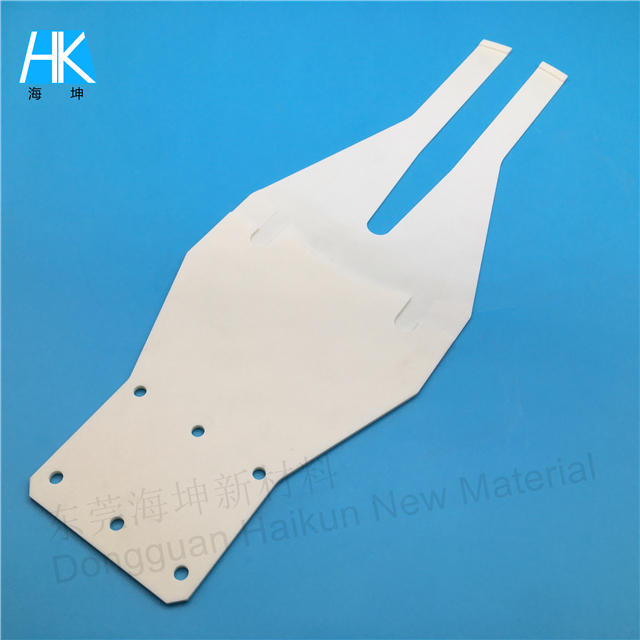
Ceramic limit fixtures can be precision-machined to meet specific structural and dimensional requirements, serving to provide precise positioning constraints and support.
2. Reducing the Risk of Contamination from Metallic Wear Particles
Semiconductor equipment requires a highly clean environment. During prolonged periods of friction, contact, and motion, metallic components can generate wear particles.
Ceramic materials, characterized by high hardness and excellent wear resistance, can help mitigate the risk of generating such metallic wear particles—provided that appropriate friction pairings and operating conditions are maintained.
However, the use of ceramics does not guarantee a complete absence of particulate contamination. Factors such as processing residues, surface chipping, particle shedding, and cleaning processes must also be carefully controlled.
3. Meeting Requirements for Electrical Insulation and Specific Thermal Environments
Certain semiconductor equipment components require electrical isolation, insulating support, or the ability to withstand temperature fluctuations.
Ceramic materials such as aluminum oxide (alumina) and zirconium oxide (zirconia) offer excellent electrical insulation properties, while silicon nitride provides a unique combination of mechanical strength, thermal performance, and wear resistance.
Selecting the appropriate material based on the specific equipment design can facilitate various functions, including positioning, structural support, electrical insulation, and wear resistance.
4. Adapting to the Complex Operating Environment Within Equipment
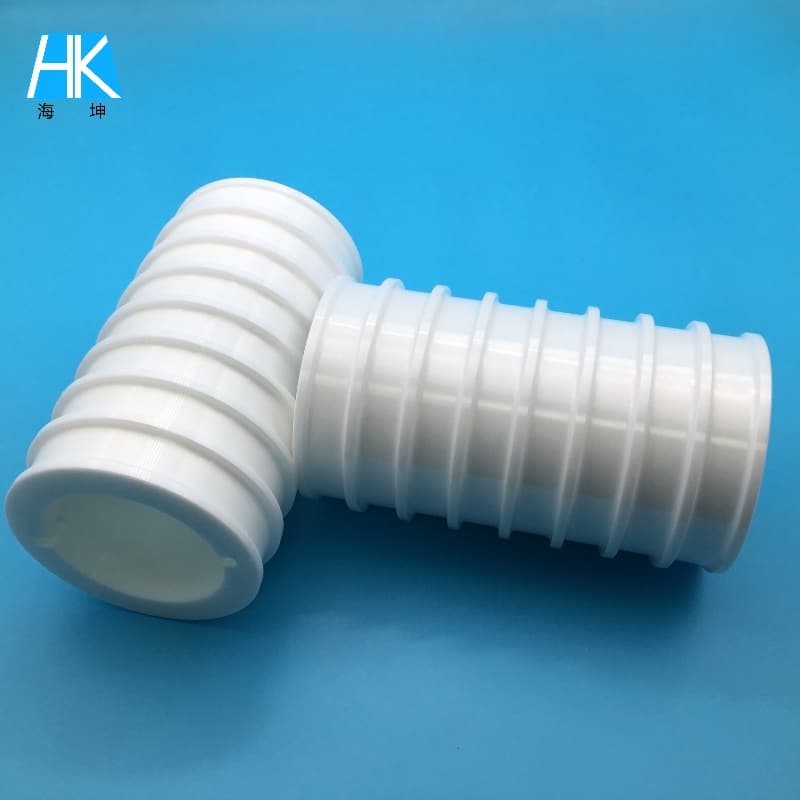
Semiconductor equipment often involves diverse environments, including vacuums, specific gases, chemical media, temperature fluctuations, and high-frequency motion.
Beyond meeting basic dimensional requirements, positioning fixtures must also account for factors such as material chemical stability, outgassing and contamination control, thermal expansion, surface quality, and mounting methods.
Consequently, the selection of ceramic fixtures for semiconductor equipment cannot be based solely on material hardness; rather, it requires a comprehensive evaluation tailored to the specific operating conditions of the equipment.
2. Which ceramic materials are commonly used for semiconductor positioning fixtures?
Different ceramic materials possess distinct performance characteristics; the selection process should take into account the primary function of the positioning/limiting component, its operating environment, and the mechanical loads it will encounter.
1. Alumina Ceramics (Al₂O₃): A Fundamental Choice with an Excellent Balance of Performance and Cost
Alumina ceramics are characterized by high hardness, superior electrical insulation, excellent wear resistance, and chemical stability, making them one of the most widely used materials in industrial precision ceramics.
Common grades of alumina include 95%, 96%, 99%, and higher purity levels.
Typical Applications:
Insulating positioning blocks for semiconductor equipment;
Ceramic limiting blocks and support blocks;
Precision ceramic shims and spacers;
Wear-resistant positioning components for internal equipment use;
Fixtures requiring high dimensional stability and electrical insulation.
Selection Guidance: For general insulation, support, and positioning requirements, 96% or 99% alumina are the primary options to consider. In cases involving high-cleanliness environments, corrosive media, or specific electrical performance requirements, it is necessary to further verify the material purity, impurity content, and surface treatment specifications.
2. Zirconia (ZrO₂): Suitable for precision limiting structures requiring toughness and wear resistance
Zirconia ceramics offer excellent fracture toughness, high hardness, and strong potential for wear-resistant applications. Specifically, partially stabilized zirconia can utilize a phase-transformation toughening mechanism to enhance its resistance to crack propagation.
For equipment components subject to repeated contact, positioning, and friction, zirconia is a material option worth considering.
Typical applications:
Precision limiting pins and positioning pins;
Wear-resistant contact blocks;
Precision positioning sleeves and guiding components;
Ceramic structural parts requiring a degree of impact resistance;
Precision moving parts with specific requirements for dimensions and surface condition.
Selection advice: Zirconia is not necessarily harder than alumina; its primary advantage lies in its superior fracture toughness. For limiting structures subject to impact, lateral forces, or repeated contact, careful evaluation of the specific material grade, cross-sectional dimensions, and mounting method is essential.
3. Silicon Nitride (Si₃N₄) Ceramics: Suitable for components requiring high strength and resistance to thermal cycling
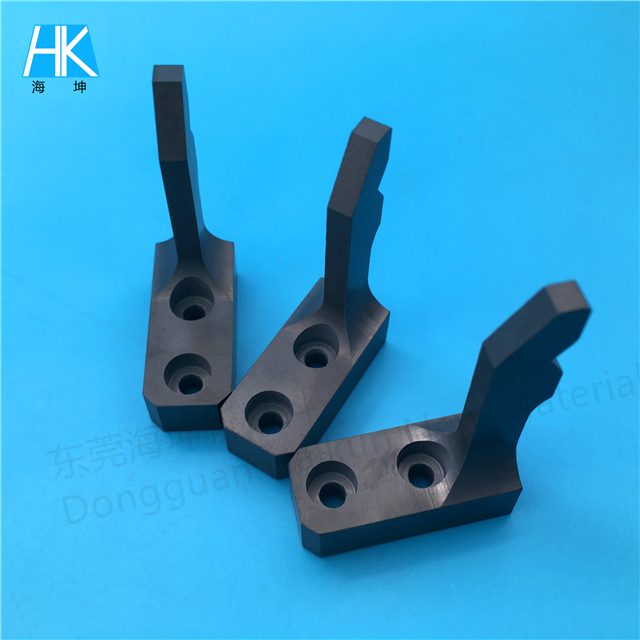
Silicon nitride ceramics offer high mechanical strength, good fracture toughness, wear resistance, and excellent thermal shock resistance.
For equipment components subject to temperature fluctuations, mechanical loads, or high-frequency motion, silicon nitride provides a superior balance of properties.
Typical Applications:
High-strength ceramic support components;
Precision, wear-resistant positioning parts;
Structural components for environments involving thermal cycling;
Ceramic parts with stringent requirements for mechanical strength and crack resistance.
Selection Advice: Silicon nitride is not necessarily the primary choice for all semiconductor positioning jigs. For general room-temperature positioning or insulating support applications, aluminum oxide (alumina) may be a more cost-effective solution. The decision to use silicon nitride should be based on a comprehensive assessment of load, temperature, operating environment, and cost.
4. Aluminum Nitride (AlN) Ceramics: Suitable for structures requiring both thermal conductivity and electrical insulation
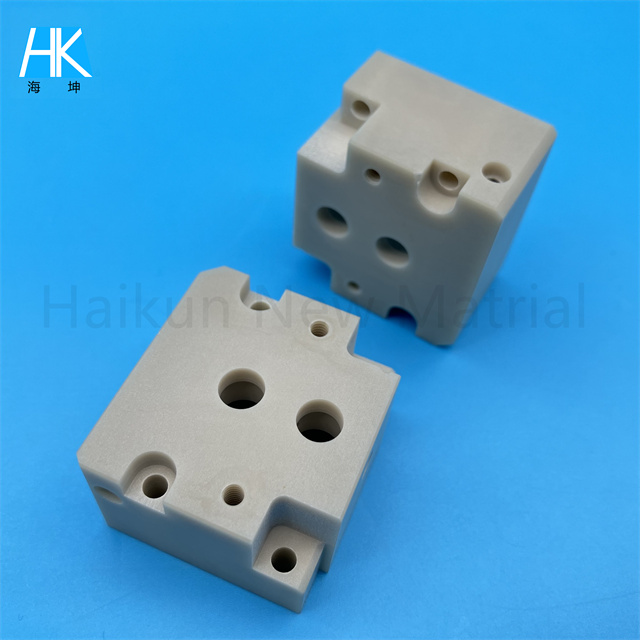
Aluminum nitride (AlN) ceramics offer high thermal conductivity combined with excellent electrical insulation, making them well-suited for applications with specific requirements for heat transfer and electrical isolation.
Typical Applications:
Insulating and thermally conductive structures for semiconductor equipment;
Ceramic support components for temperature-controlled systems;
Structural parts that must provide both thermal conductivity and electrical insulation;
Specific thermal management components in precision equipment.
Selection Advice: If the primary function of a positioning fixture is standard mechanical alignment, there is generally no need to select aluminum nitride solely for its thermal conductivity. First, verify whether the equipment has an actual requirement for thermal management.
3. Common Ceramic Positioning Fixtures in Semiconductor Equipment and Their Structural Applications
The structural design of ceramic fixtures directly influences positioning accuracy, mounting reliability, and overall performance in practical application.
The following are common ceramic limiting and positioning structures used in semiconductor equipment:
1. Ceramic Limit Blocks
Primarily used within equipment for travel limitation, positional constraint, and contact protection.
Key design considerations:
Dimensions and flatness of the limiting surfaces;
Tolerances for mounting holes and hole spacing;
Chamfering of contact edges;
Load-bearing surface area and structural strength;
Fit clearance between the ceramic component and its metal mounting base.
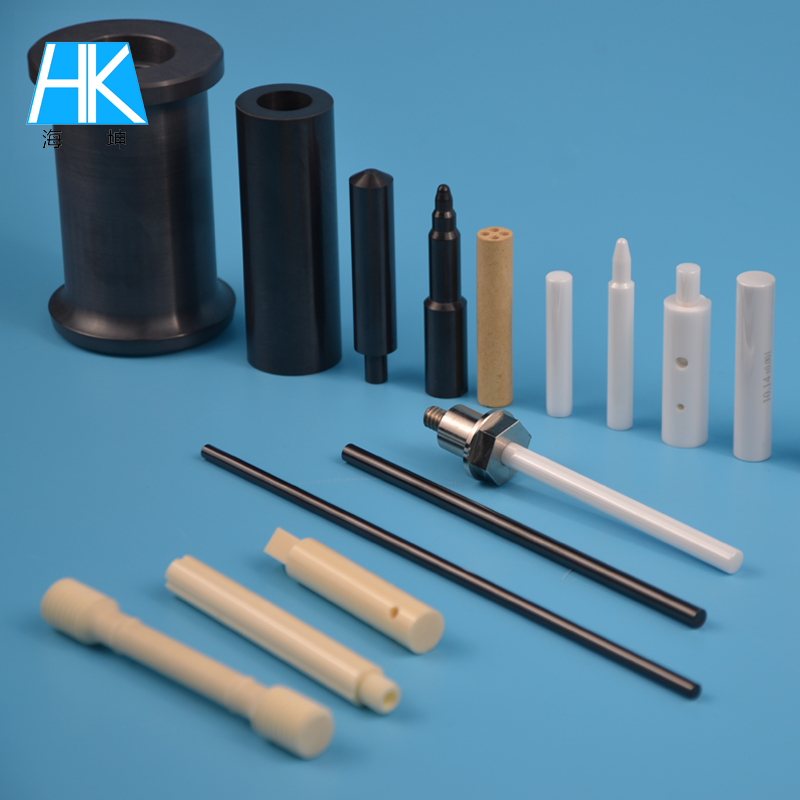
2. Ceramic Locating Pins and Positioning Posts
Primarily used for workpiece positioning, assembly guidance, and repeatable positioning.
Design considerations:
Tolerances for outer diameter and length;
Roundness, cylindricity, and coaxiality;
End chamfers and lead-in features;
Surface roughness;
Mounting method and lateral loading.
3. Ceramic Support Blocks and Fixtures
Used to hold equipment components or workpieces, providing support, isolation, and precise vertical positioning.
Key Design Considerations:
Flatness and parallelism;
Load-bearing surface area;
Localized contact pressure;
Surface quality of the support interface;
Thermal expansion and mounting constraints.
4. Ceramic Shims and Spacers
Primarily used for height adjustment, electrical insulation, and gap control within equipment.
Key Design Considerations:
Thickness tolerance;
Flatness;
Hole diameter and outer diameter;
Control of edge chipping;
Cleanliness and packaging requirements.
4. What precision and quality requirements should be considered when processing semiconductor ceramic fixtures?
For semiconductor equipment, the requirements for components typically extend beyond mere dimensional compliance to include surface quality, cleanliness, material consistency, and long-term operational stability.
1. Dimensional Accuracy and Geometric Tolerances
Based on the assembly and positioning requirements of the component, specify parameters such as outer diameter, inner diameter, thickness, hole spacing, flatness, parallelism, and coaxiality.
For critical positioning features, the technical drawings must clearly define datums, fit specifications, and inspection methods, rather than merely stating a generic machining precision.
2. Surface Roughness and Contact Quality
Ceramic limiting and positioning surfaces may come into direct contact with other components; surface roughness directly influences contact conditions, friction, and wear.
For areas requiring high-precision positioning or specific contact characteristics, processes such as lapping or polishing should be selected based on functional requirements, with explicit $R_a$ (arithmetic mean roughness) values specified.
3. Edge Chamfering and Control of Micro-defects
Due to the inherent brittleness of ceramic materials, hole edges, sharp corners, and thin-walled sections are prone to chipping or cracking.
Consequently, for precision ceramic fixtures, particular attention must be paid to edge chamfering, the quality of hole edges, the prevention of machining-induced micro-cracks, and thorough visual inspection.
4. Cleanliness and Contamination Control
Semiconductor equipment often imposes stringent requirements regarding particles, metallic impurities, and organic contaminants.
If the product is intended for use in a vacuum chamber or in areas that come into contact with wafers, the following requirements must be further specified:
Controls for material impurities and metallic elements;
Cleaning processes and the management of cleaning residues;
Requirements for surface particles and packaging;
Outgassing specifications for vacuum environments;
Any specific cleanliness class requirements or the need for inspection/test reports.
It should be noted that standard precision ceramic machining is not automatically equivalent to semiconductor-grade cleanroom processing; actual cleanliness capabilities must be determined based on the specific production environment and verified through inspection or test results.
5. Haikun Precision Ceramics: Custom processing of non-standard ceramic fixtures for semiconductor equipment
Ceramic positioning fixtures used in semiconductor equipment are often characterized by diverse structural designs, stringent dimensional requirements, limited installation space, and specific material performance needs.
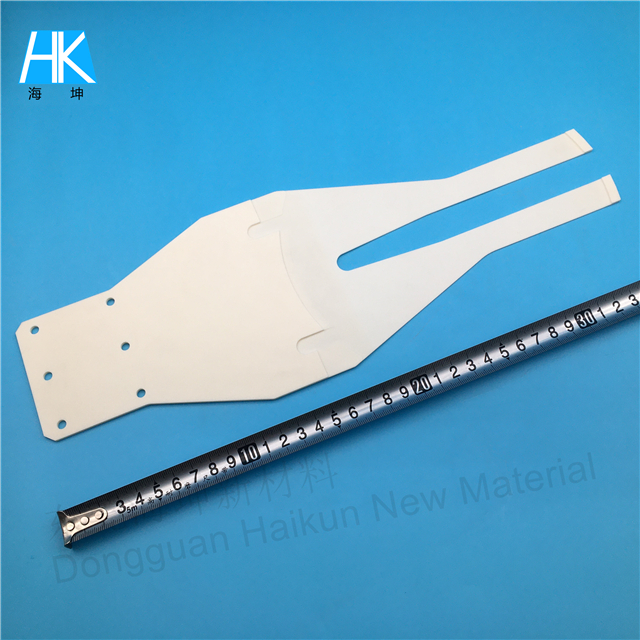
Dongguan Haikun New Materials Co., Ltd. specializes in the custom processing of precision industrial ceramic components. Based on client drawings, samples, and specific operational conditions, the company provides professional assessments for the fabrication of components using ceramic materials such as alumina, zirconia, silicon nitride, and aluminum nitride.
Our customization services include:
1. Diverse Ceramic Material Options
We evaluate and recommend suitable materials based on your specific requirements for insulation, wear resistance, mechanical strength, thermal conductivity, corrosion resistance, and cost.
2. Custom Non-Standard Structural Components
We offer custom fabrication—based on your provided drawings—of components such as ceramic limit blocks, positioning pins, support blocks, spacers, locating sleeves, and other complex, non-standard structural parts.
3. Precision Machining and Dimensional Control
We develop tailored processes for forming, sintering, grinding, polishing, and precision CNC machining, based on the specific structure of the part and your technical drawings.
4. Critical Dimension and Surface Quality Control
We establish precise machining and inspection standards for mating surfaces, positioning surfaces, mounting holes, and other critical dimensions.
5. Evaluation Based on Drawings or Samples
You may provide 2D drawings, 3D models, or physical samples; we will assess the feasibility of manufacturing and provide a formal quotation based on your specific requirements.
6. How do you choose the right semiconductor ceramic fixture for your needs?
When selecting ceramic fixtures for semiconductor equipment, no single material is suitable for all operating conditions.
If your primary requirements are electrical insulation, wear resistance, and cost control, alumina is a good starting point. If you need superior fracture toughness and wear resistance, consider zirconia. For applications demanding high mechanical strength, resistance to thermal cycling, and thermal shock resistance, silicon nitride is an appropriate choice. If you require a combination of high thermal conductivity and electrical insulation, aluminum nitride should be considered.
To streamline the customization process, please provide the following information when making an inquiry:
2D drawings or 3D models of the ceramic fixture;
Product material and dimensional requirements;
Installation location and structure within the equipment;
Operating temperature, medium, and usage environment;
Critical tolerances, surface roughness, and cleanliness requirements;
Existing issues with the current part and desired performance improvements
Relevant information