
information centre / Industry Information / Silicon nitride ceramic nozzles: High thermal shock resistance; stable and crack-free under high-temperature erosion conditions.
Silicon nitride ceramic nozzles: High thermal shock resistance; stable and crack-free under high-temperature erosion conditions.
Introduction
In applications such as high-temperature jetting, heat treatment equipment, industrial combustion systems, and the transport of high-temperature gases, nozzles must endure not only the erosive action of the medium but also a range of demanding conditions—including rapid temperature fluctuations, concentrated thermal stress, particulate abrasion, and the rigors of long-term, high-temperature operation. Traditional metal nozzles can suffer from issues like high-temperature oxidation, corrosion, wear, or dimensional instability under certain operating conditions. While conventional ceramic nozzles offer superior heat and corrosion resistance, they remain susceptible to thermal shock cracking—particularly in environments characterized by rapid heating and cooling, significant temperature gradients, or mechanical impact. Silicon nitride ceramic nozzles, with their high strength, good fracture toughness, exceptional thermal shock resistance, and excellent wear resistance, represent a compelling material choice for demanding environments involving high temperatures, high-velocity erosion, and complex thermal cycling. So, what makes silicon nitride ceramic nozzles particularly well-suited for such applications? And which technical parameters should be prioritized during material selection and structural design?
Quick Links
Contact Us
Live
E-mail:sales01@hkceramic.com
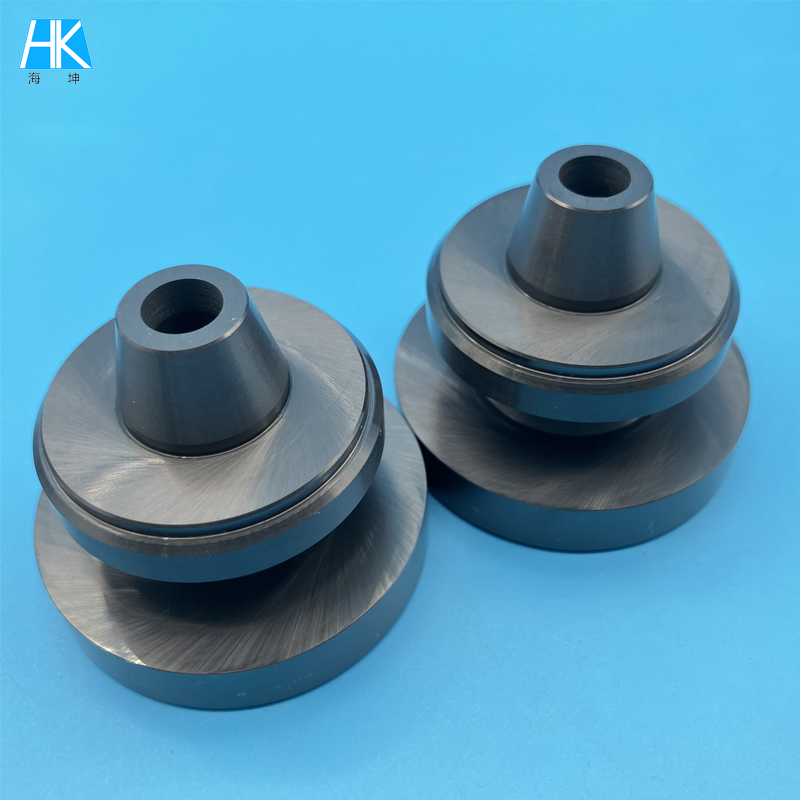
What are silicon nitride ceramic nozzles, and why are they suitable for demanding operating conditions?
Silicon nitride (Si₃N₄) is a high-performance engineering ceramic material characterized by high mechanical strength (flexural strength ≥600 MPa, compressive strength ≥2000 MPa), good fracture toughness (≥6 MPa·m½), excellent wear resistance, and outstanding thermal shock resistance (≥500 ΔT °C).
Compared to many traditional ceramic materials, silicon nitride offers a superior balance of strength, toughness, and thermal properties, making it well-suited for industrial components that demand high reliability.
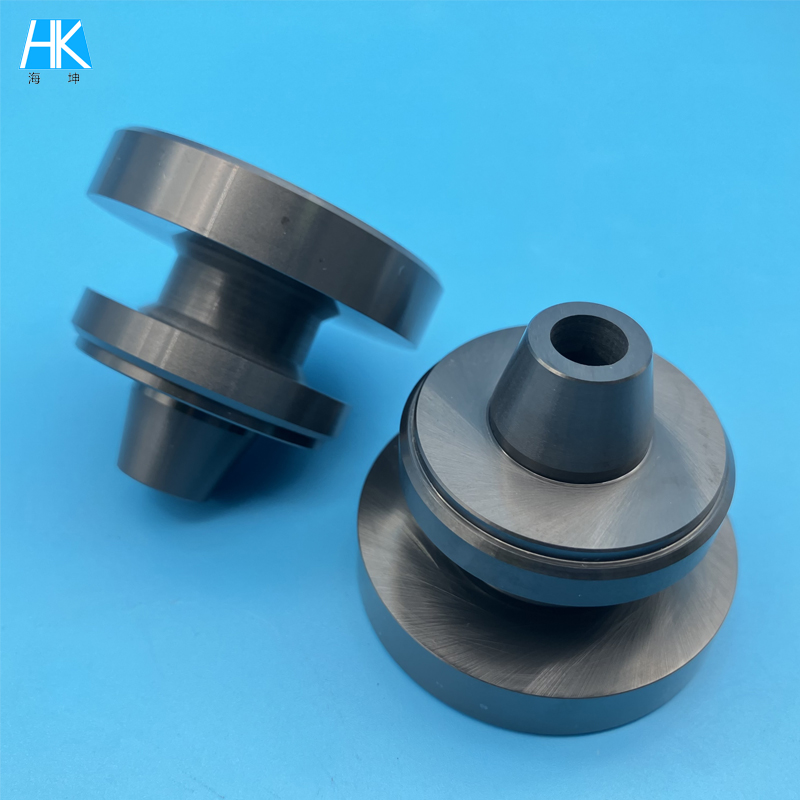
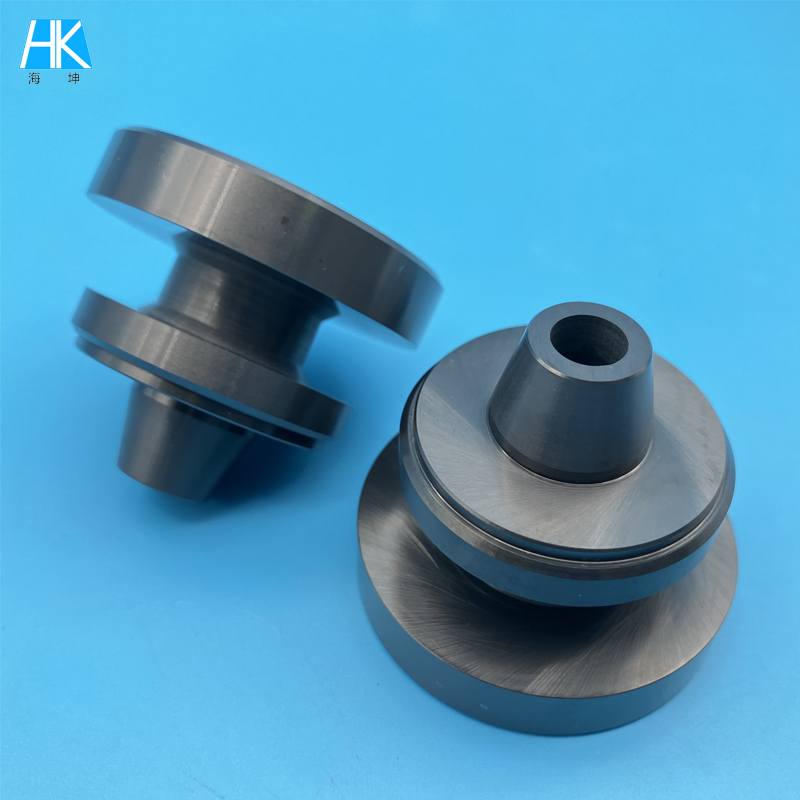
Silicon nitride ceramic nozzles are primarily designed to direct, distribute, or transport gases, liquids, or particle-laden media through precisely engineered orifices, flow channels, and exit geometries. Depending on specific application requirements, they can be configured as straight-bore, conical, or custom-shaped nozzles, including non-standard designs with specialized mounting features.
In environments characterized by high temperatures and thermal cycling, nozzle materials must not only withstand the operating temperature but also resist the thermal stresses induced by temperature fluctuations. The superior thermal shock resistance of silicon nitride ceramics makes them a prime candidate for such applications.
Five Key Advantages of Silicon Nitride Ceramic Nozzles
1. Excellent thermal shock resistance, suitable for rapid heating and cooling conditions
During the operation of high-temperature equipment, nozzles may be subjected to heating during startup, cooling during shutdown, intermittent spraying, and exposure to alternating hot and cold media.
Rapid temperature changes create temperature gradients within a nozzle, which in turn generate thermal stress. If this stress exceeds the material’s tolerance, it can lead to cracking, edge chipping, or even complete structural failure.
Silicon nitride ceramics possess high strength, good fracture toughness, and a combination of thermal properties that favor thermal shock resistance. With appropriate material selection and structural design, they can perform well in applications involving frequent thermal cycling.
Compared to certain other ceramic materials with poorer thermal shock resistance, silicon nitride offers significant potential for use in environments characterized by rapid temperature fluctuations.
It should be noted, however, that thermal shock resistance is not determined solely by the material type. Actual performance is influenced by a variety of factors, including the specific material grade, thermal conductivity, coefficient of thermal expansion, component thickness, rates of heating and cooling, the temperature of the media, and constraints imposed by the mounting/installation.
Application value: Suitable for high-temperature spraying equipment that requires frequent start-ups, intermittent operation, or exposure to significant temperature fluctuations; helps reduce the risk of cracking caused by thermal stress.
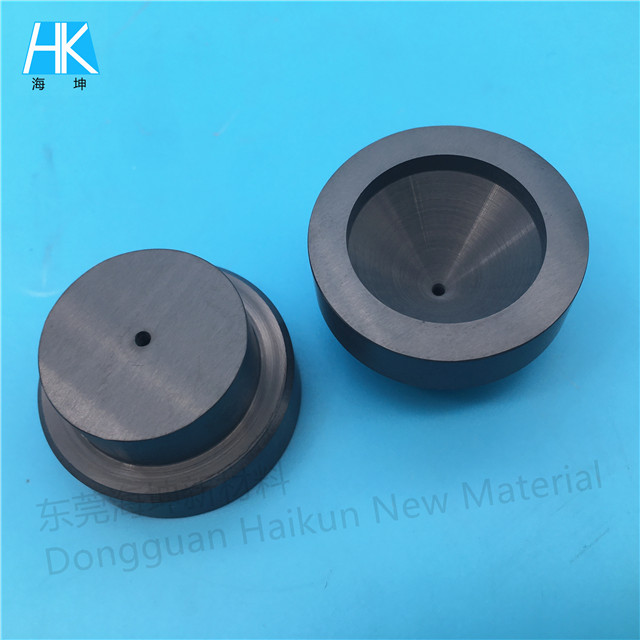
2. High mechanical strength and fracture toughness, reducing the risk of brittle failure
The failure of ceramic nozzles is not necessarily caused by high temperatures; it can also result from mechanical stress during installation, particle impact, pipeline vibration, or uneven loading.
A key characteristic of silicon nitride ceramics—beyond their high hardness—is their relatively superior fracture toughness and mechanical strength. Compared to many conventional, brittle ceramics, silicon nitride can better withstand a certain degree of mechanical stress, provided the component is designed appropriately.
For nozzle products, this means that when designing spray orifices, thin-walled exit sections, or mounting/connection structures, silicon nitride offers an excellent material foundation for balancing structural strength with operational reliability.
Nevertheless, as a ceramic material, silicon nitride cannot dissipate stress through significant plastic deformation, as metals do. Sharp corners, thin-walled sections, micro-cracks, or excessive tightening can still lead to failure.
Application Value: Suitable for industrial equipment that demands high nozzle strength, structural integrity, and long-term operational reliability.
3. Excellent wear resistance, suitable for high-velocity media and particle erosion
When a nozzle is used to transport high-velocity gas streams, media containing particles, or abrasive fluids over an extended period, the inner walls of the orifice and the edges of the outlet are subject to continuous erosion.
As the material gradually wears away, the orifice diameter, the shape of the outlet, and the surface condition of the flow channel may change—factors that can, in turn, affect flow rate, spray angle, and spray stability.
Silicon nitride ceramics, characterized by high hardness and superior wear resistance, can be utilized to enhance the wear performance of nozzles under appropriate operating conditions (i.e., specific media and load parameters).
The actual service life—in terms of wear resistance—depends on several factors: particle hardness, particle size, concentration, erosion velocity, impact angle, medium temperature, and the surface quality of the nozzle. For applications involving high-temperature, particle-laden gas streams or highly abrasive slurries, performance should be verified through testing under specific operating conditions.
Application Value: Ideal for spray components that require precise orifice dimensions, consistent flow rates, and a long service life.
4. Excellent High-Temperature Performance, Suitable for Various Thermal Processing Equipment
Some nozzles are frequently exposed to high-temperature gas flows, heat-treatment environments, or industrial combustion equipment. In such settings, the material must not only withstand temperature fluctuations but also maintain essential mechanical properties and structural stability.
Silicon nitride ceramics offer excellent high-temperature performance. Depending on the specific material grade, operating atmosphere, and load conditions, they can be utilized for industrial nozzles across a defined temperature range.
It should be noted that when evaluating materials for high-temperature applications, one cannot rely solely on the maximum temperature rating. Factors such as the oxidizing atmosphere, the presence of corrosive media, the duration of exposure to high temperatures, mechanical loading, and the specific material grade all influence the long-term performance of a nozzle.
Application Value: Suitable for industrial spraying systems that require a balance of high-temperature strength, resistance to thermal cycling, wear resistance, and dimensional stability.
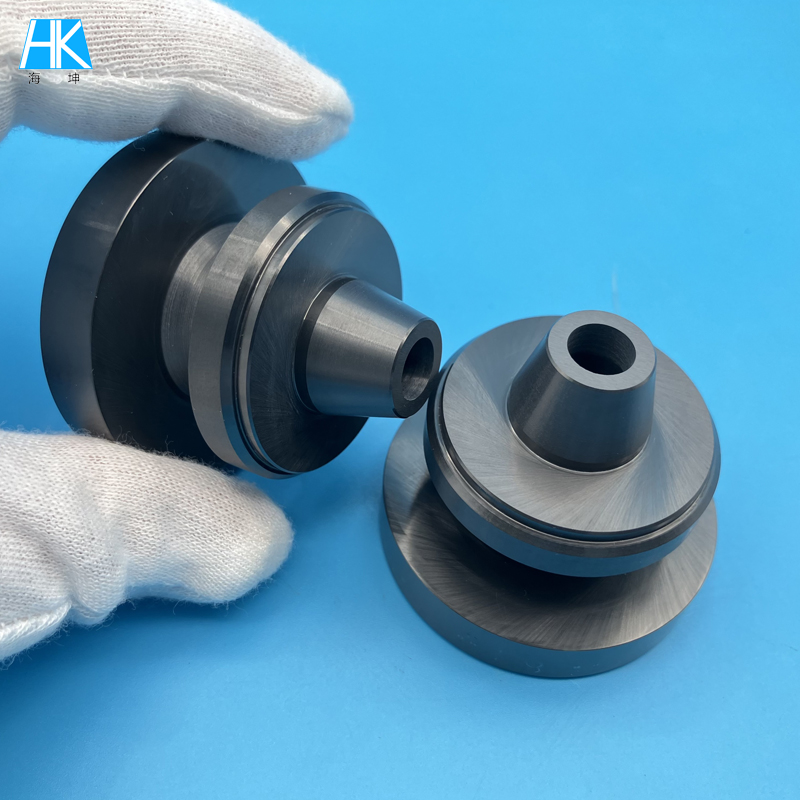
5. Precision Machining and Structural Customization to Meet Diverse Spraying Requirements
The performance of a nozzle depends not only on its material but also, crucially, on factors such as orifice size, flow channel geometry, exit configuration, surface quality, and installation precision.
Silicon nitride ceramics can be fabricated into various nozzle shapes through tailored forming, sintering, and subsequent precision machining processes, in accordance with specific structural and accuracy requirements.
Common customization parameters include:
Orifice diameter and channel length;
Straight, tapered, or specially shaped orifice geometries;
Outer diameter, total length, and mounting shoulder dimensions;
Spray-end face specifications and critical mating dimensions;
Surface quality, dimensional tolerances, and structural strength requirements.
For designs involving long, narrow orifices, thin-walled exits, or complex flow channels, factors such as manufacturability, potential deformation during sintering, and subsequent inspection methods must be carefully considered during the design phase.
Application Value: Ideal for non-standard equipment, specialized spraying systems, and industrial ceramic nozzles that require structural optimization based on specific operating conditions.
For what types of high-temperature erosion scenarios are silicon nitride ceramic nozzles suitable?
1. High-Temperature Gas Injection Systems
In thermal processing equipment and industrial gas transport systems, nozzles may be subjected to prolonged exposure to high-temperature gas flows, as well as the effects of start-up/shut-down cycles and process fluctuations.
Silicon nitride ceramics serve as a potential material for such nozzles, offering a combination of thermal cycling resistance, mechanical strength, and wear resistance.
2. Industrial Combustion and Heat Treatment Equipment
Certain combustion systems and heat treatment equipment require the use of nozzles to control the direction of gas flow, the point of injection, or the distribution of flow rates.
In such applications, the suitability of silicon nitride nozzles should be evaluated by taking into account the operating atmosphere, actual temperature, flow rate, pressure, and thermal cycling conditions.
3. High-Velocity Particle Erosion and Powder Conveying Equipment
When the medium contains hard particles, abrasive wear may occur on the inner walls and at the exit area of a nozzle.
Silicon nitride ceramics can be considered for such erosive environments; however, in cases involving high-intensity particle impact, elevated temperatures, or complex corrosive media, the suitability of the material must be determined by evaluating particle characteristics and conducting actual wear tests.
4. Industrial Equipment Subjected to Repeated Thermal Cycling
For equipment involving intermittent spraying, periodic heating and cooling cycles, or frequent start-stop operations, nozzles may be subjected to repeated thermal stress.
The superior thermal shock resistance of silicon nitride ceramics makes them a suitable material choice for such operating conditions. In practical applications, however, it is necessary to verify factors including the nozzle’s heating/cooling rate, temperature differential, wall thickness, and mounting constraints.
How to select a suitable silicon nitride ceramic nozzle?
To ensure stable nozzle operation in high-temperature, erosive environments, consider the following aspects when selecting a nozzle:
1. Define Operating Temperatures and Temperature Fluctuations
In addition to the maximum operating temperature, specify the normal operating temperature, start-up temperature, cooling method during shutdown, heating/cooling rates, and the frequency of thermal cycling. For nozzles in direct contact with a cooling medium, pay particular attention to localized temperature gradients.
2. Identify Medium Composition and Erosion Conditions
Determine whether the medium is a gas, a liquid, or a mixture containing solid particles. Provide details such as pressure, flow velocity, particle size, hardness, and concentration. Different media can have vastly different effects on material wear and corrosion.
3. Determine Orifice Dimensions and Flow Requirements
The orifice diameter, channel length, taper, exit geometry, and surface quality all influence flow rate and spray characteristics. Critical dimensions should be determined based on actual flow, pressure, and spray requirements; avoid the tendency to pursue smaller orifice diameters or higher machining precision than is strictly necessary.
4. Consider Wall Thickness and Mounting Structure
Thin-walled sections, orifice openings, and transitions (such as shoulders or steps) can become sites for stress concentration. During installation, avoid excessive tightening, localized compression, or uneven support. Also, account for differences in thermal expansion between ceramic components and metal mounting hardware.
5. Specify Material Grade and Performance Requirements
Silicon nitride materials vary in terms of sintering processes, microstructures, and performance characteristics. When procuring, clearly define the material grade, key performance indicators, dimensional tolerances, and inspection requirements. If necessary, verify suitability through sample testing.
Haikun Precision Ceramics: Custom Processing of Silicon Nitride Ceramic Nozzles
In demanding operating environments—characterized by high temperatures, thermal shock, and high-velocity erosion—simply swapping materials may not be enough to resolve issues like nozzle cracking or wear. A comprehensive approach, integrating appropriate material selection, structural design, and rigorous quality control during manufacturing, is essential.
Dongguan Haikun New Materials Co., Ltd. specializes in the custom fabrication of precision industrial ceramic components. We evaluate the material selection, structural design, and manufacturing feasibility for silicon nitride ceramic nozzles based on client-provided drawings, samples, and specific operational requirements.
Our customization services include:
Custom Fabrication: Developing manufacturing strategies based on orifice specifications, external dimensions, mounting configurations, and tolerance requirements.
Material Optimization: Selecting materials by analyzing operating temperatures, the composition of the medium, wear mechanisms, and thermal cycling conditions.
Precision Processing: Formulating plans for forming, sintering, and post-processing tailored to the product’s structure and precision requirements.
Structural Assessment: Focusing on potential stress concentration points, such as orifices, thin-walled sections, stepped features, and mounting interfaces.
Application Consultation: Assisting in defining material selection and validation approaches to address specific challenges like cracking, wear, or fluctuations in flow rate.
If you are experiencing issues with existing nozzles—such as thermal shock cracking, outlet wear, or insufficient service life—we recommend providing the original product drawings, photographs of the failed components, and details regarding the operating conditions. This will enable a more accurate diagnosis of the root cause.
Get a customized solution for silicon nitride ceramic nozzles
Selecting a nozzle for high-temperature, high-velocity flow conditions requires more than just heat resistance; it necessitates a comprehensive evaluation of thermal shock resistance, mechanical strength, fracture toughness, wear resistance, compatibility with the process medium, and installation configuration.
With its superior overall performance, silicon nitride ceramic offers a new option for nozzle design in demanding industrial environments. However, whether it can truly deliver more stable operation and a longer service life depends on the specific operating conditions and empirical test results.
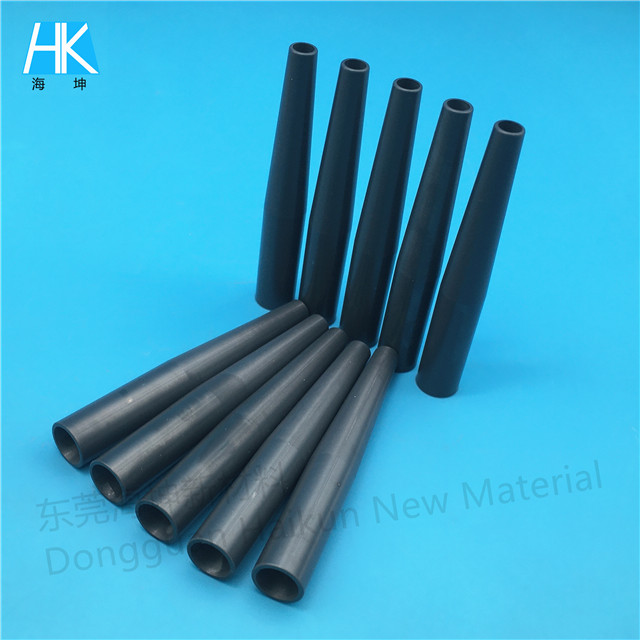
Haikun Precision Ceramics offers custom processing and evaluation for non-standard silicon nitride ceramic nozzles, tailored to your specific drawings, samples, and operational requirements.
When inquiring, please provide the following information:
Nozzle drawings or photographs of the actual components;
Operating temperatures, including heating and cooling cycles;
Type of medium, pressure, and flow rate;
Presence of particulates and their abrasive characteristics;
Primary failure modes of the current components;
Orifice dimensions, critical tolerances, and performance expectations.
This information enables a precise assessment of material suitability, nozzle design, and manufacturing strategies.
Haikun Precision Ceramics specializes in the custom fabrication of precision industrial ceramic components, providing material and processing solutions for high-temperature spraying applications and demanding operational environments.
Relevant information