
information centre / Industry Information / Porous Ceramic Valve Bodies and Cores: The Application of Alumina Ceramics in Precision Fluid Flow Distribution
Porous Ceramic Valve Bodies and Cores: The Application of Alumina Ceramics in Precision Fluid Flow Distribution
Introduction
In industrial fluid control systems, valve bodies and valve cores not only serve to connect and regulate fluid pathways but also directly influence the uniformity of fluid distribution, the operational stability of the system, and the service life of the equipment. In certain precision fluid-handling applications, conventional single-channel structures often fail to meet specific requirements for flow equalization, splitting, or precise flow distribution. Porous ceramics—characterized by an interconnected pore network—offer a novel structural solution for the uniform distribution of gases or liquids by leveraging their distributed flow-channel architecture. Specifically, alumina-based porous ceramic valve bodies and cores—valued for their high hardness, electrical insulation, heat resistance, and chemical stability—are well-suited for industrial environments that demand precise fluid distribution, wear resistance, and material stability. How, then, do porous ceramic valve components achieve uniform fluid distribution? What are the advantages of alumina ceramics? And what key parameters should be considered during product design and selection?
Quick Links
Contact Us
Live
E-mail:sales01@hkceramic.com
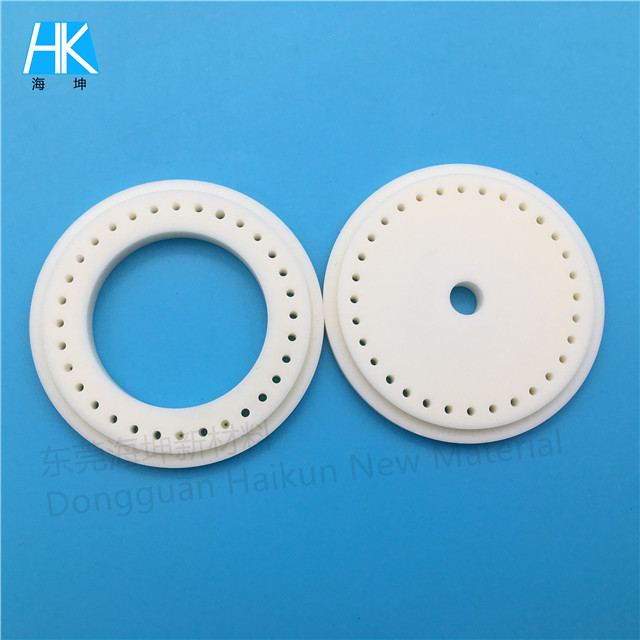
What are porous ceramic valve bodies and valve cores, and how do they enable uniform fluid distribution?
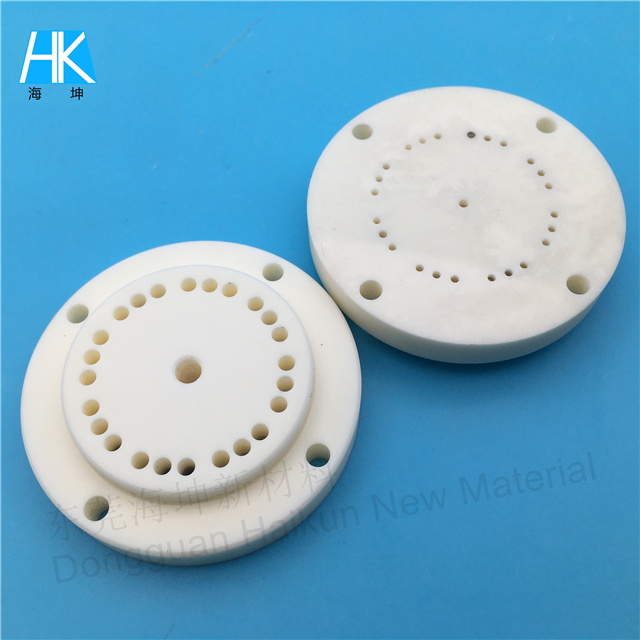
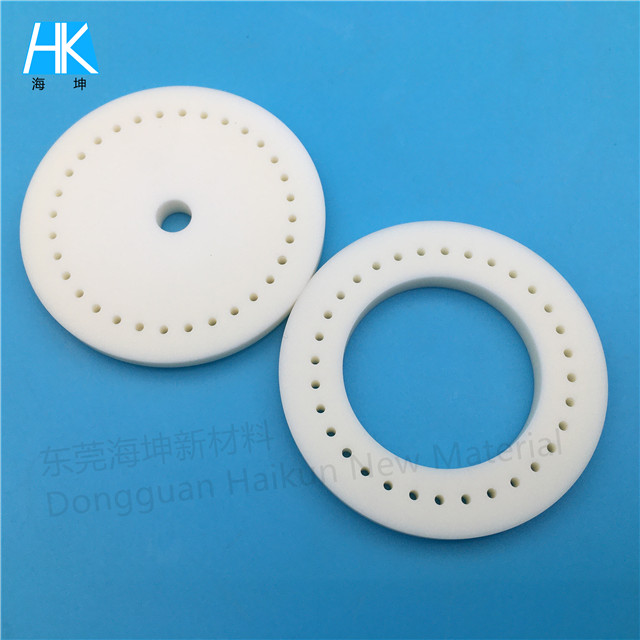
Porous ceramic valve bodies and valve cores are ceramic components that utilize the pore structure—either throughout the material or within specific regions—to facilitate the passage, distribution, or regulation of fluids.
Unlike traditional designs featuring a single flow channel, porous ceramics utilize pores distributed within the material to create multiple flow paths. As a gas or liquid enters the porous region, the fluid travels through these various channels before exiting via designated outlets or surfaces.
When designed appropriately, this distributed flow-path structure helps disperse the fluid, effectively mitigating issues related to localized, concentrated flow.
Primary Methods for Achieving Uniform Flow with Porous Ceramics
① Distributing Fluid Channels
Fluid travels through an interconnected pore network, dispersing from a single inlet into multiple regions—a configuration well-suited for designs requiring distributed outflow.
② Adjusting Flow Resistance
Fluid resistance is influenced by factors such as pore size, porosity, the tortuosity of the flow paths, and the thickness of the porous material. By tuning these parameters, one can engineer the flow distribution across different regions.
③ Improving Local Flow Distribution
In specific fluid systems, a well-designed porous structure helps mitigate local variations in flow velocity, preventing fluid from becoming concentrated within only a few channels.
It should be noted that a porous structure does not automatically guarantee uniform flow. The final level of uniformity also depends on factors such as the inlet pressure distribution, fluid viscosity, the consistency of the pore structure, installation methods, and outlet conditions; therefore, design and validation based on specific operating conditions are essential.
What are the material advantages of porous alumina ceramic valve bodies and valve cores?
Alumina (Al₂O₃) ceramics are widely used as engineering ceramic materials in industrial applications. When employed for porous valve bodies or valve cores, it is necessary to consider not only the pore structure but also the material’s inherent mechanical properties, chemical stability, and the specific operating environment.
1. High hardness and wear resistance potential
Alumina ceramics possess high hardness (HV 1600) and offer good potential for wear resistance under appropriate frictional conditions.
For components subject to fluid erosion, contact with particles, or localized mechanical friction, alumina ceramics serve as a viable candidate material.
However, actual wear performance depends on factors such as flow velocity, particle hardness and concentration, contact loads, and pore structure. Since the strength of porous ceramics is influenced by their porosity and pore morphology, the strength specifications for dense (non-porous) alumina ceramics cannot be applied directly.
2. Excellent electrical insulation properties
Alumina ceramics exhibit strong electrical insulation characteristics (with a dielectric strength of approximately 25 kV/mm), making them suitable for equipment components that require both fluid distribution and electrical isolation.
Actual insulation performance should be verified based on material purity, temperature, humidity, and specific electrical requirements.
3. Good heat resistance
Alumina ceramics are suitable for use in various high-temperature industrial environments (withstanding temperatures up to 1600°C). The specific operating temperature, however, must be determined by considering the material grade, pore structure, rate of temperature change, and the ambient atmosphere.
In scenarios involving frequent temperature fluctuations or thermal cycling, it is essential to specifically evaluate the risks of thermal shock and structural stress.
4. Possesses a Certain Degree of Chemical Stability
In applicable media environments, alumina ceramics generally exhibit good chemical stability, making them suitable for use in certain fluid systems that require corrosion resistance.
However, acids, bases, and other chemical media at varying concentrations may affect alumina differently; therefore, it is essential to evaluate media compatibility, especially when operating under high-temperature conditions.
When selecting porous alumina ceramics, one should not focus solely on material hardness; factors such as porosity, structural strength, flow rate requirements, and media compatibility must also be taken into account.
Primary Application Scenarios for Porous Ceramic Valve Bodies and Valve Cores
The application value of porous alumina ceramics stems primarily from the synergy between their porous structure and the inherent properties of the ceramic material. Regarding fluid flow distribution, the following use cases are particularly noteworthy:
① Industrial Gas Distribution and Flow Equalization
In certain gas distribution equipment, it is necessary to disperse incoming gas across multiple zones to mitigate the impact of localized, concentrated outflow.
Well-designed porous alumina ceramics can facilitate gas dispersion through a network of distributed channels; the specific level of uniformity should be verified via flow testing or flow field analysis.
② Fluid Distribution in Precision Equipment
In various automated systems, experimental apparatus, and precision fluid-handling setups, the stability of fluid distribution directly influences operational performance.
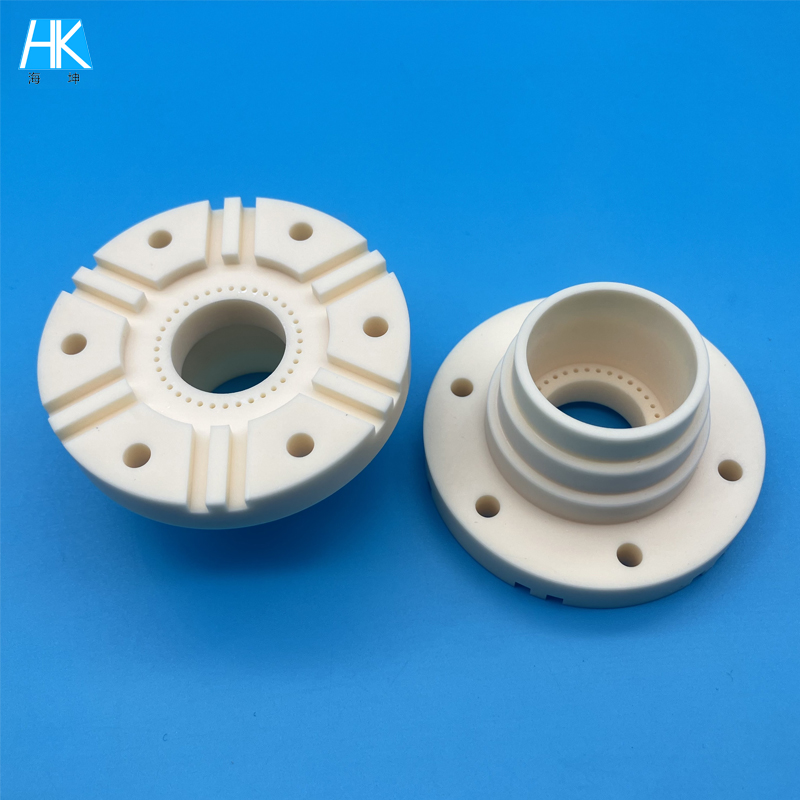
Porous ceramic components—such as valve cores—can be engineered into specific shapes tailored to the equipment’s architecture. By precisely controlling the positioning, thickness, and pore characteristics of the porous regions, these components can be customized to meet diverse distribution requirements.
③ Liquid Flow Diversion and Distribution
In applicable liquid-handling systems, porous ceramics can be used to disperse liquid flow and improve the uniformity of the outlet flow distribution.
However, factors such as liquid viscosity, particle content, operating pressure, and the risk of clogging can affect performance in practice. If the fluid contains solid particles, the compatibility between the pore size and the particle dimensions must also be evaluated.
④ High-Temperature or Electrically Insulating Fluid Equipment
For certain high-temperature fluid systems or equipment requiring electrical insulation, alumina ceramics may be considered as a structural material.
Determining suitability requires a comprehensive assessment of the operating temperature, the medium, pressure, thermal cycling, and mechanical loads.
It should be emphasized that the specific function of a porous ceramic valve body or valve core is determined by its actual structural design. Functions such as flow equalization, filtration, throttling, and sealing represent distinct design objectives; one cannot assume that a product possesses all these capabilities simply because it is made of “porous ceramic.”
How should one select a porous alumina ceramic valve core?
When designing porous ceramic valve bodies and valve cores, one must look beyond mere external dimensions. For flow-equalization applications, the alignment between the pore structure and fluid parameters is of critical importance.
1. Pore Size and Porosity
Pore size determines the conditions under which fluid passes through individual channels, while porosity defines the proportion of the material’s volume occupied by pores.
Collectively, pore size, porosity, and pore connectivity influence flow rate, pressure drop, and structural strength.
Increasing porosity does not necessarily improve flow equalization; a higher density of pores may also reduce the material’s load-bearing capacity.
2. Flow Rate and Operating Pressure
It is essential to define the inlet pressure, outlet pressure, target flow rate, and allowable pressure drop.
If the flow resistance of the equalization structure is too high, it may lead to excessive system pressure loss; conversely, if the resistance is insufficient or unevenly distributed, achieving the desired flow distribution may prove difficult.
3. Gas or Liquid
Gases and liquids exhibit different flow characteristics; factors such as the viscosity of a liquid or the compressibility of a gas significantly influence the design of porous structures.
Therefore, when selecting a component, it is essential to specify the type of medium, its viscosity (or other relevant physical properties), the operating temperature, and the flow regime.
4. Structural Dimensions and Installation Method
The outer diameter, inner bore, length, wall thickness, connection points, and sealing areas of the valve body and valve core all impact both assembly and operational performance.
For complex structures—such as those incorporating thin-walled sections, porous regions, and solid connecting zones—it is also necessary to evaluate the difficulty of the forming process, potential deformation during sintering, and the development of localized stress.
5. Strength and Risk of Clogging
The strength of porous ceramics depends on factors including porosity, pore size distribution, pore geometry, material composition, and the quality of the sintering process.
If the fluid contains particles, sediments, or components prone to crystallization, one must account for the risk of pore clogging, as well as determine appropriate cleaning methods and maintenance intervals.
Before product development, it is recommended to clarify at least the following information:
| Selection Parameters | Items requiring confirmation |
|---|---|
| Fluid Type | Gas or liquid; specify the name of the medium |
| Traffic Requirements | Target Flow and Uniformity Requirements |
| Work pressure | Inlet pressure, outlet pressure, allowable pressure drop |
| Pore parameters | Pore size range, porosity, connectivity |
| Work Environment | Temperature, corrosivity, particle content |
| Structural requirements | Overall dimensions, wall thickness, and installation and sealing methods |
| Service life | Continuous operating time, cleaning, and maintenance requirements |
The more clearly defined these parameters are, the more helpful they will be for developing appropriate structures and processing strategies for porous ceramics.
What are the challenges in machining porous alumina ceramic valve bodies and valve cores?
Porous ceramic components differ from dense ceramic parts. Beyond standard dimensional accuracy, one must also consider the stability and consistency of the pore structure.
① Pore Structure Control
Pore size distribution, porosity, and connectivity influence fluid resistance and flow uniformity. Since different forming methods and sintering processes can result in varying pore structures, the manufacturing route must be selected based on the intended functional requirements.
② Structural Strength and Dimensional Control
Porous regions and dense connecting sections may exhibit different mechanical properties. For products featuring threads, mounting holes, sealing surfaces, or thin-walled structures, careful structural design is essential, as is the mitigation of risks such as edge chipping or breakage during machining.
③ Sintering Quality
The forming and sintering processes affect material shrinkage, pore structure, and final dimensions. For products with specific flow requirements, it is also critical to ensure the consistency of pore parameters across different production batches.
④ Flow Testing and Performance Verification
For components designed for fluid flow distribution, visual and dimensional inspections are generally insufficient. Depending on the application, samples should undergo testing for flow rate, pressure drop, and outlet flow distribution to verify that the product meets its intended functional specifications.
A porous ceramic valve core truly suited for a specific operating environment requires an integrated approach that encompasses material selection, pore structure design, precision machining, and fluid performance verification.
Haikun Precision Ceramics: Custom Processing of Porous Alumina Ceramic Valve Bodies and Valve Cores
Porous ceramic valve bodies and valve cores are functional ceramic components. Their design typically requires a comprehensive evaluation of material properties, pore structure, fluid parameters, and equipment installation requirements.
Dongguan Haikun New Material Co., Ltd. specializes in the customization of industrial ceramic components. We assess structural designs and processing solutions—utilizing engineering ceramics such as alumina—based on client drawings, samples, and specific application requirements.
For porous alumina ceramic valve bodies and cores, key considerations include:
External dimensions and installation structure;
The positioning and structural requirements of the porous regions;
Target flow rate, operating pressure, and allowable pressure drop;
The operating medium, working temperature, and potential for corrosion;
Pore parameters, strength requirements, and testing standards.
For products featuring specialized pore structures or complex geometries, we evaluate the necessary forming, sintering, and precision machining processes. In projects involving flow distribution, we also conduct sample testing and parameter verification to ensure the desired performance.
If you are seeking a supplier for porous ceramic valve bodies or valve cores, please provide product drawings, sample photographs, details regarding the fluid medium, flow and pressure requirements, and the expected flow distribution outcomes.
Haikun Precision Ceramics assists in evaluating material and structural solutions tailored to your specific operating conditions, offering custom manufacturing services for industrial ceramic components based on your drawings or samples.
The core challenge in producing porous ceramic valve bodies and cores lies not merely in creating a porous structure, but in ensuring that the pore characteristics and fluid resistance are precisely matched to the equipment’s operating conditions.
Dongguan Haikun New Material Co., Ltd. | Specialized in the customization of precision industrial ceramic components.
Relevant information