
information centre / Industry Information / Zirconia ceramic temperature-sensing components; ceramic substrates are the preferred choice for temperature sensors.
Zirconia ceramic temperature-sensing components; ceramic substrates are the preferred choice for temperature sensors.
Introduction
Temperature sensors are critical components for temperature monitoring and process control in sectors such as industrial automation, heat treatment equipment, energy systems, and high-temperature testing. As equipment evolves toward higher operating temperatures, greater precision, and long-term continuous operation, the internal base materials, protective structures, and insulation components of these sensors face increasingly stringent requirements. In certain temperature-sensing applications, conventional metals or polymers may be limited by factors such as operating temperatures, corrosive media, electrical insulation needs, and long-term stability. Consequently, engineering ceramics—characterized by high-temperature resistance, electrical insulation, and chemical stability—are increasingly being used for sensor protective sheaths, insulating supports, and other precision structural components. Among these, zirconia ceramics have emerged as a noteworthy material for specialized temperature-sensing structures, thanks to their excellent high-temperature performance, chemical stability, and mechanical strength. What, then, are the characteristics of zirconia ceramic temperature-sensing components? For which applications are they suitable? And what factors require attention during material selection and processing?
Quick Links
Contact Us
Live
E-mail:sales01@hkceramic.com
Why do temperature sensors require ceramic substrates?
The temperature measurement accuracy of a temperature sensor depends not only on the sensing element itself but is also closely linked to its protective structure, insulation materials, installation method, and actual operating environment.
In industrial settings, sensors may be exposed to high temperatures, thermal cycling, corrosive atmospheres, or electrical interference for extended periods. If the base materials are unsuited to these operating conditions, issues such as aging, corrosion, degraded insulation performance, or structural damage may arise.
Engineering ceramics play a vital role in certain specialized environments, primarily in the following respects.
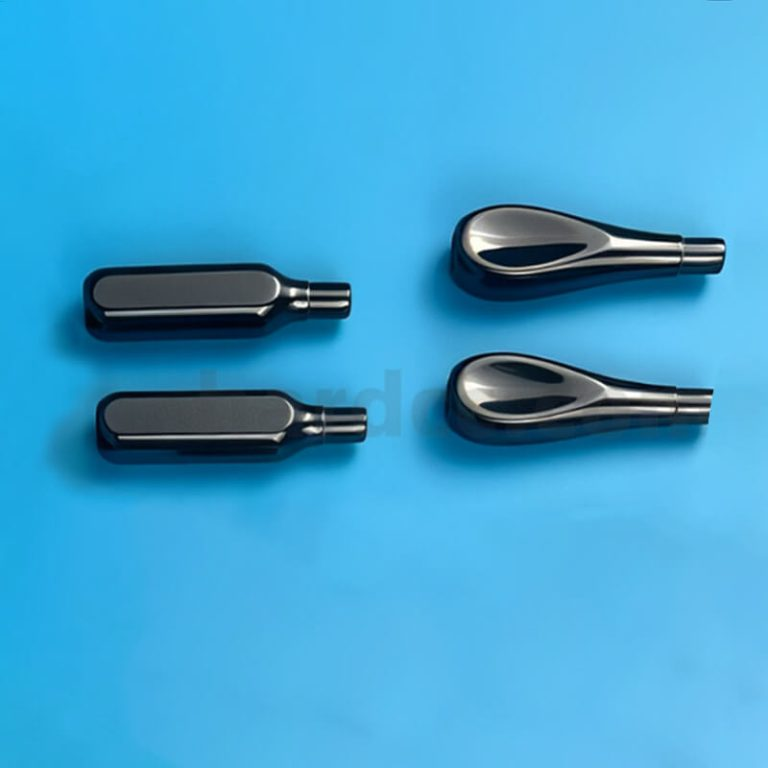
① High-Temperature Resistance
Certain ceramic materials maintain structural stability at elevated temperatures, making them suitable for protective and supporting structures in high-temperature sensors. Specific temperature limits depend on the material grade, atmosphere, thermal cycling conditions, and component design.
② Electrical Insulation
In temperature-sensing assemblies such as thermocouples, ceramic components serve to isolate conductors and minimize the risk of unwanted electrical contact. Insulation performance must be verified against specific temperature, dimensional, and voltage requirements.
③ Chemical Stability
In corrosive atmospheres or specialized media, appropriate ceramic materials often offer a superior solution compared to conventional metals. However, as ceramics are not completely inert to all chemical media, an assessment of media compatibility is essential for practical applications.
④ Dimensional and Structural Stability
Through careful material selection, forming, sintering, and precision machining, ceramics can be fabricated into sleeves, supports, insulating tubes, rings, and complex structural components to meet sensor assembly requirements.
Consequently, in the structural design of temperature-sensing equipment, ceramic substrates are not merely simple substitutes; they are functional materials selected based on the sensor’s operating principles and the specific application environment.
What are the characteristics of zirconia ceramics?
Zirconia (ZrO₂) is one of the common advanced engineering ceramic materials. Compared with ceramics such as alumina and silicon nitride, zirconia possesses a unique combination of properties.
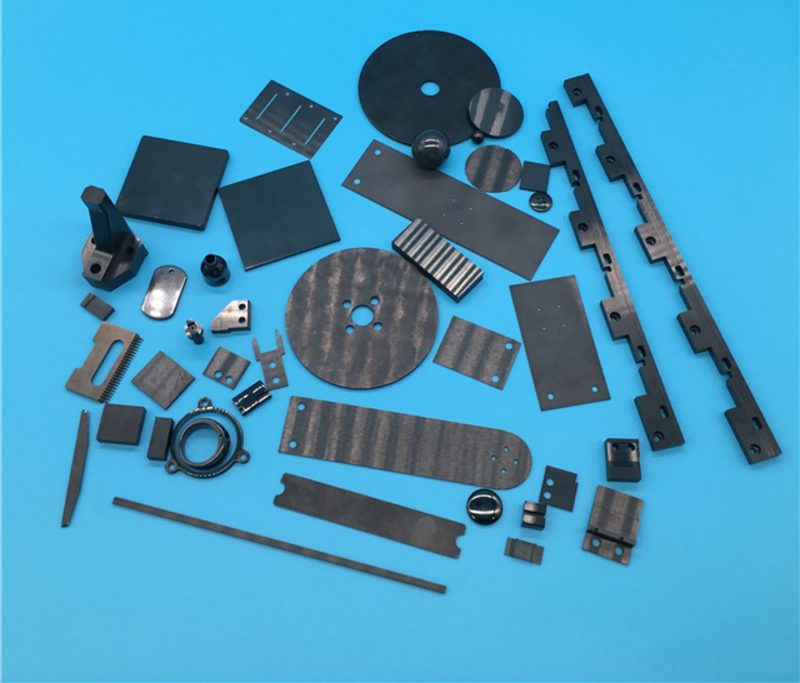
1. High mechanical strength and fracture toughness
A standout characteristic of zirconia is transformation toughening. Properly stabilized zirconia materials typically exhibit high fracture toughness, making them better suited than many traditional ceramics for environments involving complex stresses.
This attribute is particularly significant for sensor structural components subject to assembly stresses, vibration, or mechanical contact.
2. Electrical insulation properties
Under appropriate conditions, conventional stabilized zirconia exhibits electrical insulation properties, making it suitable for specific insulation and structural applications.
However, zirconia’s electrical conductivity is influenced by factors such as stabilizers, temperature, and the surrounding atmosphere. Notably, materials like yttria-stabilized zirconia may exhibit significant oxygen-ion conductivity at high temperatures; therefore, they cannot simply be regarded as materials that maintain consistent insulation performance across all temperatures.
Consequently, if the product is intended for high-temperature electrical insulation structures, the specific material grade and operating temperature must be clearly defined, and the insulation performance verified accordingly.
3. Good chemical stability
In suitable operating environments, zirconia demonstrates excellent chemical stability, making it appropriate for structural components requiring corrosion resistance.
However, for environments involving strong acids, strong alkalis, molten salts, or specialized high-temperature atmospheres, suitability must be confirmed based on the specific medium, concentration, and temperature.
4. Capable of being machined into various precision structures
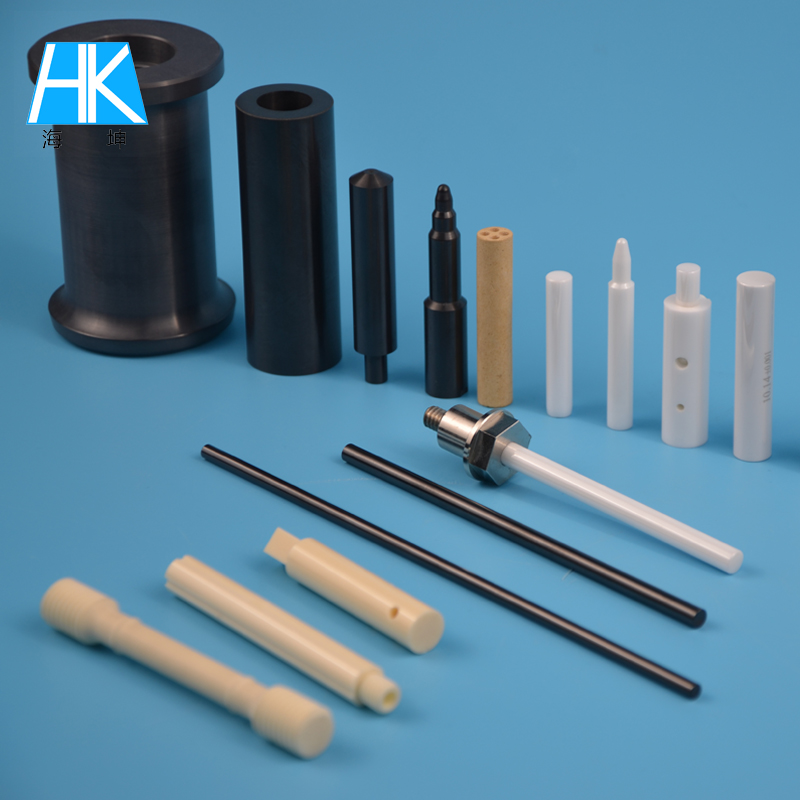
Through forming, sintering, and subsequent precision machining, zirconia can be fabricated into structural components of various shapes, such as:
Ceramic protective sleeves and tubular parts;
Insulating supports for sensors;
Ceramic positioning rings and structural connectors;
Precision ceramic bushings;
Custom-shaped ceramic parts.
It should be emphasized that the advantages of zirconia lie primarily in its comprehensive mechanical properties, chemical stability, and suitability for specific structural applications; these characteristics alone do not imply that it is suitable for all temperature sensors.
What are the application areas for zirconia ceramic temperature-sensing components?
In heat treatment equipment, industrial furnaces, and other high-temperature installations, sensors may require ceramic protective structures or insulating components.
The choice between zirconia and other ceramics should be based on a comprehensive assessment of the temperature range, atmosphere, thermal shock, mechanical load, and cost.
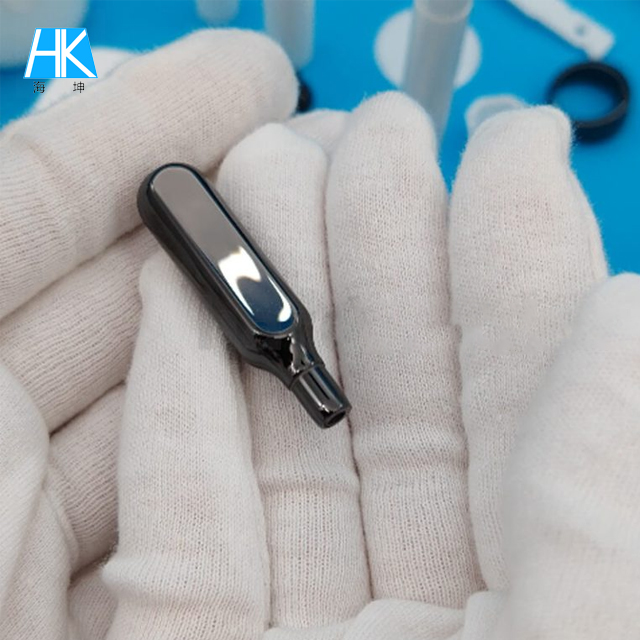
Application 2: Thermocouple Insulation and Support Structures
Certain thermocouple designs require ceramic components to position, support, or electrically isolate the conductors.
In such applications, material selection must consider not only temperature resistance but also high-temperature electrical resistivity, thermal expansion, insulation reliability, and long-term stability.
For standard high-temperature electrical insulation requirements, alumina ceramics are often a key candidate material; one should not automatically assume that zirconia is superior to alumina.
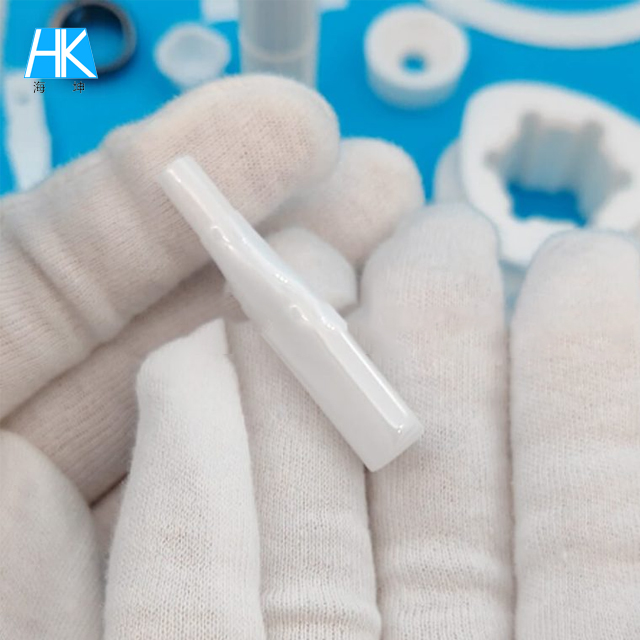
Application 3: Structures for Special Atmospheres and Oxygen Sensors
Stabilized zirconia exhibits oxygen-ion conductivity under specific temperature and atmospheric conditions, making it suitable for use in certain oxygen sensors and high-temperature electrochemical devices.
This differs from the operating principles of standard insulating ceramics. Such products require specialized design based on sensing principles, stabilizer systems, electrode configurations, and operating temperatures; standard zirconia structural components cannot simply be equated with complete sensing elements.
How should one choose between zirconia, alumina, and other ceramics for temperature measurement applications?
There is no single, universally optimal answer regarding ceramic materials for temperature sensors. Different materials offer distinct characteristics in terms of high-temperature stability, thermal conductivity, mechanical properties, and cost.
| Comparison dimensions | Zirconia ceramics | Alumina ceramics | Silicon nitride ceramics |
|---|---|---|---|
| Key Features | Good toughness and outstanding mechanical properties | Excellent insulation properties and high overall cost-performance ratio. | It exhibits good strength, toughness, and thermal shock resistance. |
| Electrical Characteristics | Depends on the formula and temperature. | Typically suitable for electrical insulation applications. | Typically possesses electrical insulation properties. |
| High-temperature applications | Stabilizers and the atmosphere need to be considered. | Widely used for high-temperature insulation and structural components. | Suitable for certain structural applications involving thermal shock and high temperatures. |
| Key considerations | High-temperature electrical conduction behavior, thermal expansion, thermal cycling | Material cost, purity, and machining precision | Material costs, processing difficulty, and specific grades |
| Applicable areas | Specific structural components and special-function devices | Standard high-temperature insulation, protection, and support components | Structural components subject to high thermal shock or mechanical loads |
When selecting materials, it is advisable to first clarify the following parameters:
Temperature range: Ambient, medium, or high temperature?
Temperature sensing principle: Thermocouple, resistance temperature detector (RTD), oxygen sensor, or another detection method?
Material function: Insulation, protection, structural support, or direct participation in sensing?
Operating environment: Air, vacuum, reducing atmosphere, corrosive atmosphere, or other conditions?
Structural requirements: Outer diameter, inner bore, length, wall thickness, concentricity, and assembly tolerances.
Service life requirements: Will there be frequent thermal cycling, vibration, shock, or long-term continuous operation?
Defining the function and operating conditions before selecting the material helps avoid unnecessary costs resulting from a mismatch between the material and the application environment.
What details require attention during the processing of zirconia ceramic temperature-sensing components?
For precision temperature sensor assemblies, material properties are merely the foundation; the quality of component machining is equally important.
① Dimensional Accuracy
Ceramic protective sleeves, insulating tubes, and positioning components often feature slender, thin-walled, or small-bore geometries. Dimensional deviations can affect assembly and positioning; therefore, machining strategies must be determined based on specific engineering drawings.
② Inner Bore and Outer Diameter Accuracy
For tubular or sleeve-like components, attention must be paid to inner and outer diameter dimensions, as well as coaxiality, roundness, and straightness, to prevent improper fits from compromising assembly.
③ Surface Quality
Surface roughness for inner bores, end faces, and mating surfaces should be determined based on assembly methods, sealing requirements, and functional needs, rather than simply pursuing the highest possible surface finish grade.
④ Sintering Deformation and Machining Allowance
Ceramics undergo shrinkage during sintering; complex structures require consideration of dimensional changes and deformation control. Proper upfront design regarding forming methods, sintering processes, and machining allowances helps improve the yield rate.
⑤ Thermal Cycling and Material Compatibility
When ceramics are joined or used in combination with metals, factors such as differences in thermal expansion, fastening methods, sealing structures, and stresses induced by thermal cycling must be taken into account.
Therefore, the customization of zirconia ceramic temperature-sensing components requires a comprehensive approach that integrates material grade selection, structural design, sintering processes, and precision machining.
Haikun Precision Ceramics: Providing custom precision ceramic components for temperature sensors.
In temperature sensors and related industrial equipment, ceramic components—despite their small size—can significantly impact assembly precision, insulation reliability, and long-term operational performance.
Dongguan Haikun New Materials Co., Ltd. specializes in the customization of industrial ceramic components. We provide forming, sintering, and precision machining services for engineering ceramics—such as zirconia, alumina, and silicon nitride—tailored to customer drawings, samples, and specific operating conditions.
Customizable parts available for evaluation based on specific requirements include:
Zirconia ceramic tubes and sleeves;
Ceramic protective sheaths and insulating supports;
Ceramic positioning rings, bushings, and connectors;
Precision ceramic structural components;
Non-standard ceramic parts and custom-shaped components.
If you are developing temperature sensors, high-temperature detection assemblies, or related industrial equipment and require custom ceramic substrates or precision structural components, please provide your drawings, material specifications, operating temperatures, working atmospheres, dimensional tolerances, and assembly requirements.
HaikunPrecision Ceramics assists in evaluating materials and processing solutions based on actual operating conditions, offering customization services for precision ceramic components based on provided drawings or samples.
Selecting the right ceramic substrate involves more than just considering temperature resistance; it requires aligning material properties with temperature measurement principles, the operating environment, and structural requirements.
Hai kun Precision Ceramics—specializing in the customization of precision industrial ceramic components.
Relevant information