
information centre / Industry Information / What is zirconia ceramic? Why is it called “ceramic steel”?
What is zirconia ceramic? Why is it called “ceramic steel”?
Introduction
In the field of industrial ceramics, if alumina ceramics are considered the “king of cost-effectiveness,” then zirconia ceramics (ZrO₂) are undoubtedly recognized as “ceramic steel.” It combines the wear resistance, impact resistance, and corrosion resistance of ceramic materials with the strength and toughness approaching that of metals, completely changing the traditional perception that “ceramics are fragile.” Today, zirconia ceramics are widely used in medical devices, semiconductor equipment, new energy vehicles, precision machinery, food processing equipment, and high-end consumer electronics. So, what exactly is zirconia ceramics? And why has it earned the title of “ceramic steel”?
Quick Links
Contact Us
Live
E-mail:sales01@hkceramic.com
1. What is zirconia ceramic?
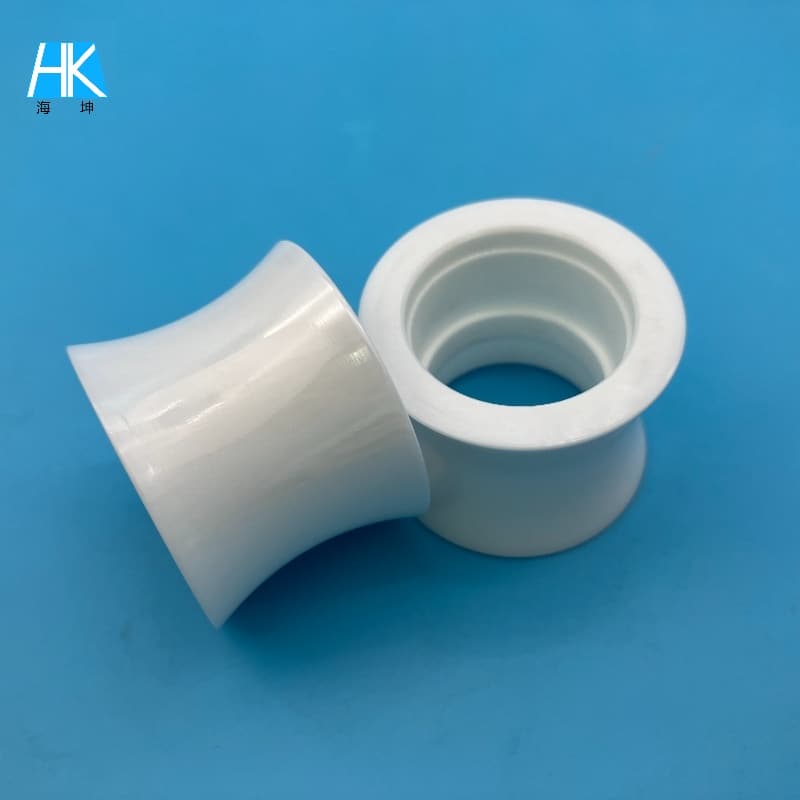
Zirconia ceramics are high-performance engineering ceramic materials made primarily from zirconium oxide (ZrO₂), with the addition of stabilizers, followed by high-temperature sintering and precision machining.
Common types of stabilizers include:
Yttrium-stabilized zirconium oxide (Y-TZP)
Magnesium-stabilized zirconium oxide (Mg-PSZ)
Cerium-stabilized zirconium oxide (Ce-TZP)
Among these, Yttrium-stabilized zirconium oxide (Y-TZP) is the most widely used zirconium oxide ceramic material due to its superior overall performance.
Compared to traditional ceramics, the most significant characteristic of zirconium oxide is:
It possesses fracture toughness and impact resistance far exceeding that of ordinary ceramics.
Therefore, it is hailed by the industry as:
“The ceramic material most like metal.”
2. Why is zirconia ceramic called "ceramic steel"?
1. Ultra-high strength, approaching that of some metallic materials
While ordinary ceramics have high hardness, they generally suffer from high brittleness.
Zirconium oxide ceramics, however, possess a bending strength of:
≥800MPa
far exceeding that of alumina ceramics (approximately 300–400MPa).
This strength level is approaching that of some high-strength steels, thus earning it the reputation of “ceramic steel.”
2. Fracture toughness far exceeds that of traditional ceramics
The core advantage of zirconia lies in:
Phase Transformation Toughening Mechanism
When subjected to external impact, zirconia crystals undergo microstructural changes, absorbing crack propagation energy and thus preventing rapid material fracture.
In simple terms:
Zirconium oxide does not “shatter at the slightest touch” like ordinary ceramics.
Its fracture toughness typically reaches:
9 MPa·m¹ᐟ²
significantly higher than alumina ceramics.
Therefore, it is particularly suitable for:
High-impact applications
High-frequency moving parts
Precision mechanical structural components

3. High Hardness and High Wear Resistance Coexist
Although its toughness is close to that of metals, zirconia retains the high hardness characteristic of ceramic materials.
Typical Hardness:
HV1200
While slightly lower than alumina ceramics, it is far higher than ordinary stainless steel and engineering plastics.
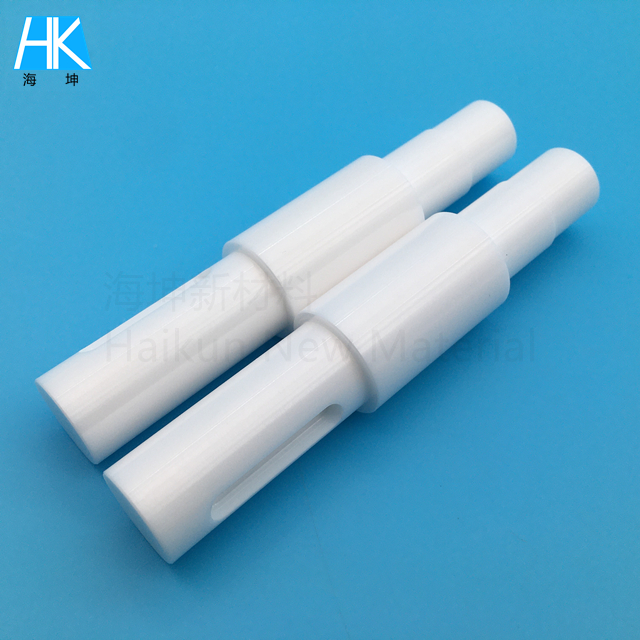
Therefore, it is widely used in:
Ceramic cutting tools
Ceramic bearings
Valve cores
Plungers
Sealing rings
These products can significantly extend the service life of equipment.
4. Corrosion Resistance, Rust Resistance, and Excellent Biocompatibility
One of the biggest advantages of zirconia ceramics compared to metallic materials is:
It never rusts.
It can withstand:
Acidic media
Alkaline environments
Salt spray corrosion
Organic solvents
Therefore, it is widely used in:
Food machinery
Medical equipment
Chemical equipment
Marine engineering
Maintaining stable performance even after long-term use.
3. What are the main properties of zirconia ceramics?
| Performance items | Typical values (Y-TZP) |
|---|---|
| density | Approximately 6.0 g/cm³ |
| flexural strength | 800 MPa |
| Vickers hardness | 1200 HV |
| fracture toughness | 9 MPa·m¹ᐟ² |
| Volume resistivity | >10¹² Ω·cm |
| thermal conductivity | 2~3 W/(m·K) |
| coefficient of thermal expansion | 10×10⁻⁶/℃ |
| Long-term operating temperature | 800℃左右(air environment) |
In summary:
Zirconium oxide is one of the structural ceramic materials with the best overall mechanical properties currently available.
4. In which industries are zirconia ceramics mainly used?
Semiconductor Equipment
Application Products:
Precision Positioning Components
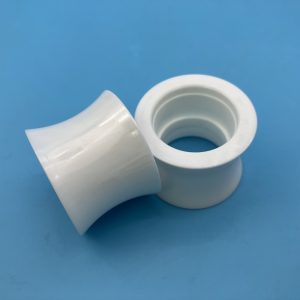
Guide Wheels
Vacuum Equipment Structural Components
Automated Handling Parts
High cleanliness, wear resistance, and excellent insulation properties.
Medical Devices
Typical Products:
Artificial Dental Crowns
Surgical Instruments
Medical Pumps and Valves
Bio-Implants
With good biocompatibility and corrosion resistance.
New Energy Vehicles
Application Areas:
Precision sensor components
Electronic control system structural components
High wear-resistant sealing assemblies
Meeting long-term stable operation requirements.
Food and Chemical Equipment
Due to its non-rusting and non-contamination properties, zirconia ceramics are widely used in:
Ceramic plungers
Ceramic valve cores
Ceramic ground parts
Precision seals
Becoming an important material to replace metals.
5. Why are more and more companies using zirconium oxide to replace metals?
With the upgrading of equipment manufacturing, more and more companies are discovering that:
Traditional metals suffer from:
rust and corrosion
severe wear
heavy weight
high maintenance costs
While zirconia ceramics can achieve:
✔ Rust-free
✔ High wear resistance
✔ High strength
✔ Electrical insulation
✔ Long lifespan
✔ Low maintenance costs
Therefore, zirconia ceramics are gradually replacing stainless steel, cemented carbide, and engineering plastics in many high-end equipment.
Conclusion: Why is "ceramic steel" becoming a new choice for high-end manufacturing?
Zirconia ceramics have overcome the limitations of traditional ceramics, which are characterized by high brittleness.
They possess the wear resistance, corrosion resistance, and insulation advantages of ceramic materials, while also exhibiting toughness and strength approaching that of metals.
For this reason, zirconia ceramics are referred to in the industry as:
“Ceramic steel”.
In the future, with the development of semiconductors, new energy vehicles, medical equipment, and intelligent manufacturing, zirconia ceramics will play an important role in more high-end fields.
Dongguan Haikun New Materials Co., Ltd.
Specializing in the R&D and precision machining of high-performance industrial ceramics, we offer:
Zirconium Oxide Ceramic Products
Yttrium Stabilized Zirconia Ceramics (Y-TZP)
Magnesium Stabilized Zirconia Ceramics (Mg-PSZ)
Ceramic Plungers
Ceramic Valve Cores
Ceramic Sealing Rings
Precision Structural Ceramic Parts
Machining Capabilities
✔ CNC Precision Machining
✔ Laser Cutting and Micro-hole Machining
✔ Mirror Polishing (up to Ra 0.02μm)
✔ High-Precision Grinding
✔ Small Batch Prototyping and Mass Production
We support customization based on provided drawings or samples, providing professional industrial ceramic solutions for the semiconductor, medical, new energy, food machinery, and high-end equipment manufacturing industries.
Relevant information