
information centre / Industry Information / What kind of material is industrial ceramic, and why has it become a crucial material in the high-end manufacturing sector?
What kind of material is industrial ceramic, and why has it become a crucial material in the high-end manufacturing sector?
Introduction
In the realm of modern industrial manufacturing, many people’s first impression of “ceramics” is still limited to everyday items like bowls, plates, and cups, or construction materials such as tiles and sanitary ware. However, in high-end manufacturing sectors—including semiconductors, new energy, aerospace, medical equipment, and precision machinery—there exists a completely different type of ceramic material: industrial ceramics. Far from being ordinary household ceramics, these are advanced inorganic non-metallic materials characterized by high strength, superior wear and heat resistance, excellent insulation properties, and exceptional stability. Today, industrial ceramics have become a key alternative to certain metals and are widely used in high-precision, high-reliability industrial equipment. So, what exactly are industrial ceramics? What advantages do they offer? And why are an increasing number of enterprises adopting them?
Quick Links
Contact Us
Live
E-mail:sales01@hkceramic.com
1. What kind of material is industrial ceramic?
Industrial ceramics—also known as:
engineering ceramics
precision ceramics
specialty ceramics
—are high-performance ceramic materials primarily made from high-purity inorganic compounds through processes such as:
powder preparation
forming and shaping
high-temperature sintering
precision machining.
Unlike traditional ceramics, the primary objective of industrial ceramics is not aesthetics, but rather:
leveraging unique material properties to address challenges in industrial equipment—such as high temperatures, wear, corrosion, insulation requirements, and the need for precision control.
2. What materials are primarily used to make industrial ceramics?
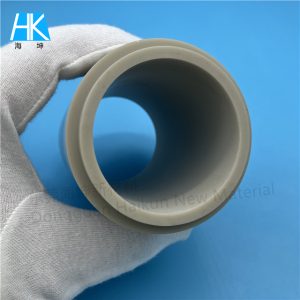
1. Alumina Ceramics (Al₂O₃)
Alumina ceramics are currently the most widely used industrial ceramic materials.
Key characteristics:
✔ High insulation performance
✔ High hardness
✔ Wear resistance
✔ Low cost
✔ Mature manufacturing technology
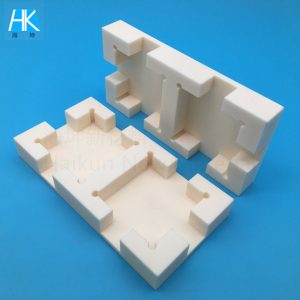
Common applications:
Ceramic substrates
Insulating rings
Wear-resistant bushings
Nozzles
Semiconductor equipment components
Known as:
A cost-effective material in industrial ceramics.
2. Zirconia Ceramics (ZrO₂)
Due to their excellent toughness, zirconia ceramics are known as:
“Ceramic Steel”
Key characteristics:
✔ High strength
✔ High fracture toughness (9 MPa·m½)
✔ Strong impact resistance
✔ Good wear resistance
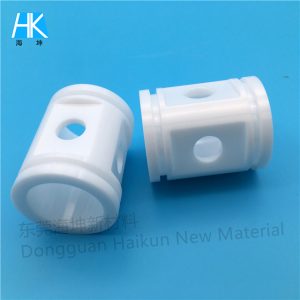
Applications:
Ceramic plungers
Valve cores
Seals
Precision structural components
Medical ceramic parts
3. Silicon Nitride Ceramics (Si₃N₄)
Silicon nitride ceramics are known as:
“The King of Structural Ceramics”
Key advantages:
✔ High strength
✔ High toughness
✔ Excellent thermal shock resistance (ΔT = 500°C)
✔ Good high-temperature stability
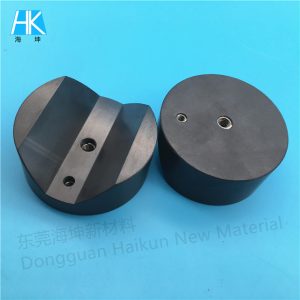
Applications:
Ceramic bearings
High-temperature structural components
Semiconductor equipment parts
New energy equipment components
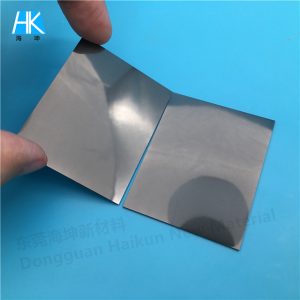
4. Aluminum Nitride (AlN) Ceramics
Key characteristics of aluminum nitride ceramics:
High thermal conductivity + high electrical insulation
Key properties:
Thermal conductivity: 170–230 W/(m·K)
Coefficient of thermal expansion: close to that of silicon
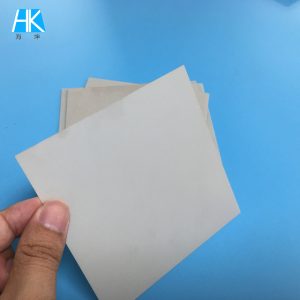
Applications:
Power module substrates
LED heat dissipation substrates
Semiconductor packaging materials
5. Silicon Carbide (SiC) Ceramics
Silicon carbide ceramics are high-performance, high-temperature resistant materials.
Characteristics:
✔ High hardness
✔ High thermal conductivity
✔ Corrosion resistance
✔ High-temperature resistance
Applications:
Semiconductor equipment
High-temperature furnace components
Mechanical seals
3. What are the core advantages of industrial ceramics?
1. High wear resistance and extended service life
During the long-term operation of industrial equipment, metal parts are prone to:
Wear
Deformation
Corrosion
In contrast, industrial ceramics offer:
High hardness
Low wear rates
Excellent dimensional stability
…effectively extending the service life of components.
For example:
Alumina ceramics can achieve a hardness of:
HV 1600–1800
…far exceeding that of ordinary steel.
2. Excellent High-Temperature Resistance
Many industrial environments involve prolonged exposure to conditions such as:
High-temperature furnaces
Heat treatment equipment
Semiconductor manufacturing environments
Conventional materials tend to soften or deform.
Industrial ceramics feature:
✔ High melting points
✔ High-temperature stability
✔ Low thermal expansion
Some materials can operate continuously in:
Environments exceeding 2000°C
3. Excellent insulation properties
Industrial ceramics serve as vital insulating materials in the electronics and electrical sectors.
Take alumina ceramics, for example:
Volume resistivity > 10¹⁴ Ω·cm
Widely used in:
High-voltage equipment
Semiconductor equipment
Power electronics systems
New energy vehicles
4. Excellent corrosion resistance
Industrial ceramics can withstand:
Acids
Alkalis
Salt spray
Organic solvents
Compared to metals:
They do not rust and are resistant to corrosion.
Therefore, they are suitable for:
Chemical processing equipment
Food processing machinery
Medical equipment
Laboratory equipment
5. High-Precision Machining Capabilities
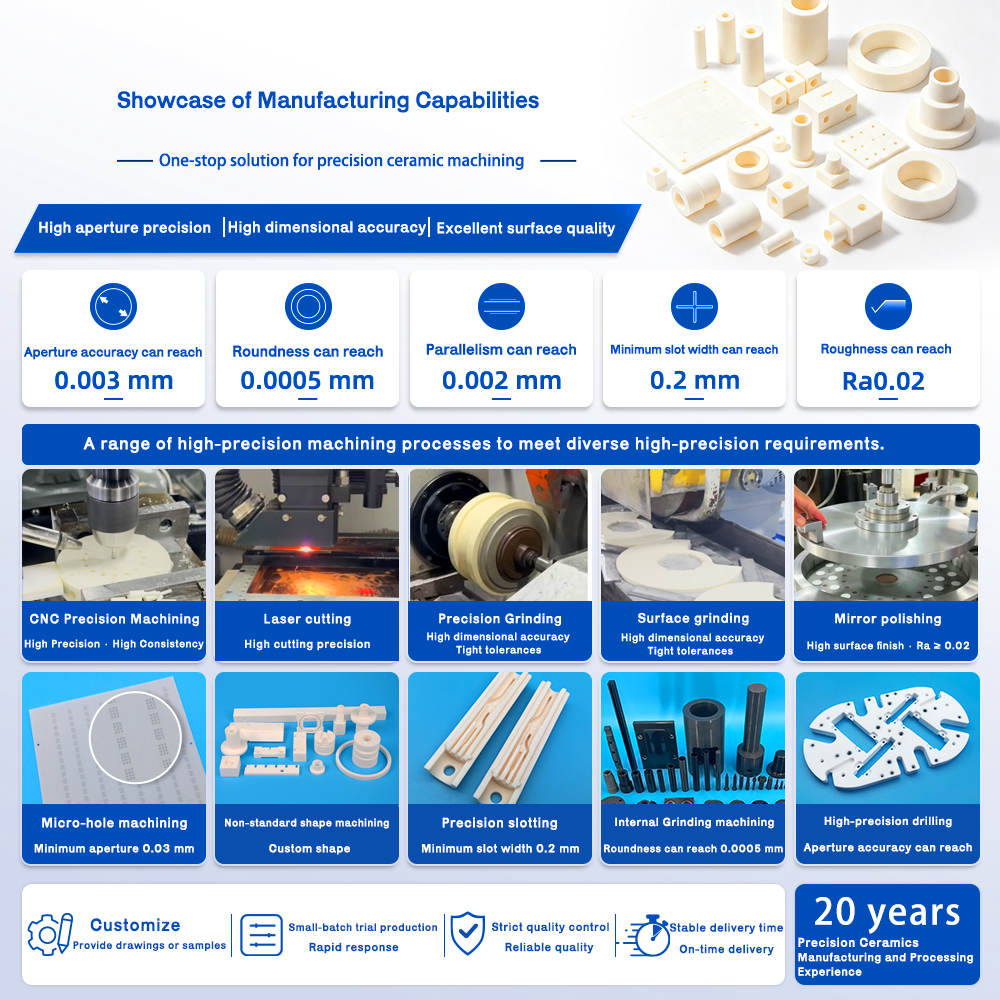
With the advancement of precision manufacturing, industrial ceramics have evolved beyond simple materials into solutions for high-precision components.
Utilizing processes such as:
CNC precision machining
Diamond grinding
Laser cutting
Micro-hole machining
Mirror polishing
We can manufacture:
Complex structural components
Precision ceramic parts
Ceramic components with micro-holes
…to meet the demands of high-end equipment.
4. What is the difference between industrial ceramics and ordinary ceramics?
| Comparison items | Ordinary ceramics | Industrial ceramics |
|---|---|---|
| Primary Uses | Daily Life | Industrial Equipment |
| raw materials | Common clay, feldspar | High-purity oxides and nitrides |
| Key Areas of Focus | Appearance, cost | Performance, reliability |
| strength | generally | High-intensity |
| Precision | ordinary | High precision |
| Work Environment | normal temperature | High-temperature, high-pressure, and corrosive environments |
| Processing requirements | Lower | Precision Machining |
Simply put:
Ordinary ceramics meet everyday needs, while industrial ceramics solve industrial challenges.
5. In which industries are industrial ceramics primarily used?
Semiconductor Industry
Applications:
Ceramic insulators
Wafer supports
Vacuum equipment components
High-temperature process components
New Energy Vehicles
Applications:
Power module substrates
Insulating structural components
Wear-resistant seals
Precision Machinery
Applications:
Ceramic bushings
Ceramic guide rails
Ceramic valve cores
Wear-resistant parts
Medical Industry
Applications:
Medical device parts
Precision ceramic components
Bioceramic components
Aerospace
Applications:
High-temperature structural components
Lightweight parts
Heat-resistant components
Conclusion: Industrial ceramics are among the key materials for modern industrial development.
Industrial ceramics are not “ceramics” in the traditional sense; rather, they are a class of high-performance engineering materials developed through advanced material technologies.
They combine:
corrosion resistance unattainable by metals;
temperature resistance beyond the capabilities of plastics;
and high-performance characteristics not found in conventional ceramics.
From semiconductors and new energy to precision manufacturing and aerospace, industrial ceramics are playing an increasingly vital role.
In the future, driven by the advancement of intelligent manufacturing and high-end equipment, industrial ceramics will become indispensable, key materials across an even wider range of fields.
Dongguan Haikun New Materials Co., Ltd.
Industrial Ceramic Materials
Alumina Ceramics (Al₂O₃)
Zirconia Ceramics (ZrO₂)
Silicon Nitride Ceramics (Si₃N₄)
Aluminum Nitride Ceramics (AlN)
Silicon Carbide Ceramics (SiC)
Macor Machinable Ceramic
Precision Machining Capabilities
✔ CNC precision machining
✔ Laser cutting
✔ Micro-hole machining
✔ Precision grinding
✔ Mirror polishing
✔ Custom machining based on drawings
Serving the following industries:
Semiconductors, new energy vehicles, electronics and electrical equipment, medical devices, automation machinery, and high-end equipment manufacturing.
Providing customers with high-performance industrial ceramic material options and precision component solutions.
Relevant information