
information centre / Ceramic material, Industry Information / Which is better for heat dissipation: ceramic heat sinks or aluminum heat sinks? A real comparison tells you the answer.
Which is better for heat dissipation: ceramic heat sinks or aluminum heat sinks? A real comparison tells you the answer.
Introduction
In today’s world where electronic products are constantly striving for higher power, smaller size, and greater stability, the importance of heat dissipation materials has risen to the core of product lifespan and performance. In the past, most companies were accustomed to using aluminum heat sinks. However, in recent years, a new trend has emerged: more and more mid-to-high-end companies are turning to ceramic heat sinks (alumina/aluminum nitride). So, are ceramic heat sinks reliable? Compared to aluminum heat sinks, which is better? Below, we’ll use real data and practical applications to tell you the answer.
Quick Links
Contact Us
Live
E-mail:sales01@hkceramic.com
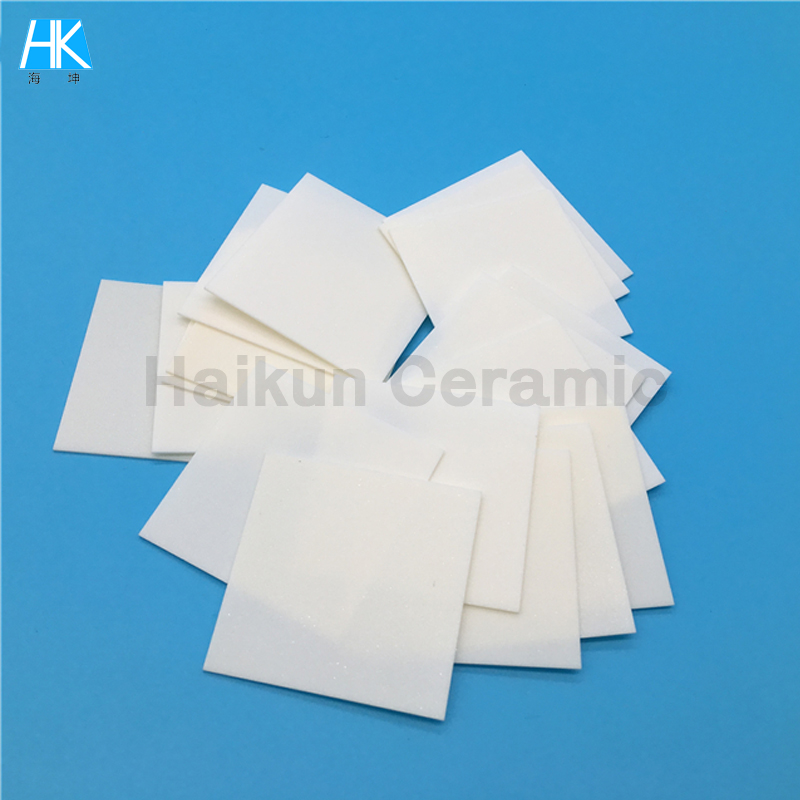
Specifications|Support customization

| Plate material mm (L, H, and W can be selected as needed, customization supported) | ||||||||||||
| L | 3 | 5 | 8 | 10 | 12 | 15 | 18 | 20 | 22 | 25 | 28 | More (Customizable) |
| W*H | 100*100 | 90*140 | 95*145 | 150*150 | 160*160 | 122*290 | 110*275 | More (Customizable) | ||||
| Rod material mm (W, Ø can be selected as needed, customization supported) | ||||||||||||
| Ø | 0.5 | 0.8 | 0.9 | 1 | 1.5 | 2 | 2.5 | 3 | 3.5 | 4 | 4.5 | More (Customizable) |
| W | 60 | 100 | 120 | 200 | More (Customizable) | |||||||
1. Heat dissipation performance comparison: ceramic VS aluminum, which is stronger?
First, we need to distinguish the types of common ceramic heat sinks.
① Alumina ceramic heat sink (Al₂O₃)
Thermal conductivity: 20–30 W/m·K
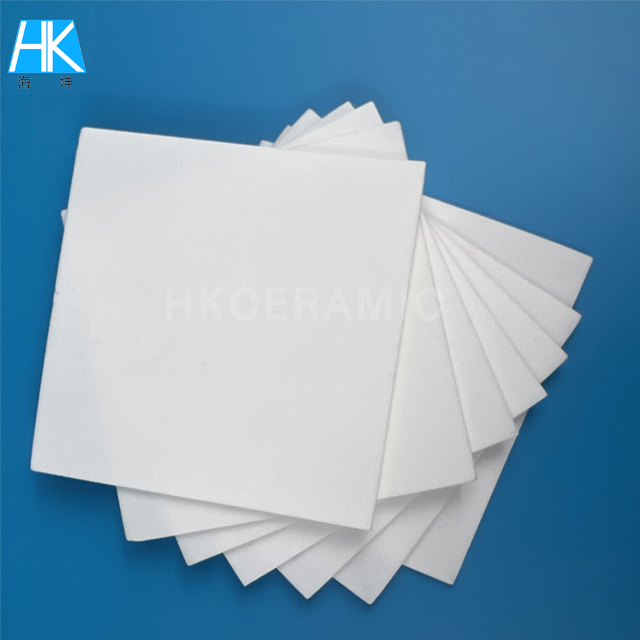
It has slightly lower thermal conductivity than aluminum (approximately 200 W/m·K), but strong insulation properties, making it suitable for circuit structures requiring resistance to electric shock and insulation.
② Aluminum nitride ceramic heat sink (AlN)
Thermal conductivity: 170–230 W/m·K
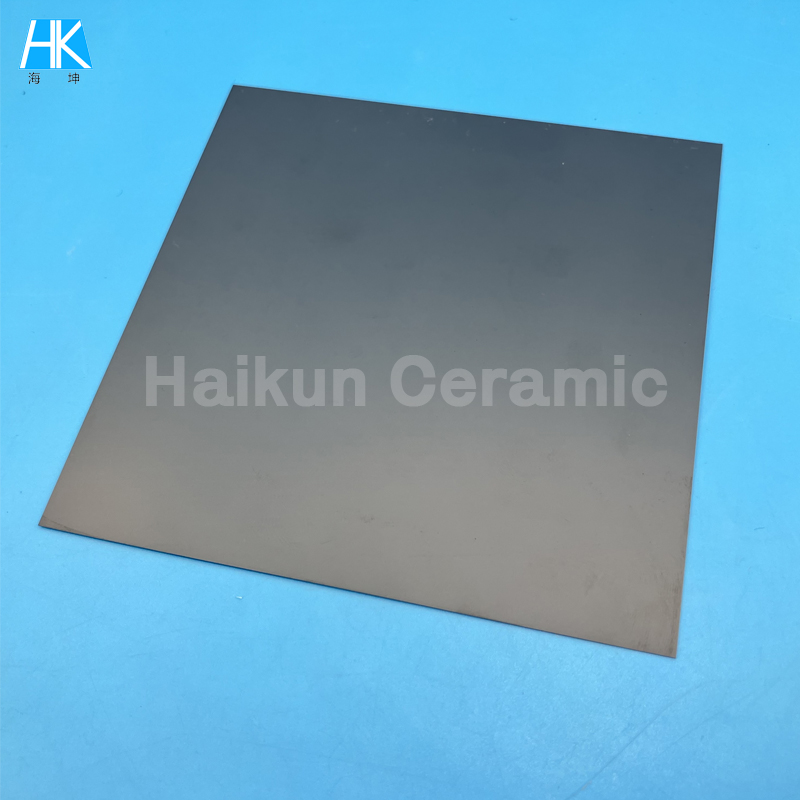
It is almost equivalent to, or even higher than, aluminum, but possesses insulation and high-temperature resistance properties that aluminum cannot match.
2. Why are more and more companies choosing "ceramics" instead of "aluminum"?
① Ceramics are natural insulators, making them more suitable for high-power electronic products.
While aluminum heat sinks have high thermal conductivity, they are also electrically conductive, necessitating the addition of an insulating layer (such as thermally conductive silicone pads or insulating gaskets).
Once the insulation layer ages or breaks down, the risk of short circuits, breakdowns, and product failure increases significantly.
Ceramic heat sinks are natural insulators (resistivity > 10¹⁴ Ω·cm):
No insulating sheet required
No safety hazards
Ceramic heatsinks can be directly mounted on the PCB
Shorter heat dissipation path, higher efficiency
This is why high-power LEDs, power modules, IGBTs, inverters, and other components are increasingly made of ceramic.
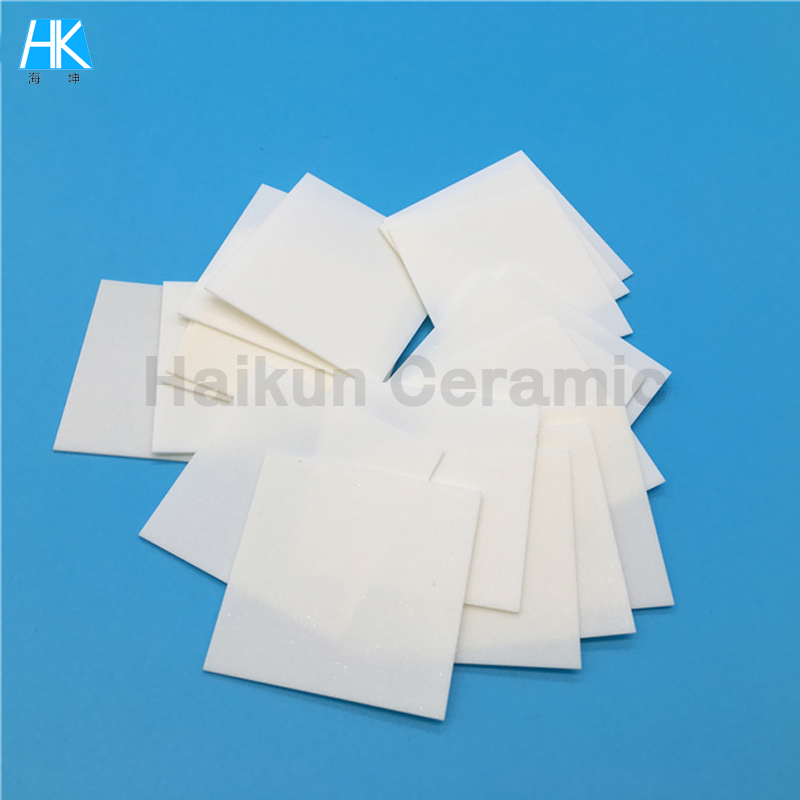
② Stronger high temperature resistance
Aluminum heat sink: Strength decreases significantly above 200℃
Alumina ceramic: Withstands 1600℃
Aluminum nitride ceramic: Withstands 1000℃
In high-temperature environments, ceramic heat sinks will not soften, oxidize, or deform.
This is particularly important for automotive electronics, photovoltaic inverters, and 5G communications.
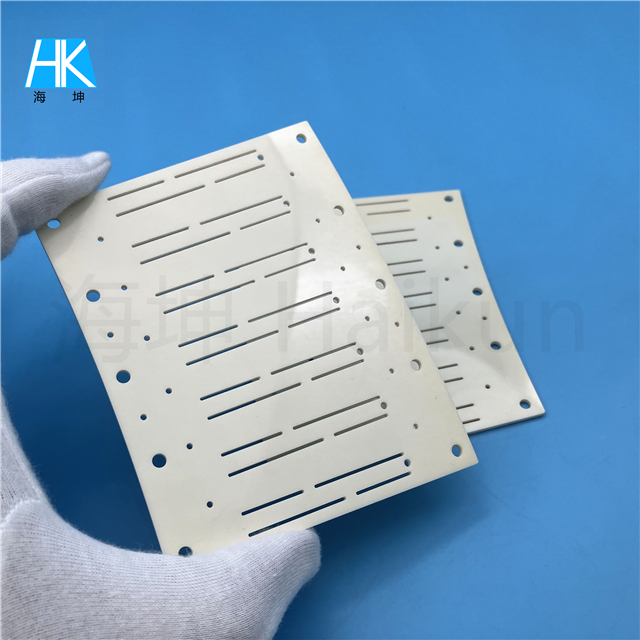
③ Longer lifespan than aluminum sheets
Common problems with aluminum sheets:
Prone to oxidation
Deformation due to prolonged thermal cycling
Loosening of circuit contacts
Aging of thermal grease/insulating pads affects heat dissipation
Ceramic heat sink:
Non-oxidizing
Low thermal expansion (not easily deformed)
High structural stability
Lifespan can reach 5-10 years or more
④ Heat dissipation efficiency is greatly improved (especially for aluminum nitride ceramics).
Aluminum nitride ceramics have a thermal conductivity exceeding 170 W/m·K, even comparable to copper, but are lighter and have better insulation properties.
In some electronic modules, ceramic heat sinks can be used to:
Chip temperature reduced by 5–20°C
Product lifespan increased by 30–50%
More stable operation, reduced thermal failure
3. Ceramic heat sinks are finding increasingly wider applications, for a simple reason—they are highly effective.
The following industries are using it on a large scale:
✔ High-power LEDs
✔ IGBT power modules
✔ Charging piles and power modules
✔ New energy vehicle control units
✔ Inverters / Photovoltaic energy storage
✔ 5G base stations
✔ Aerospace
✔ Precision instrument control systems
In particular, aluminum nitride ceramics are the preferred material for heat dissipation in high-end electronic devices worldwide.
4. Aluminum Heatsinks vs. Ceramic Heatsinks: A Table to Understand the Differences
| Comparison Projects | Aluminum heat sink | alumina ceramics | Aluminum nitride ceramics |
| thermal conductivity | ★★★★★ | ★★☆☆☆ | ★★★★★ |
| insulation | ★☆☆☆☆(Insulating sheet needs to be added) | ★★★★★ | ★★★★★ |
| High temperature resistance | ★★☆☆☆ | ★★★★★ | ★★★★☆ |
| Corrosion resistance | ★★☆☆☆ | ★★★★★ | ★★★★★ |
| Service life | ★★☆☆☆ | ★★★★☆ | ★★★★★ |
| stability | ★★☆☆☆ | ★★★★★ | ★★★★★ |
| price | Low | middle | Medium and high |
If your product is:
👉 High power
👉 Temperature sensitive
👉 Requires insulation
👉 Requires long-term stable operation
Ceramic heat sinks are a better choice.
*Values are typical material properties, actual values may vary due to product configuration and manufacturing process.
*For more details, please feel free to contact our company.
*For more details, please feel free to contact our company.
Other
Precision ceramic products
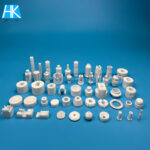
High Precision Alumina Ceramic Components for Industrial Applications
Material:Alumina ceramics
Describe:High Precision Alumina Ceramic Components for Industrial Applications, also known as porous retaining rings, feature precise designs with drilled holes for secure connection. Their high hardness and strength ensure stability and durability under pressure, ideal for long-lasting equipment performance.
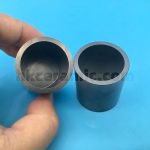
Small Silicon Nitride Ceramic Crucible
Material:Silicon Nitride Ceramics
Describe:Discover silicon nitride ceramic crucibles for high-temperature experiments and industrial melting processes. Known for their thermal stability, corrosion resistance, and durability, these crucibles ensure reliable performance in laboratory and industrial settings.
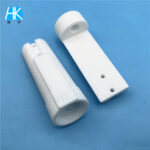
Machinable Ceramic Parts
Material:Macor Ceramic
Describe:Machinable ceramic Parts are a type of advanced ceramic material with excellent machining properties. They can be cut, drilled, milled, etc. on conventional machining equipment (such as CNC, lathes, and drilling machines) without the need for special diamond tools. They are widely used in precision electronics, semiconductors, medical and high-temperature insulation fields.
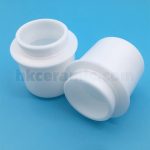
Customized Zirconia Ceramic Special-shaped Tubes
Material:Zirconia Ceramics
Describe:Customized zirconia (ZrO2) ceramic special-shaped tubes, also known as industrial ceramic threaded connecting tubes. Designed with precision threads for mechanical systems, these ceramic tubes ensure high-quality sealing and structural integrity. Their smooth surfaces reduce friction, optimizing fluid or gas flow efficiency.
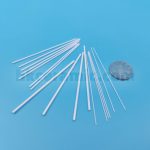
Zirconia ceramic Pin/Thin rod
Material:Zirconia Ceramics
Describe:Custom zirconia (ZrO2) ceramic gauges with 0.001mm tolerance offer precise measurements in high-pressure environments, ensuring accuracy and reliability.
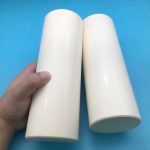
Large-sized alumina ceramic rod
Material:Alumina ceramics
Describe:Large-sized alumina ceramic rods, 99% alumina solid plungers, and other precision ceramic products excel in industrial applications with their outstanding heat resistance, corrosion resistance, high-temperature stability, and wear resistance. Widely used in manufacturing mechanical components, they are essential in fields requiring these qualities, such as high-temperature and corrosive environments.