
information centre / Industry Information / What is alumina ceramic? Why is it the most cost-effective industrial ceramic material?
What is alumina ceramic? Why is it the most cost-effective industrial ceramic material?
Introduction
In the field of industrial ceramics, if one could only choose one material with the widest application, the most balanced overall performance, and the most reasonable cost, the answer would most likely be alumina ceramics (Al₂O₃ Ceramic). From electronics, semiconductors, and new energy vehicles to machinery, medical devices, and automated production lines, alumina ceramics are virtually ubiquitous. Many engineers even say, “If you don’t know which industrial ceramic to choose, start with alumina; you usually can’t go wrong.” So, what exactly is alumina ceramics? Why is it hailed as the most cost-effective ceramic material in the industrial field? This article will take you deeper into its meaning.
Quick Links
Contact Us
Live
E-mail:sales01@hkceramic.com
1. What is alumina ceramic?
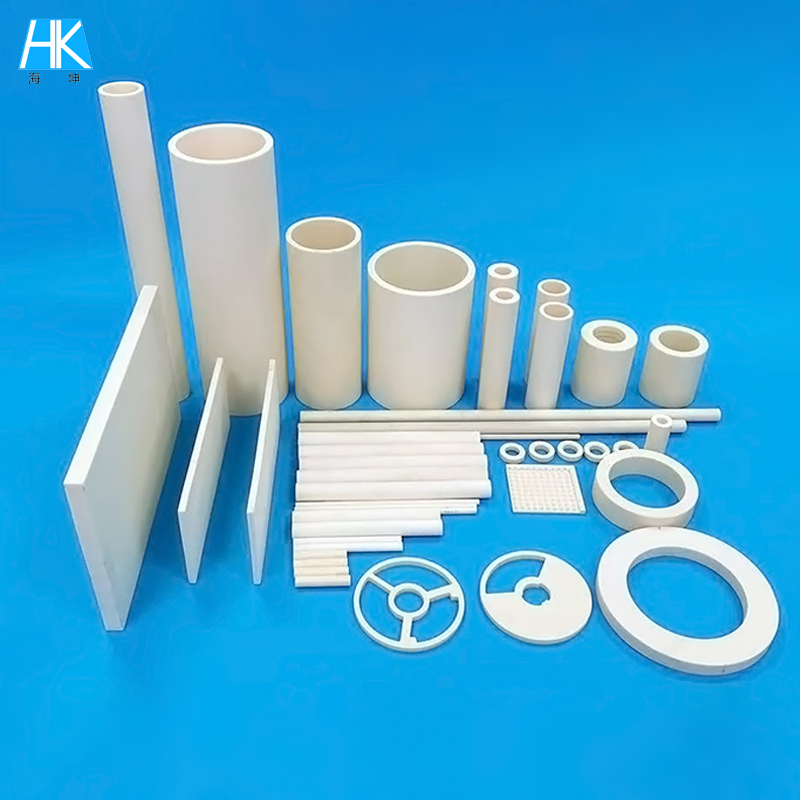
Alumina ceramics are a high-performance inorganic non-metallic material made from alumina (Al₂O₃) powder as the main raw material through powder preparation, molding, high-temperature sintering and precision processing.
Depending on the alumina content, common specifications include:
95% alumina ceramics
96% alumina ceramics
99% alumina ceramics
Generally speaking:
Higher purity results in better insulation performance, corrosion resistance, and high-temperature stability, but the cost also increases accordingly.
Among them, 95% and 96% alumina ceramics, due to their excellent overall performance, have become the most widely used mainstream materials in industrial applications.
2. What are the core advantages of alumina ceramics?
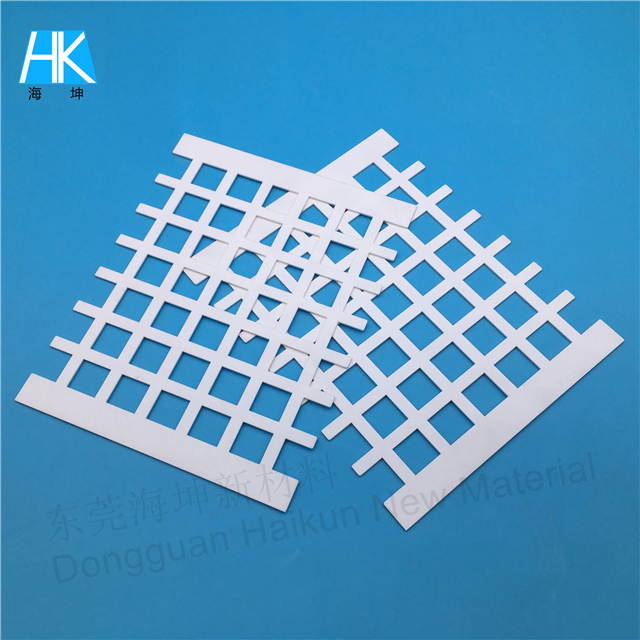
1. Excellent electrical insulation properties
Alumina ceramics are typical insulating materials.
Main parameters:
Volume resistivity: >10¹⁴ Ω·cm
Breakthrough strength: 15~25kV/mm
Dielectric constant: 9~10 (1MHz)
Therefore, they are widely used in:
✔ Semiconductor equipment
✔ Power module substrates
✔ Power electronic systems
✔ High-voltage insulation components
✔ New energy vehicle electronic control systems
2. Superior wear resistance
Alumina ceramics boast a hardness of up to:
HV1600
significantly higher than that of ordinary steel.
It maintains stable performance even under prolonged exposure to high-friction environments.
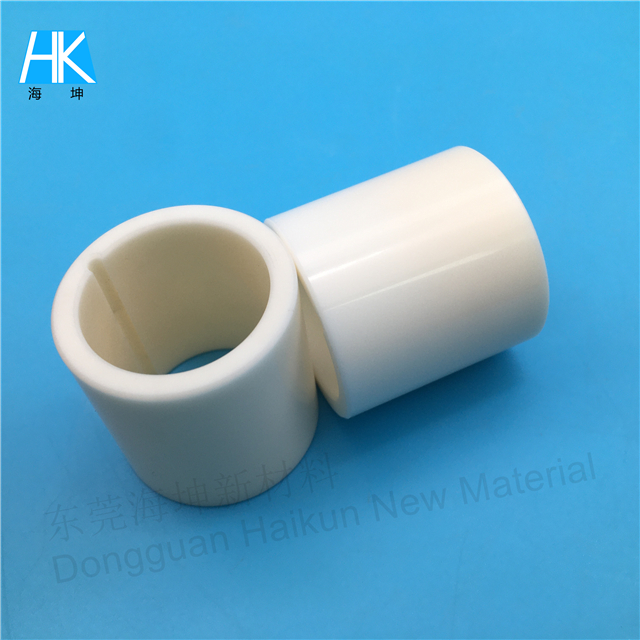
Common wear-resistant products include:
Ceramic nozzles
Ceramic guide rails
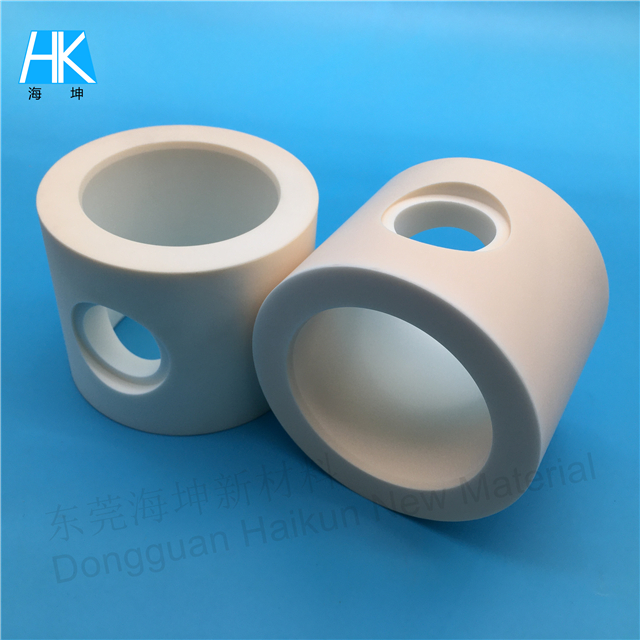
Ceramic bushings
Valve core seals
Wear-resistant liners. These effectively reduce equipment maintenance costs and downtime.
3. Excellent high temperature resistance
Alumina ceramics can be used at temperatures up to:
1600℃
Even under high temperatures, they maintain:
✔ Structural stability
✔ Dimensional accuracy
✔ Electrical insulation properties
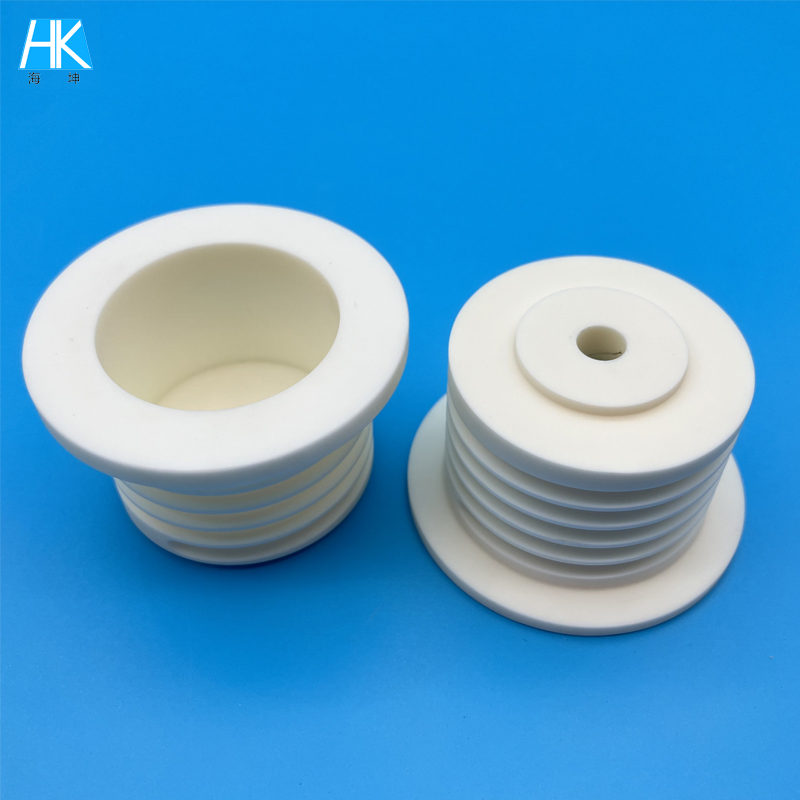
Therefore, they are widely used in:
High-temperature furnace equipment
Heat treatment industry
Semiconductor processing equipment
Vacuum systems
4. Strong corrosion resistance
Alumina ceramics resist corrosion from:
most acidic media
alkaline environments
organic solvents
and are suitable for:
chemical equipment
medical devices
food machinery
environmental protection equipment
and will not rust or oxidize with long-term use.
3. Why is alumina ceramic the most cost-effective industrial ceramic?
Many companies face the challenge of choosing the right materials:
Zirconium oxide, silicon nitride, aluminum nitride, silicon carbide – which should they choose?
In fact, for the vast majority of applications:
Alumina ceramics often offer the optimal balance between performance and cost.
1. Balanced performance, covering more than 80% of industrial needs.
Alumina ceramics possess the following properties:
✔ Insulation
✔ Wear resistance
✔ High temperature resistance
✔ Corrosion resistance
✔ High hardness
✔ Dimensional stability
For:
Electronic insulating components
Wear-resistant structural components
High-temperature parts
Precision mechanical parts
It fully meets the requirements.
There is no need to pay higher costs for unnecessary performance.
2. Cost is much lower than other high-performance ceramics
| Material | Overall performance | Cost level | Cost-effectiveness |
|---|---|---|---|
| Alumina ceramics (Al₂O₃) | ★★★★☆ | ★★★★★ | ★★★★★ |
| Zirconia ceramics (ZrO₂) | ★★★★☆ | ★★★☆☆ | ★★★★☆ |
| Silicon nitride ceramics (Si₃N₄) | ★★★★★ | ★★☆☆☆ | ★★★☆☆ |
| Aluminum nitride ceramics (AlN) | ★★★★☆ | ★★☆☆☆ | ★★★☆☆ |
| Silicon carbide ceramics (SiC) | ★★★★☆ | ★★★☆☆ | ★★★★☆ |
In short:
For ultra-high toughness, zirconia is an option;
For high thermal conductivity, aluminum nitride is an option;
For extremely strong thermal shock resistance, silicon nitride is an option;
For a balance between performance and budget, alumina ceramics are almost the best choice.
3. Mature industry, lower cost in bulk
After decades of development, alumina ceramics have formed a complete industrial chain.
Supported processes:
Dry pressing
Isostatic pressing
Injection molding
Extrusion molding
Laser cutting
CNC precision grinding
Mirror polishing
Mature processes mean:
✔ Shorter lead times
✔ More stable quality
✔ Lower batch costs
✔ Stronger supply capacity
For enterprise procurement, this stability itself is a significant value.
4. Long lifespan and lower overall operating costs
True cost-effectiveness isn’t just about the purchase price.
More importantly:
Total life-cycle cost.
Alumina ceramics possess:
Extremely long wear-resistant lifespan
Rust-free
Oxidation-free
Nearly maintenance-free. Many devices using alumina ceramics experience:
Lifespan increased by 3 to 10 times or more.
From a long-term operating cost perspective, its economic value far exceeds that of ordinary metals and plastics.
4. In which industries are alumina ceramics mainly used?
Currently, alumina ceramics have become one of the most important basic materials in modern industry.
Semiconductor Industry
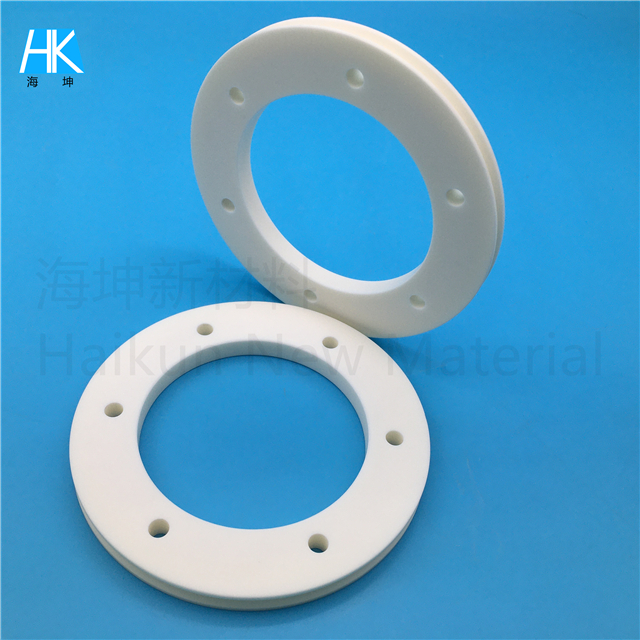
Ceramic Insulating Rings
Wafer Supports
Vacuum Equipment Components
Ceramic Substrates
New energy vehicles
Power module insulation components
Battery system structural components
Sensor components
Mechanical Automation
Ceramic Guide Rails
Ceramic Bushings
Wear-Resistant Nozzles
Sealing Components
Medical devices
Biological laboratory equipment
Precision insulating components
Corrosion-resistant parts
Power Electronics
High Voltage Insulation Components
Ceramic Heat Dissipation Substrates
Electrical Insulation Structural Components
5. Why are more and more companies choosing alumina ceramics as their preferred option?
If we compare industrial ceramics to cars:
Silicon nitride ceramics are like professional racing cars;
Aluminum nitride ceramics are like high-end new energy sports cars;
Zirconium oxide ceramics are like luxury SUVs;
Then,
Alumina ceramics are more like an all-around vehicle that balances performance, reliability, and cost.
It has no obvious weaknesses, yet it can meet the needs of the vast majority of industrial applications.
Therefore, more and more companies are making it:
the first choice for selecting industrial ceramic materials.
Conclusion: High cost-effectiveness is the biggest competitive advantage of alumina ceramics.
The reason alumina ceramics have long held a dominant position in the industrial ceramics market is not due to the exceptional performance of any single property, but rather because:
They have found the optimal balance between performance, cost, processing technology, and application range.
For businesses:
Choosing alumina ceramics not only means obtaining excellent wear resistance, insulation, and high-temperature resistance, but also:
✔ Lower procurement costs
✔ More stable batch supply capabilities
✔ Longer service life
✔ Higher overall return on investment
This is why alumina ceramics are consistently referred to as:
Dongguan Haikun New Materials Co., Ltd.
Focusing on the R&D and precision machining of high-performance industrial ceramics, we offer:
Alumina ceramic products
95/96/99 alumina ceramic parts
Alumina ceramic substrates
Ceramic insulating parts
Wear-resistant structural parts
Laser-cut alumina ceramic sheets
Processing Capabilities
✔ Laser cutting thickness: 0.1~9mm
✔ Cutting accuracy: ±0.02mm
✔ Minimum machining hole diameter: 0.04mm
✔ Cutting line width: 0.04mm
✔ Mirror polishing up to Ra0.02μm
✔ Flatness up to 0.001mm
(Specific processing accuracy depends on product structure and dimensions)
We support custom orders based on provided drawings, small-batch prototyping, and mass production, providing professional industrial ceramic solutions for the semiconductor, new energy, electronics, and high-end equipment manufacturing industries.
Relevant information