
information centre / Industry Information / What are the classifications of insulating ceramics? This article provides a comprehensive understanding of the different types and applications.
What are the classifications of insulating ceramics? This article provides a comprehensive understanding of the different types and applications.
Introduction
In modern industry, insulating ceramics are widely used in electronics, communications, automotive, medical, and energy fields due to their excellent electrical insulation, high-temperature resistance, and mechanical properties. Whether in power equipment or precision electronic components, insulating ceramics play a crucial role. So, what are the different classifications of insulating ceramics? And what specific applications are they suitable for? Today, we will answer these questions for you.
Quick Links
Contact Us
Live
E-mail:sales01@hkceramic.com
1. What are insulating ceramics?
Insulating ceramics, as the name suggests, are a class of ceramic materials with excellent electrical insulation properties. They not only effectively isolate electric current but also often possess excellent high-temperature resistance, corrosion resistance, and mechanical strength.
Due to their non-conductive nature, they are widely used in industries such as power, electronics, and semiconductors to ensure the safe operation of equipment.
2. Main classifications of insulating ceramics
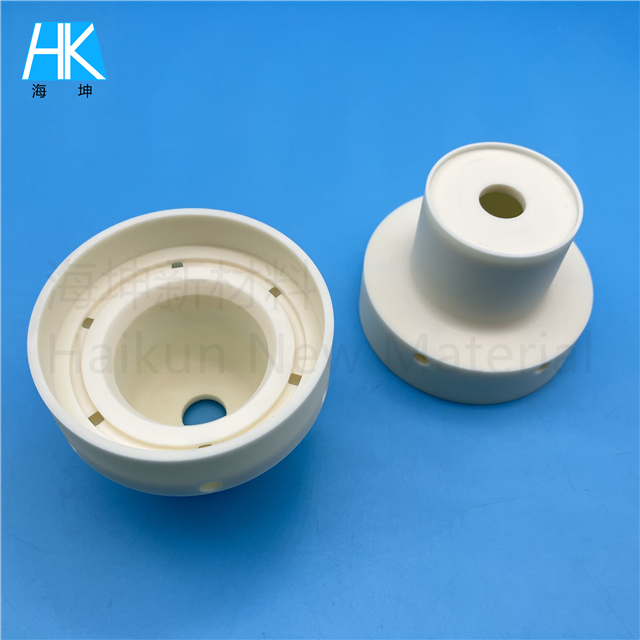
1. Alumina Insulating Ceramic (Al₂O₃)
Features:
Excellent electrical insulation (insulation strength ≥ 25KV/mm)
High strength and hardness
High-precision dimensions can be achieved through precision machining
Applications:
Electronic component substrates (e.g., ceramic substrates)
Electrical insulation parts (e.g., ceramic sleeves, connectors)
High-frequency communication equipment
Alumina ceramics are one of the most commonly used insulating ceramic materials due to their excellent electrical insulation and low cost.
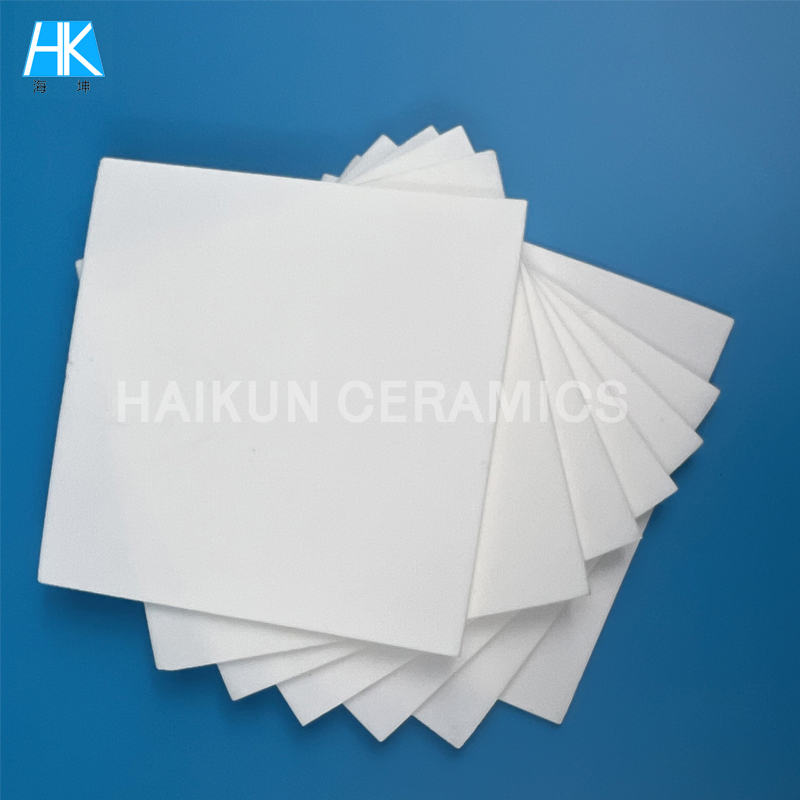
2. Aluminum Nitride Insulating Ceramic (AlN)
Features:
High thermal conductivity (170 W/m·K), superior to metals
Strong electrical insulation
Excellent high-temperature performance
Applications:
Power electronic substrates (e.g., LED heat dissipation substrates)
Semiconductor equipment packaging
Laser equipment, power modules
Aluminum nitride excels in applications requiring both high thermal conductivity and electrical insulation due to its excellent thermal conductivity and electrical insulation properties.
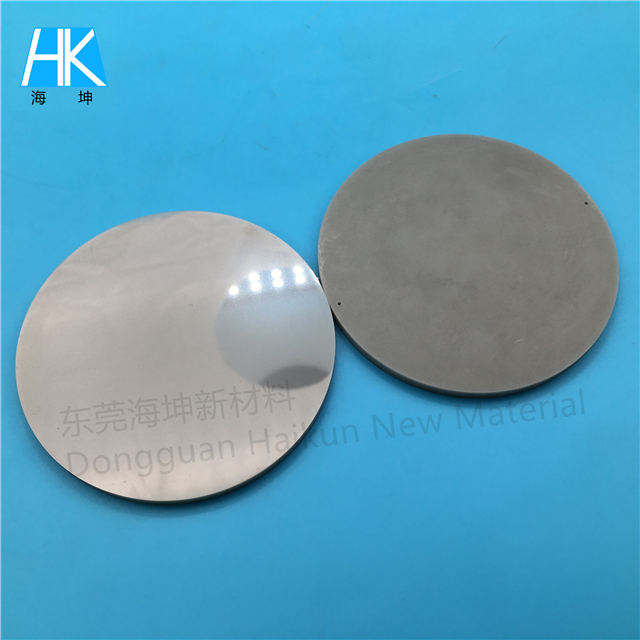
3. Silicon Nitride Insulating Ceramic (Si₃N₄)
Features:
High strength and high toughness
Good high-temperature stability
Strong electrical insulation, suitable for extreme environments
Applications:
High-temperature equipment (e.g., heat exchangers, mechanical seals)
Power equipment (e.g., insulating supports, switchgear)
Electronic devices (e.g., lasers, high-power modules)
Silicon nitride is suitable for high-temperature, high-load applications, especially where high mechanical strength and toughness are required.
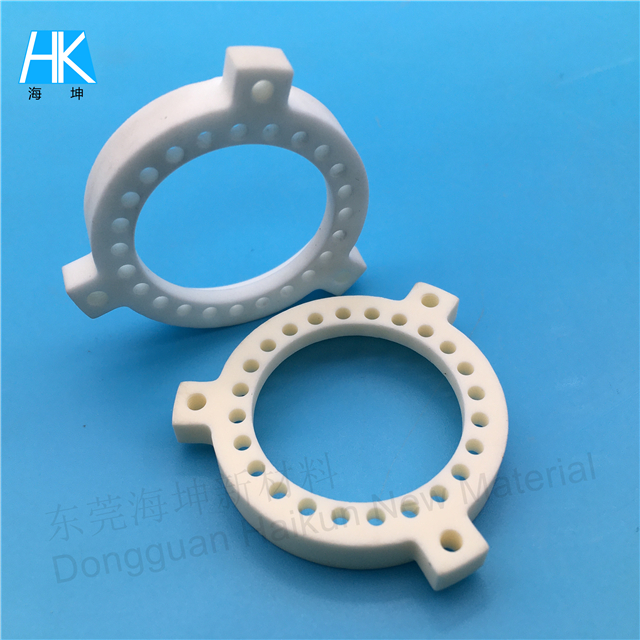
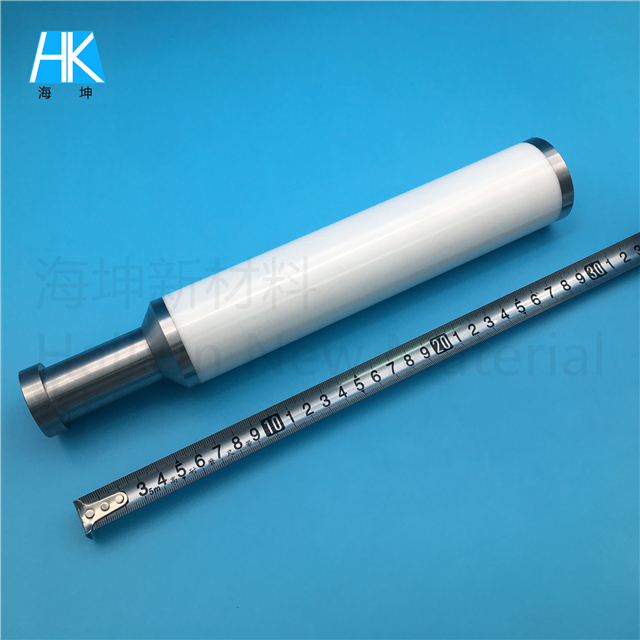
4. Zirconia Insulating Ceramics (ZrO₂)
Features:
High strength and toughness (high impact resistance)
Good electrical insulation
High wear resistance
Applications:
Electrical insulation components (e.g., insulating bushings, guides)
High wear-resistant and corrosion-resistant components (e.g., valve cores, plungers)
Precision ceramic parts (e.g., medical devices, dental materials)
Zirconium oxide possesses excellent mechanical properties, making it particularly suitable for high-load, impact-sensitive applications.
5. Barium titanate insulating ceramic (BaTiO₃)
Features:
High dielectric constant (large dielectric constant)
Strong electrical insulation
High temperature resistance, corrosion resistance
Applications:
Capacitors, sensors
Magnetic materials and electronic components
Wireless communication equipment
Due to its excellent electrical properties, barium titanate ceramics are particularly suitable for electronic devices such as capacitors and sensors.
3. Why choose insulating ceramics?
Insulating ceramic materials not only provide electrical insulation, but also have unique advantages in high temperature resistance, corrosion resistance, and wear resistance.
These properties make insulating ceramics an indispensable material in many high-precision applications.
1. Enhanced Equipment Safety
Insulating ceramics effectively prevent current leakage, ensuring the safe operation of equipment.
2. Increased Equipment Lifespan
The high wear resistance and high temperature resistance of ceramic materials significantly extend the service life of equipment, reducing downtime and malfunctions.
3. Adaptability to Extreme Conditions
Insulating ceramics maintain stable performance under extreme conditions such as high temperature, high pressure, and corrosive gases, meeting the needs of modern high-end equipment.
4. Conclusion: How to choose suitable insulating ceramic materials?
Choosing the right insulating ceramic material requires consideration not only of the material’s electrical insulation properties, but also of factors such as the specific application’s temperature requirements, mechanical strength, heat dissipation needs, and dimensional accuracy.
By understanding the properties and applications of different materials, you can select the most suitable ceramic materials for your project, improving performance, reducing costs, and extending product lifespan.
We offer custom processing services for insulating ceramic products.
We offer a wide variety of high-quality insulating ceramic products, including:
Various materials including alumina, aluminum nitride, silicon nitride, and zirconium oxide. Custom processing: laser micro-perforation, precision cutting, polishing. High-quality electrical insulation components and precision ceramic parts. Mass production and sample customization.
If you have any needs or questions regarding insulating ceramic materials, please feel free to contact our technical team. We will provide you with customized solutions.
Relevant information