
information centre / Industry Information / The characteristics and uses of special ceramics – why is high-end manufacturing inseparable from them?
The characteristics and uses of special ceramics – why is high-end manufacturing inseparable from them?
Introduction
In high-end manufacturing fields such as new energy, semiconductors, aerospace, and medical devices, a material is quietly replacing metals as the preferred choice for core components—specialty ceramics. Unlike metals, they don’t have a visible weight, yet they play a crucial role under extreme operating conditions. So, what are the characteristics of specialty ceramics? And where can they be used?
Quick Links
Contact Us
Live
E-mail:sales01@hkceramic.com
1. What are special ceramics?
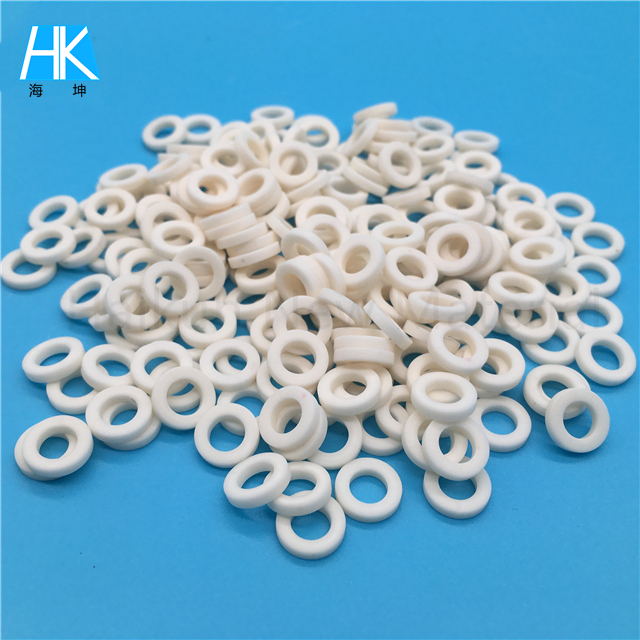
Specialty ceramics, also known as engineering ceramics or high-performance ceramics, are functional or structural ceramics made from high-purity inorganic non-metallic materials through precision molding, high-temperature sintering, and precision machining.
Unlike traditional everyday ceramics, special ceramics are not designed for aesthetics, but for performance.
Common materials include (click to view corresponding material products):
Silicon nitride ceramics (Si₃N₄)
Aluminum nitride ceramics (AlN)
Silicon carbide ceramics (SiC)
2. The core characteristics of special ceramics (why they are irreplaceable)
① High hardness and ultra-wear resistant
Special ceramics are generally much harder than steel:
Alumina: HV1600+
Zirconia: HV1100+
Silicon nitride: HV1500+
Under conditions of high wear and high-speed friction, its lifespan is often 3–10 times that of metals.
② High temperature resistance and dimensional stability
Special ceramics can operate in high-temperature environments for extended periods:
Operating temperature can reach 800–1600℃
Low coefficient of thermal expansion, not easily deformed
Suitable for high-temperature furnaces, power electronics, aerospace and other applications.
For more performance parameters of special ceramic materials, please click to view: “Comparison Table of Precision Ceramic Material Properties”
③ Excellent insulation and electrical properties
Most specialty ceramics are natural insulators:
High volume resistivity
High breakdown voltage
Stable dielectric properties
It is an irreplaceable material in electrical equipment, semiconductors, and electronic packaging.
④ Corrosion resistant and rust-free
Special ceramics are highly inert to acids, alkalis, salts, and most chemical media.
No oxidation
No rust
No chemical corrosion
It has significant advantages in chemical, environmental protection, and fluid systems.
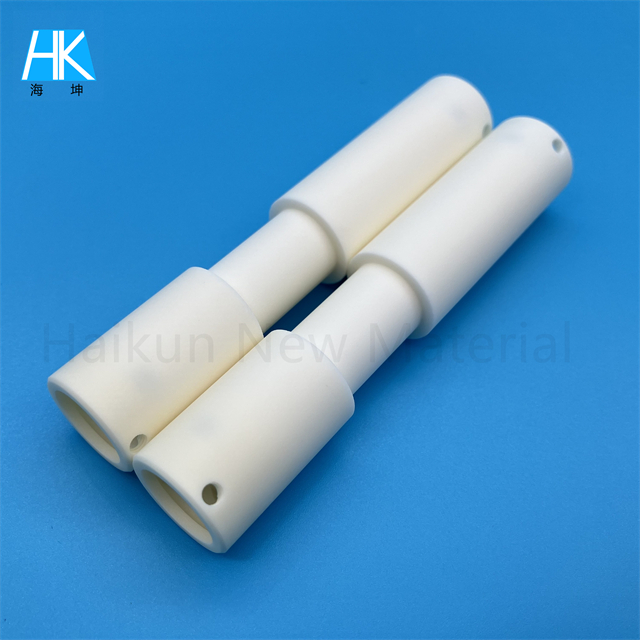
⑤ High-precision machining capability
With the development of precision ceramic processing technology, special ceramics can now achieve:
micron-level dimensional tolerances
mirror polishing
customized complex and irregular structures
meeting the precision and consistency requirements of high-end equipment.
3. Typical applications of special ceramics (used in "critical locations")
Machinery and Equipment Manufacturing
Ceramic bushings and sleeves
Ceramic plungers and valve cores
Wear-resistant liners and guide components
Advantages: Wear-resistant, long service life, low maintenance
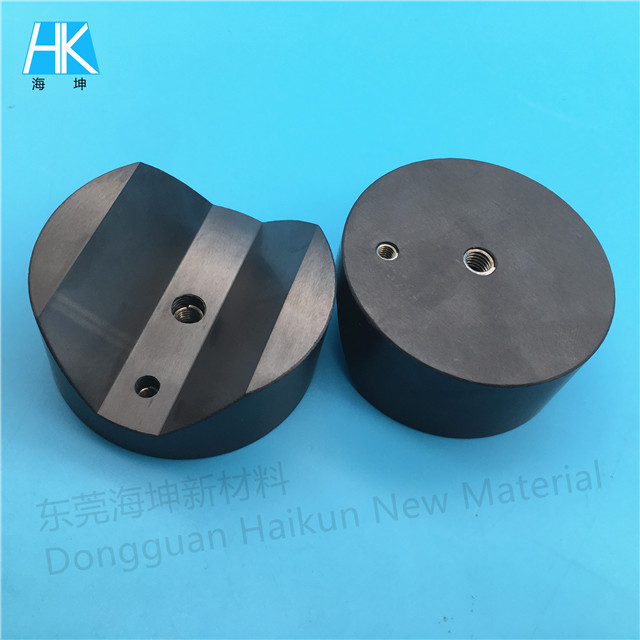
New Energy and Power Electronics
Ceramic Heat Sinks
Insulating Components
Power Module Boards
Advantages: High Insulation + Stable Heat Dissipation
Semiconductor and Electronics Industry
Ceramic substrates, carrier plates
Ceramic components for vacuum chambers
Precision positioning and support components
Advantages: Clean, stable, non-conductive
Chemical and Fluid Systems
Corrosion-resistant ceramic tubes
Ceramic nozzles and guide tubes
Sealing and wear-resistant structural components
Advantages: Non-corrosive and non-contaminated media
Medical and High-End Applications
Medical device structural components
High-precision insulating parts
Specialty environmental functional ceramics
Advantages: Stable, safe, long lifespan
4. Why are more and more companies choosing "customized specialty ceramics"?
Compared to standard metal parts, special ceramics are often used in non-standard, critical locations, which determines their core value:
Increased overall machine lifespan
Reduced maintenance and downtime
Improved equipment stability
Lower long-term overall costs
The real cost is not the unit price of materials, but the total cost over the equipment’s operating cycle.
5. Conclusion: Specialty ceramics are the "invisible core materials" of high-end manufacturing.
As equipment evolves towards higher temperatures, higher pressures, higher precision, and longer lifespans, specialty ceramics are no longer just “alternative materials,” but essential ones.
If you are looking for a specialty ceramic solution suitable for your specific working conditions, instead of comparing specifications, it’s better to involve a professional manufacturer directly, addressing everything from materials to structure in one step.
Relevant information