
information centre / Ceramic material, Industry Information / Six common industrial ceramic materials and their applications
Six common industrial ceramic materials and their applications
Introduction
With the rapid development of the automobile manufacturing, semiconductor, new energy, and high-end equipment industries, industrial ceramic materials, due to their outstanding properties in high temperature resistance, wear resistance, corrosion resistance, and electrical insulation, are gradually replacing traditional metal materials and becoming an important basic material for modern industry. The following are six common industrial ceramic materials that are currently the most widely used and mature in the industrial field.
Quick Links
Contact Us
Live
E-mail:sales01@hkceramic.com
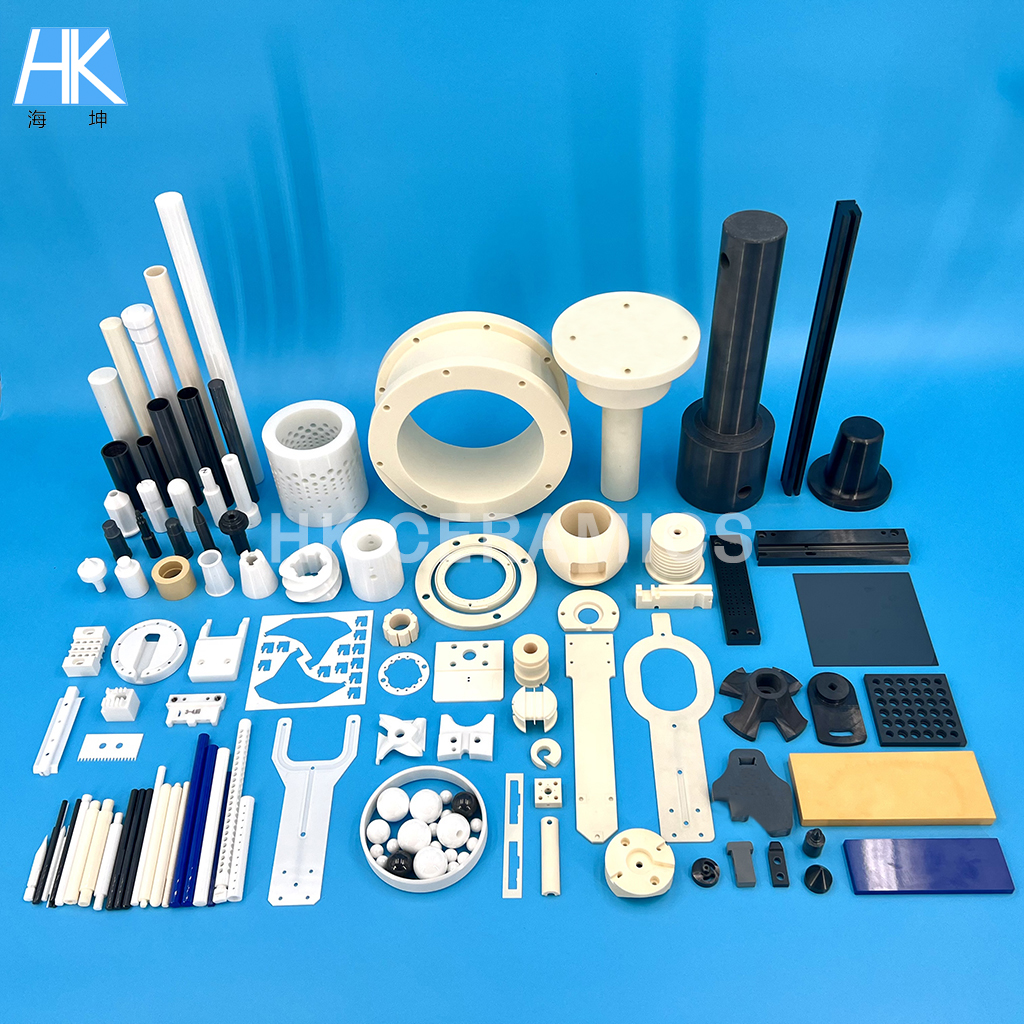
Specifications|Support customization

| Plate material mm (L, H, and W can be selected as needed, customization supported) | ||||||||||||
| L | 3 | 5 | 8 | 10 | 12 | 15 | 18 | 20 | 22 | 25 | 28 | More (Customizable) |
| W*H | 100*100 | 90*140 | 95*145 | 150*150 | 160*160 | 122*290 | 110*275 | More (Customizable) | ||||
| Rod material mm (W, Ø can be selected as needed, customization supported) | ||||||||||||
| Ø | 0.5 | 0.8 | 0.9 | 1 | 1.5 | 2 | 2.5 | 3 | 3.5 | 4 | 4.5 | More (Customizable) |
| W | 60 | 100 | 120 | 200 | More (Customizable) | |||||||
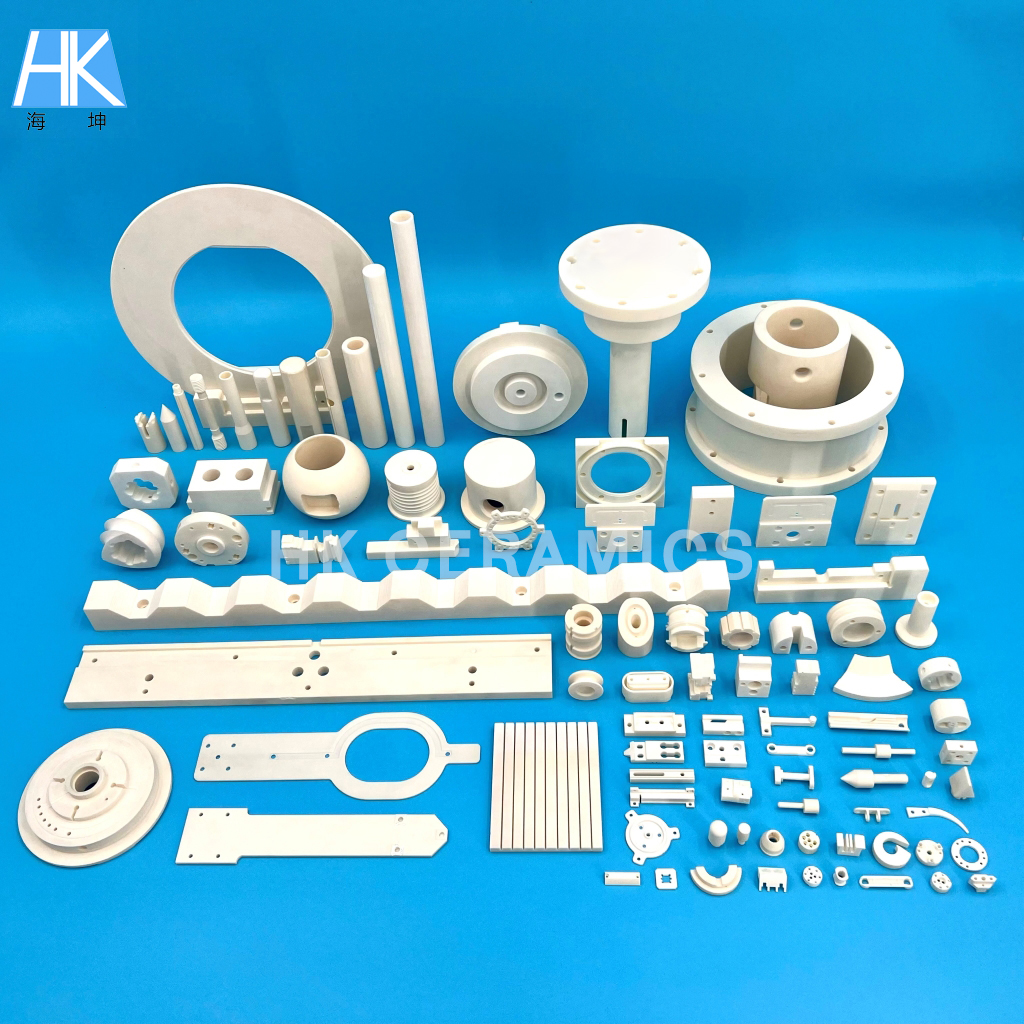
1. Alumina ceramics (Al₂O₃)
Alumina ceramics are among the most widely used and cost-effective materials in industrial ceramics.
Key Features:
High hardness and wear resistance
Excellent electrical insulation properties
High temperature resistance and chemical corrosion resistance
Mature manufacturing process, suitable for mass production
Typical Applications: Mechanical wear-resistant parts, electronic insulating parts, industrial structural parts, and automation equipment components
2. Zirconia ceramics (ZrO₂)
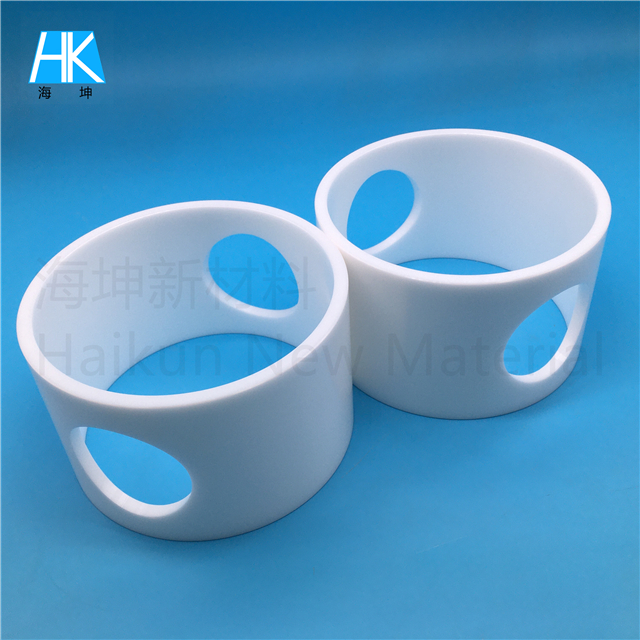
Zirconia ceramics are known for their high strength and high toughness, and are representative of advanced ceramic materials.
Key Features:
High fracture toughness, not easily brittle
Excellent wear resistance
Coefficient of thermal expansion close to that of metals
Enables high-precision machining
Typical Applications: Precision shafts, wear-resistant sliders, structural supports, high-end industrial components
3. Silicon nitride ceramics (Si₃N₄)
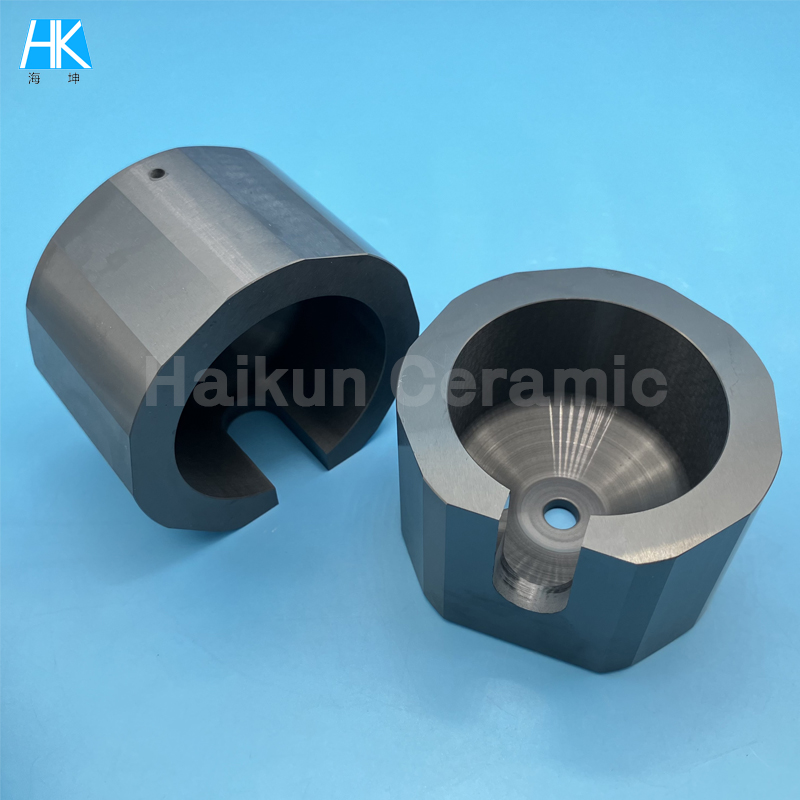
Silicon nitride ceramics are structural ceramics with outstanding comprehensive performance, suitable for high load and high reliability conditions.
Key Features:
High strength, low density
Excellent wear resistance and thermal shock resistance
Stable performance at high temperatures
Suitable for high-speed and impact environments
Typical Applications: Ceramic nozzles in automotive manufacturing, high-speed bearing components, parts for new energy and automation equipment
4. Silicon carbide ceramics (SiC)
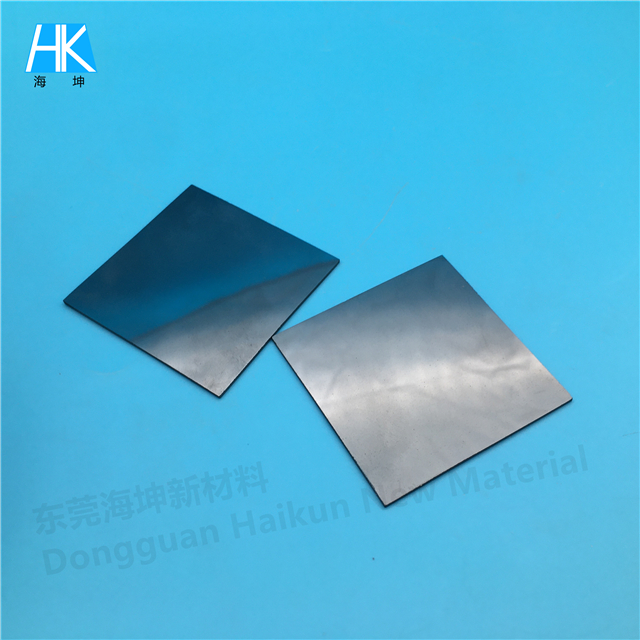
Silicon carbide ceramics are known for their ultra-high hardness and resistance to extreme working conditions, and are often used in high-wear and highly corrosive environments.
Key Features:
Extremely high hardness and excellent wear resistance
Good corrosion resistance
High thermal conductivity and high temperature resistance
Strong chemical stability
Typical Applications: Mechanical seal rings, pump and valve components, high-temperature wear-resistant parts, chemical equipment parts
5. Aluminum nitride ceramics (AlN)
Aluminum nitride ceramics are a type of functional ceramic material that combines high thermal conductivity with electrical insulation properties.
Key Features:
Extremely high thermal conductivity
Excellent electrical insulation properties
Coefficient of thermal expansion close to silicon
Suitable for electronic and semiconductor applications
Typical Applications: Power electronics heat sinks, semiconductor packaging substrates, LED and new energy electronic modules
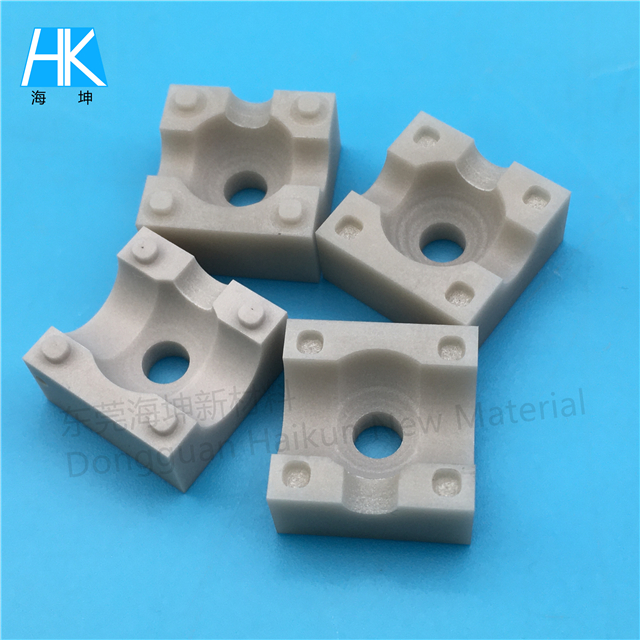
6. Machinable Ceramic (Macor®)
Machinable ceramics typically refer to Macor® machinable glass ceramics, which are special ceramic materials that can be directly machined.
Key Features:
Can be machined using conventional CNC equipment
No post-sintering superhard machining required
Good dimensional stability and high machining efficiency
Excellent electrical and thermal insulation properties
Typical Applications: Insulating components for semiconductor and electronic devices, automated jigs and fixtures, laboratory and R&D equipment components
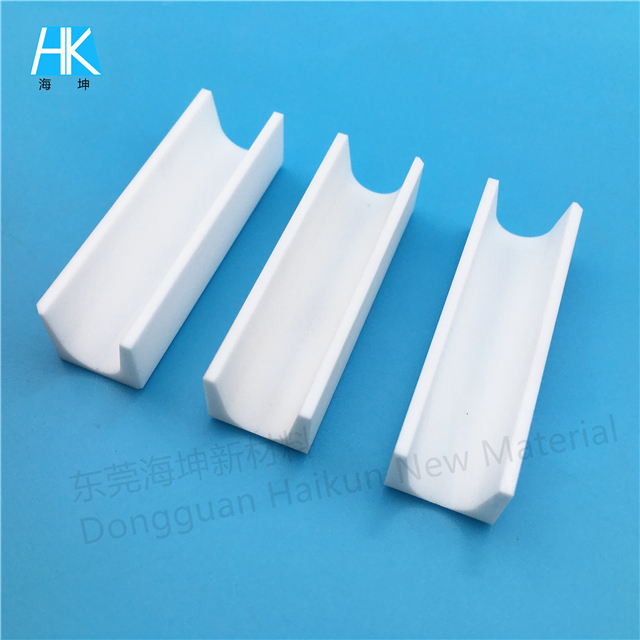
*Values are typical material properties, actual values may vary due to product configuration and manufacturing process.
*For more details, please feel free to contact our company.
*For more details, please feel free to contact our company.
Other
Precision ceramic products
Zirconia ceramic insulator
Material:Zirconia Ceramics
Describe:Zirconia ceramic insulators with smooth surfaces and precise designs provide effective electrical insulation and stability. Their high hardness and strength maintain performance under high pressure and temperature, ensuring stable operation and equipment longevity.
Corrosion-resistant Alumina Ceramic Rotor Shaft
Material:Alumina ceramics
Describe:Corrosion-resistant Alumina Ceramic Rotor Shaft, also known as porous retaining rings, feature precise designs with drilled holes for secure connection. Their high hardness and strength ensure stability and durability under pressure, ideal for long-lasting equipment performance.
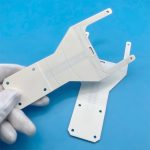
Alumina ceramic handling arm
Material:Alumina ceramics
Describe:Customized alumina (Al2O3) ceramic handling arms, also known as semiconductor silicon wafer handling fork arms. These arms ensure secure connections and stable handling in semiconductor manufacturing and high-precision industrial automation due to their precise shapes, wear resistance, and high-temperature stability in clean environments.
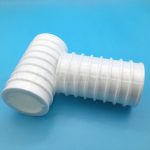
60mm diameter zirconia ceramic corrugated tube
Material:Zirconia Ceramics
Describe:A 60mm diameter zirconia ceramic corrugated tube offers exceptional heat resistance, wear resistance, and flexibility. Widely used in electronics, mechanical engineering, medical, and aerospace industries for enhanced production efficiency and reliability.

Aluminum Nitride Precision Ceramic Accessories
Material:Aluminum Nitride Ceramics
Describe:Aluminum Nitride Precision Ceramic Accessories offer precise perforation for mechanical support, electrical insulation, and thermal management enhancement in precision applications.
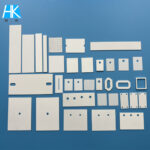
Customized 96/99 Alumina Ceramic Heat Sink
Material:Alumina ceramics
Describe:Customized 96/99 Alumina Ceramic Heat Sink, also known as porous retaining rings, feature precise designs with drilled holes for secure connection. Their high hardness and strength ensure stability and durability under pressure, ideal for long-lasting equipment performance.