
information centre / Industry Information / What is the difference between ceramic resistors and ceramic insulators? Many people misunderstand this!
What is the difference between ceramic resistors and ceramic insulators? Many people misunderstand this!
Introduction
In the industrial ceramics industry, customers often ask questions like: “Isn’t ceramic an insulator? Why are there ceramic resistors?” “What’s the difference between a ceramic resistor and a ceramic insulator?” “Are industrial ceramics conductive or insulating?” In fact, ceramic resistors and ceramic insulators are not the same concept. Ceramics can be both excellent insulators and important components of resistive elements. They differ significantly in material composition, working principle, and application areas. This article will provide a comprehensive understanding of the true differences between ceramic resistors and ceramic insulators.
Quick Links
Contact Us
Live
E-mail:sales01@hkceramic.com
1. What is ceramic insulation?
Ceramic insulation refers to:
It utilizes the extremely high resistivity of ceramic materials to prevent the passage of electric current.
Most industrial ceramics are insulating materials.
For example:
Alumina ceramics (Al₂O₃)
Aluminum nitride ceramics (AlN)
Silicon nitride ceramics (Si₃N₄)
Zirconium oxide ceramics (ZrO₂)
Boron nitride ceramics (BN)
Macro-compatible ceramics
These materials have very high volume resistivity.
For example:
96% alumina ceramics
Volume resistivity:
10¹⁴ Ω·cm
Breakdown voltage:
≥25 kV/mm
This means that current can hardly pass through the ceramic body.
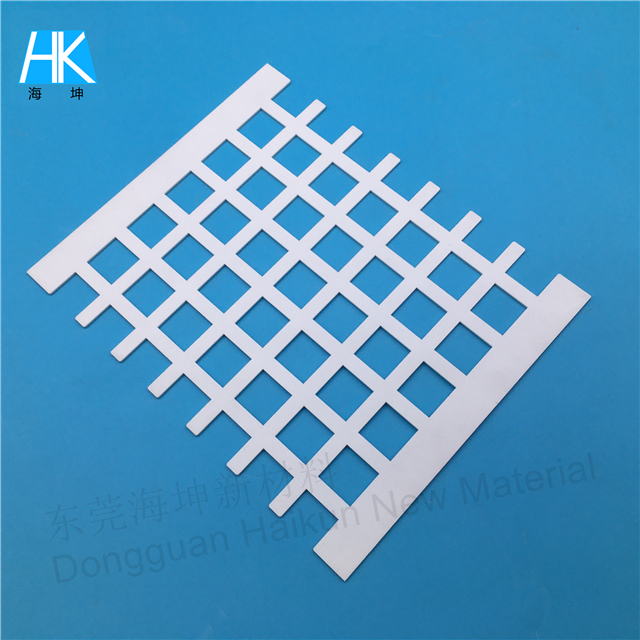
The main function of ceramic insulation
Electrical isolation
Prevent leakage and short circuit.
High voltage insulation
Used for the protection of high-voltage equipment.
Circuit support
It both supports the components and ensures insulation safety.
Common Applications
Semiconductor equipment insulation components
Power equipment insulation structural components
New energy vehicle insulation components
2. What is a ceramic resistor?
Many people mistakenly believe that:
Ceramic resistors are simply “ceramics that conduct electricity”.
That’s not actually accurate.
Ceramic resistors typically refer to:
Resistive elements manufactured using ceramics as a matrix or carrier.
The actual resistive effect is often caused by:
Metal oxides
Resistive paste
Resistive film
Instead of the ceramic itself.
Structure of ceramic resistors
Usually by:
Ceramic matrix
Responsibilities: Insulation, support, high temperature resistance
resistive layer
Responsibilities: Current limiting, voltage division, and power consumption.
They are composed of various elements; therefore, the ceramic element in a ceramic resistor mainly serves structural and insulating functions.
Common ceramic resistor products
For example:
Cement resistor
Thick film resistor
Power resistor
High voltage resistor
Heating resistor element
They typically use ceramic materials as the supporting substrate inside.
3. The essential difference between ceramic resistors and ceramic insulators
| Comparison Projects | Ceramic insulation | ceramic resistor |
|---|---|---|
| Main functions | Prevent the flow of current | Control the current magnitude |
| Electrical properties | Ultra-high resistivity | With design resistance value |
| Is it conductive? | Basically non-conductive | It has controlled conductivity. |
| core materials | Industrial ceramic body | ceramic + resistive material |
| Application areas | Insulation protection | Circuit control |
| Work Objectives | Leakage protection | Current limiting, voltage division, and heat generation |
Simply put:
Ceramic insulation
Purpose: To prevent current from flowing.
Ceramic resistor
Purpose: To allow current to flow according to a set value
5. Why can industrial ceramics be used to make both insulating components and resistors?
This is because:
Ceramic materials inherently possess:
High insulation
High temperature resistance
High stability
Therefore, they are very suitable as base materials for electronic components.
For example:
Alumina ceramics
can be used not only to manufacture:
insulating sleeves
ceramic substrates
but also as:
thick film resistor substrates
power resistor carriers
and other applications.
5. Why do semiconductors and new energy vehicles use ceramic insulation components extensively?
With the rapid development of high-voltage, high-power equipment:
The insulation performance advantages of industrial ceramics are becoming increasingly apparent.
For example:
New energy vehicles
Applications:
IGBT modules
Battery management systems
Motor controllers
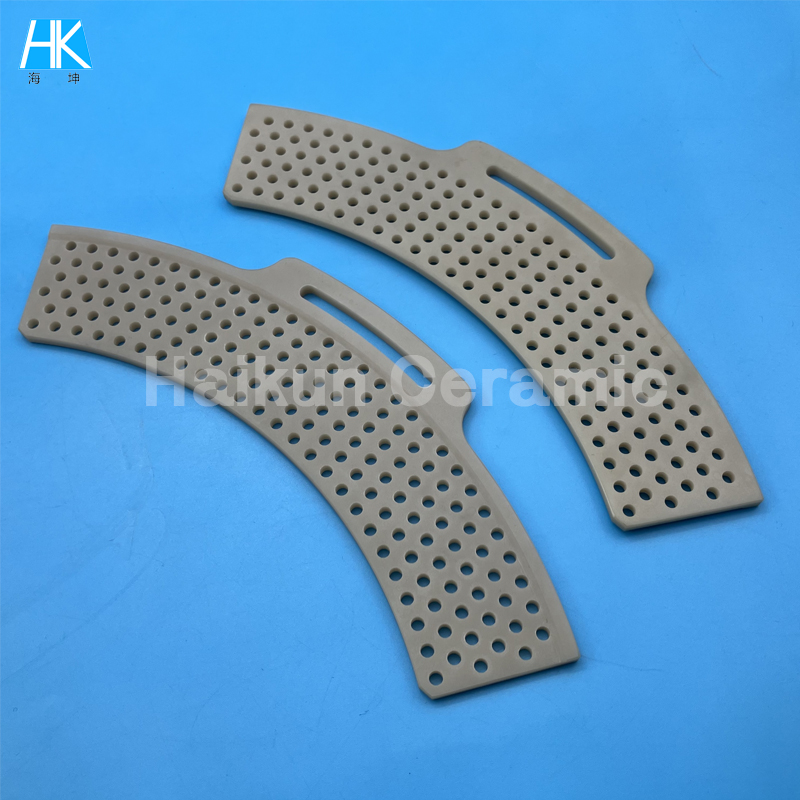
Semiconductor Equipment
Applications:
Ceramic electrostatic chucks
Ceramic insulating rings
Wafer support components
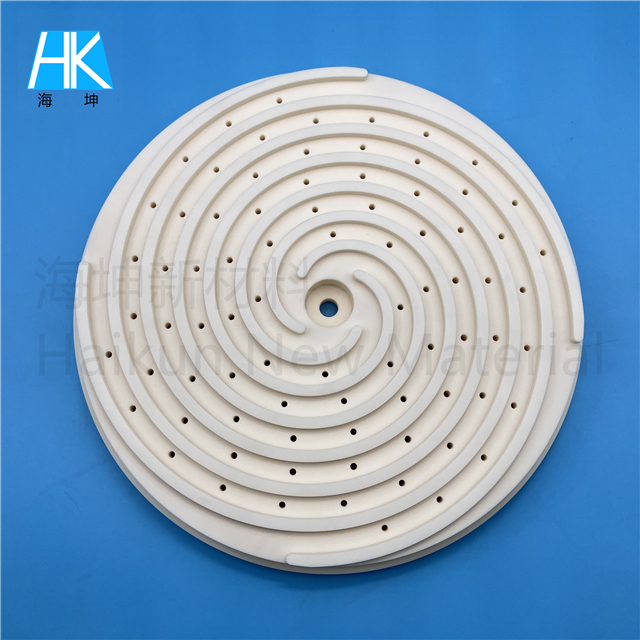
Power Electronic Equipment
Applications:
High-voltage insulation components
Power module substrates
Compared to plastics and common insulation materials:
Industrial ceramics offer:
✔ Higher insulation strength
✔ Higher temperature resistance
✔ Longer service life
✔ Greater dimensional stability
6. How to select ceramic insulation materials?
Different materials are used for different applications:
| Usage requirements | Recommended materials |
|---|---|
| General insulation | alumina ceramics |
| High thermal conductivity insulation | Aluminum nitride ceramics |
| High-strength insulation | silicon nitride ceramics |
| High wear-resistant insulation | Zirconia ceramics |
Among them:
Alumina ceramics are currently the most widely used and cost-effective insulating ceramic materials.
Ceramic resistors are not the same as ceramic insulators, but the two are inseparable.
Many people believe that ceramic resistors and ceramic insulators are the same product, but in fact they are fundamentally different.
The core function of ceramic insulation is to prevent current from flowing through it;
The core function of ceramic resistors is to control the flow of current.
Industrial ceramics, with their excellent insulation properties, high temperature resistance, and structural stability, can serve as both high-performance insulating materials and important matrix materials for resistors.
With the development of industries such as new energy vehicles, semiconductors, and power electronics, the application value of high-performance industrial ceramics is constantly increasing.
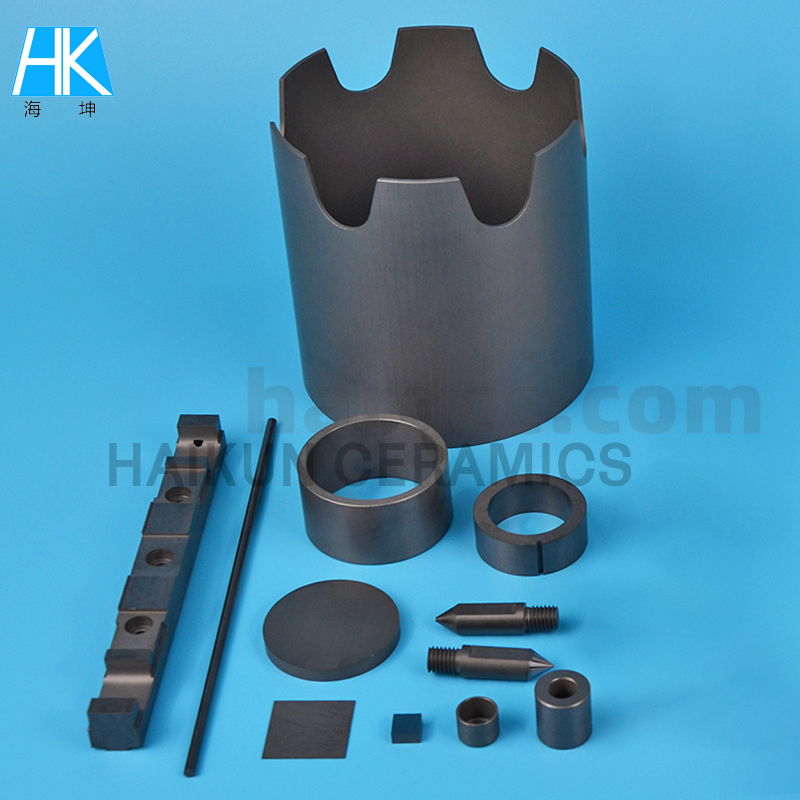
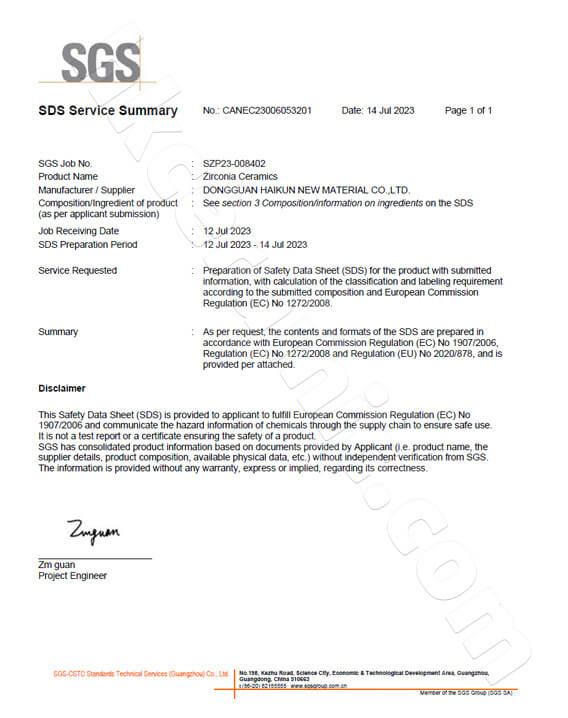
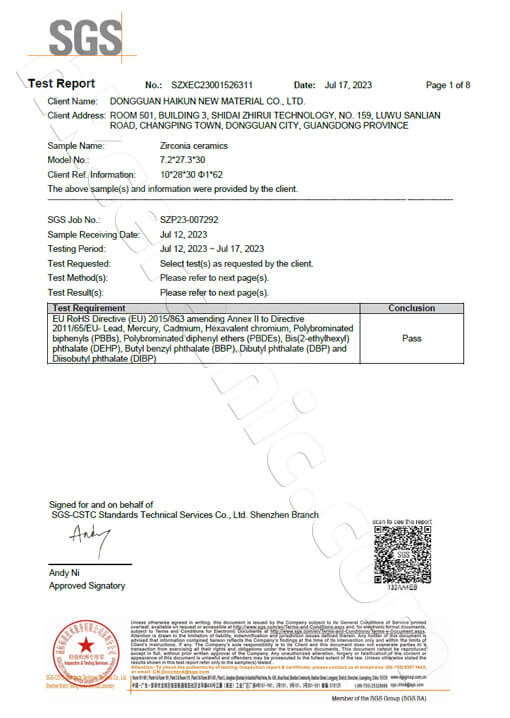
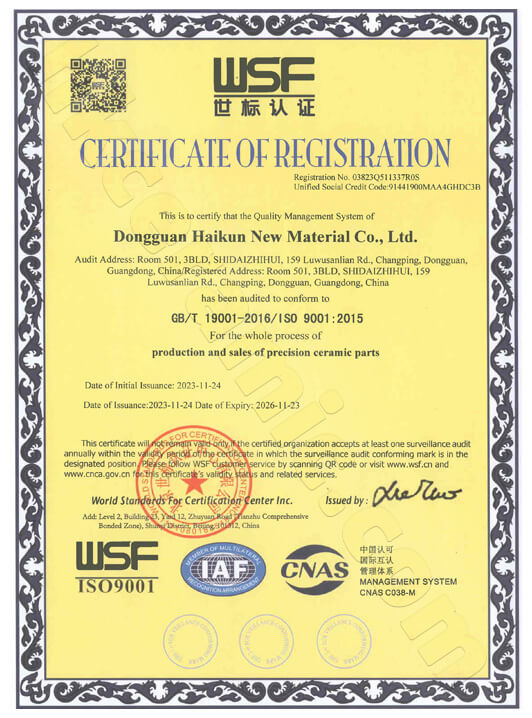
Dongguan Haikun New Materials Co., Ltd.
Focusing on the research and development and precision machining of high-performance industrial ceramics, we provide:
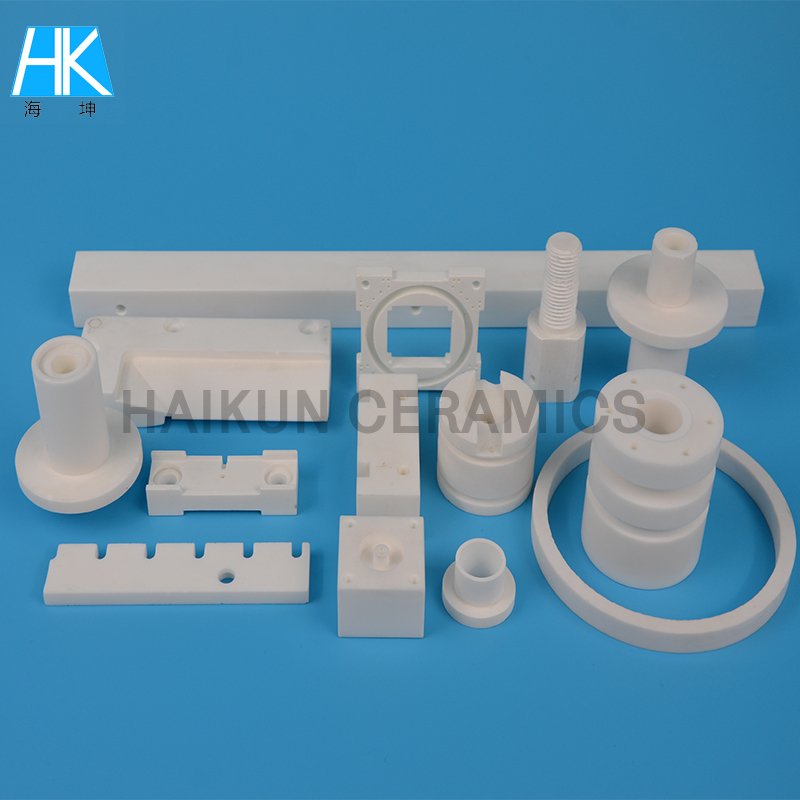
Alumina ceramic parts
Aluminum nitride ceramic substrates
Silicon nitride ceramic structural parts
Zirconium oxide ceramic precision parts
Electronic insulating ceramic assemblies
Supports:
✔ Customization based on provided drawings
✔ Precision grinding
✔ Laser cutting for micro-hole processing
✔ Mirror polishing
✔ Small batch prototyping and mass production
Providing professional industrial ceramic solutions for the electronics, power, new energy, semiconductor, and high-end equipment manufacturing industries.
Relevant information