
information centre / Company News / What factors affect the heat dissipation performance of aluminum nitride ceramic plates?
What factors affect the heat dissipation performance of aluminum nitride ceramic plates?
Introduction
The heat dissipation effect of aluminum nitride ceramic sheets is not determined by a single factor, but is the result of the combined effects of material properties, structural design and application conditions.
Quick Links
Contact Us
Live
E-mail:sales01@hkceramic.com
1. Core properties of the material itself
This is the foundation for determining heat dissipation capacity, mainly depending on two key indicators:
Thermal conductivity: This is the most crucial parameter. Aluminum nitride ceramics have a theoretically high thermal conductivity (approximately 320 W/(m·K)), but actual products vary depending on purity and sintering process, typically ranging from 170-280 W/(m·K). Higher thermal conductivity results in stronger heat dissipation.
Coefficient of thermal expansion: This determines the compatibility between the ceramic sheet and components such as chips and metal substrates. If the difference in thermal expansion coefficients is too large, stress can easily occur during temperature changes, leading to cracking and indirectly disrupting the heat dissipation path.
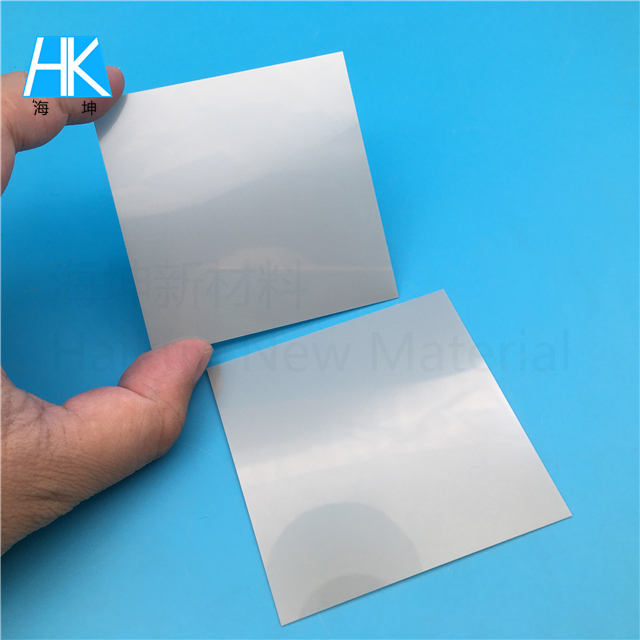
2. Product structure and size design
A reasonable structure can fully realize the heat dissipation potential, primarily involving three aspects.
Thickness: As discussed previously, there is no fixed optimal value. Excessive thickness increases thermal resistance, while excessive thinness results in insufficient mechanical strength and susceptibility to breakage. A balance must be struck between thermal resistance, strength, and installation space. The mainstream thickness of 0.25-1.0mm represents a comprehensive trade-off.
Surface flatness: The flatter the surface, the greater the contact area with the heat dissipation interface (e.g., chip, heat sink), and the smaller the gap. The air in the gap has extremely low thermal conductivity, significantly increasing contact thermal resistance and reducing heat dissipation efficiency.
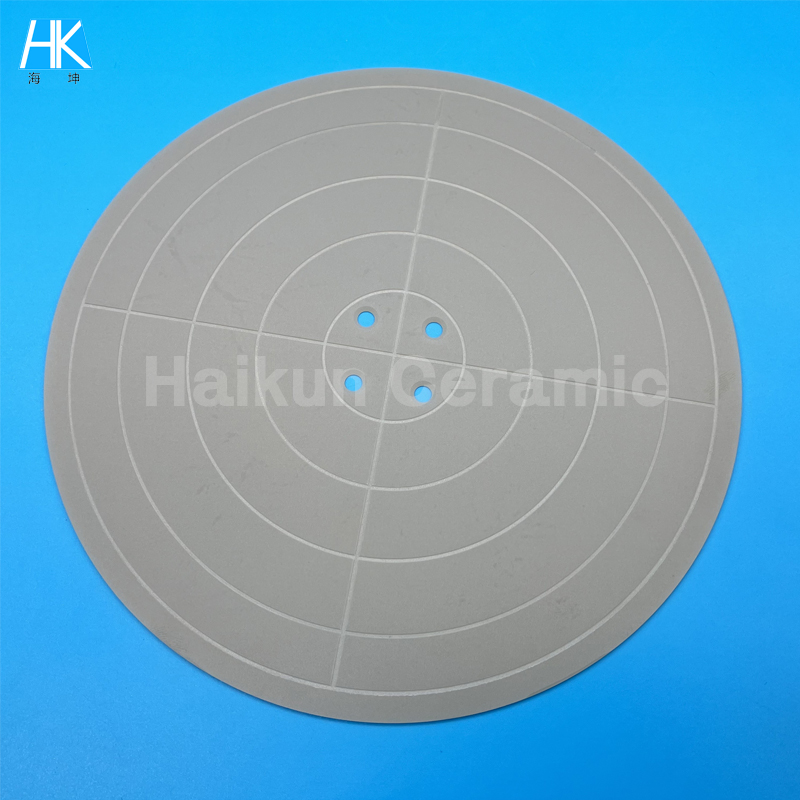
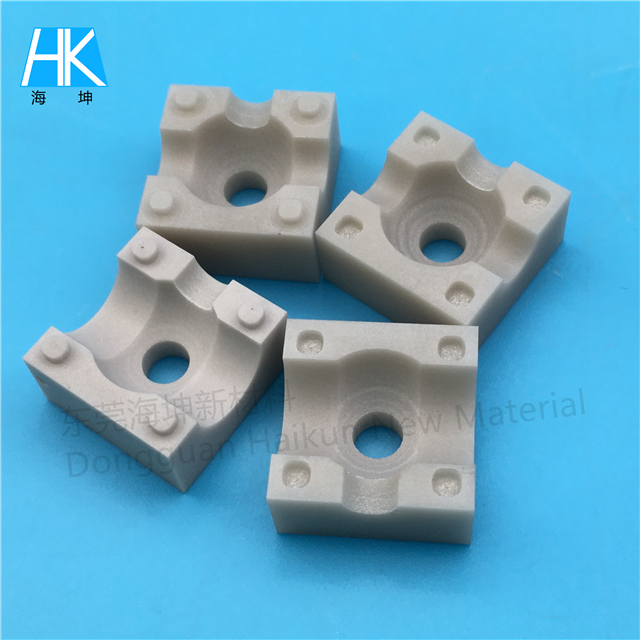
Shape and openings: Complex shapes (e.g., grooves, bosses) or openings may be designed to accommodate component mounting, but they may also reduce the effective heat dissipation area or increase local thermal resistance. Optimization is required based on specific scenarios.
3. External matching conditions during application
Even with excellent ceramic heatsink performance, improper external installation and matching can significantly reduce heat dissipation.
Interface Materials: Thermal grease and thermal pads are typically applied between the ceramic heatsink and the chip/heatsink. The thermal conductivity, thickness, and adhesion of these interface materials directly affect the contact thermal resistance.
Heat Dissipation System Matching: The ceramic heatsink is only one part of the heat dissipation path; the final heat dissipation effect also depends on the heat dissipation capacity of subsequent heatsinks (such as fins, fans, and water cooling systems). If the heatsink’s capacity is insufficient, the heat conducted by the ceramic heatsink cannot be dissipated in time, limiting the overall heat dissipation effect.
Installation Pressure and Sealing: Appropriate pressure must be applied during installation to ensure a tight fit between the ceramic heatsink and adjacent components, minimizing gaps. Furthermore, the quality of the seal affects the heat dissipation environment; for example, in humid or dusty environments, poor sealing can lead to performance degradation of heat dissipation components.
Relevant information