
information centre / Industry Information / The relationship between ceramics and semiconductors—why is there no real semiconductor manufacturing without ceramics?
The relationship between ceramics and semiconductors—why is there no real semiconductor manufacturing without ceramics?
Introduction
When people talk about semiconductors, they often think of chips, silicon wafers, and manufacturing processes, but rarely notice a “behind-the-scenes hero”—precision ceramics. In fact, from wafer manufacturing to packaging and testing, from equipment operation to long-term stability, ceramic materials are present throughout the entire semiconductor industry chain. It can be said that without high-performance ceramics, there would be no highly reliable semiconductors.
Quick Links
Contact Us
Live
E-mail:sales01@hkceramic.com
1. Why can't semiconductors be separated from ceramics?
Semiconductor manufacturing is an industrial activity with extremely demanding material requirements, the core of which include:
Ultra-clean (cannot release metal ions)
High insulation (avoids electrical interference and breakdown)
High temperature resistance (process temperatures often reach thousands of degrees Celsius)
Corrosion resistance (plasma, corrosive gases)
High dimensional stability (micrometer-level tolerance)
And these are precisely the areas where precision ceramics excels.
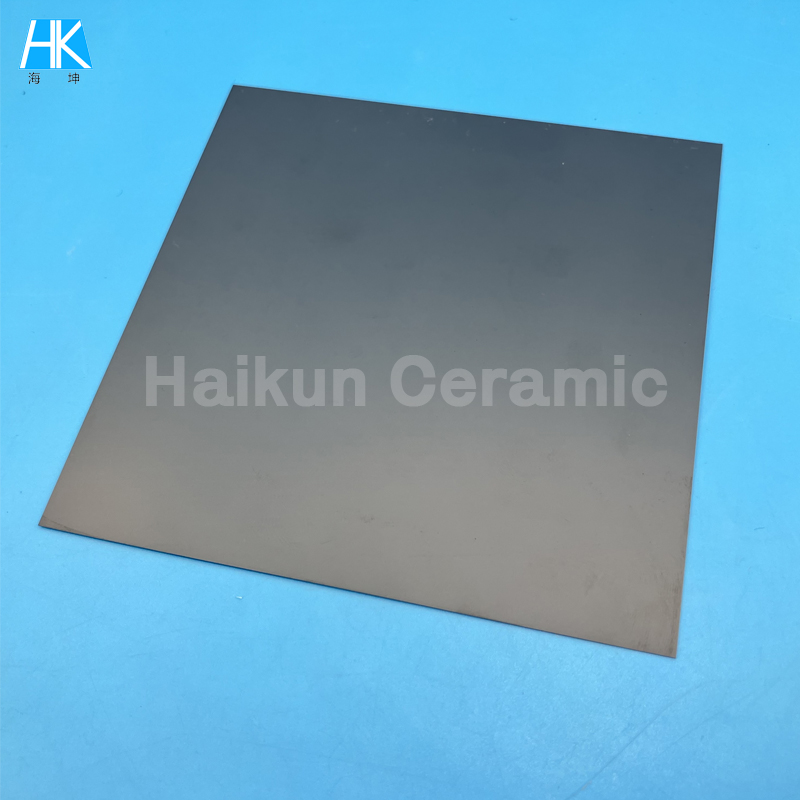
2. The key role of ceramics in the semiconductor industry chain
1. Ceramics for Semiconductor Devices – “The Skeleton and Nervous System of the Devices”
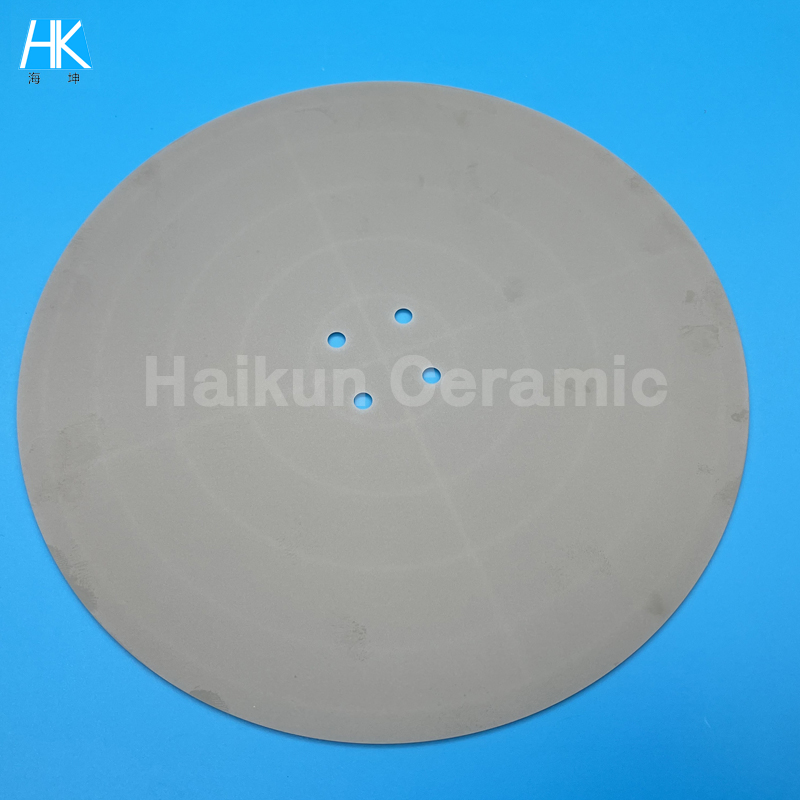
In wafer manufacturing equipment, many core components are made of ceramic, for example:
Ceramic components for vacuum chambers
Electrostatic chucks (ESC)
Ceramic heating plates
Ceramic supports and positioning components
Ceramic components for plasma environments
Commonly used materials: Alumina, aluminum nitride, silicon nitride, etc.
These components must operate stably in high temperature, high vacuum, and strong plasma environments for extended periods, which metals simply cannot handle.
2. Ceramic in Semiconductor Packaging – “The Secure Enclosure of the Chip”
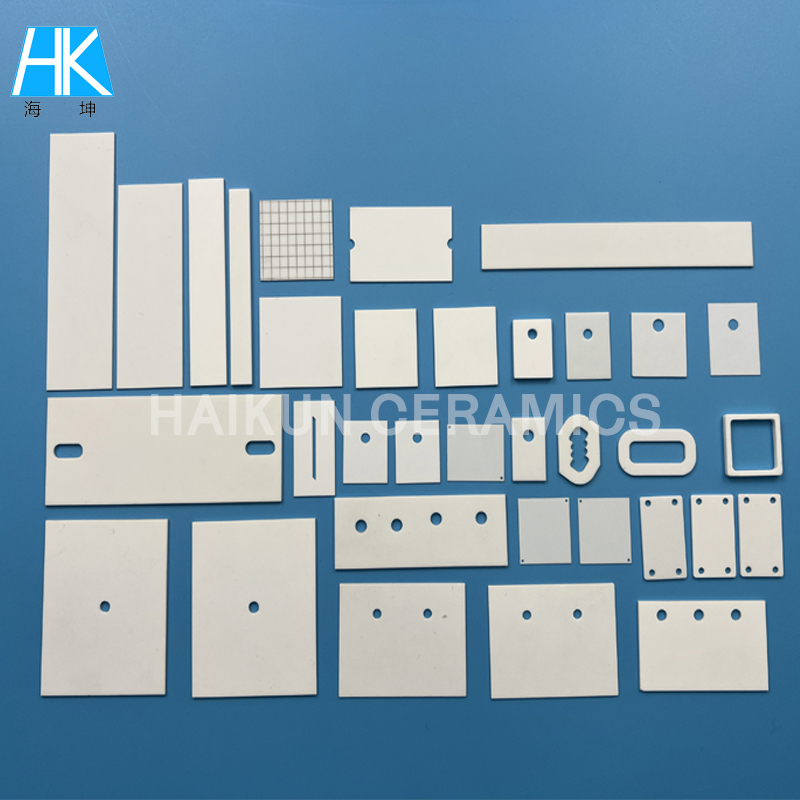
Ceramic substrates are a key material in power semiconductors and high-reliability packaging:
Aluminum nitride ceramic substrate (high thermal conductivity)
Alumina ceramic substrate (high insulation)
DBC / DPC ceramic substrate
Applications include: IGBT modules, power chips, automotive electronics, rail transportation, aerospace, etc.
Ceramic allows chips to operate safely in high-power, high-voltage environments.
3. Ceramics in Semiconductor Testing and Manufacturing Auxiliary Materials
Ceramics are also ubiquitous in testing, handling, and auxiliary systems:
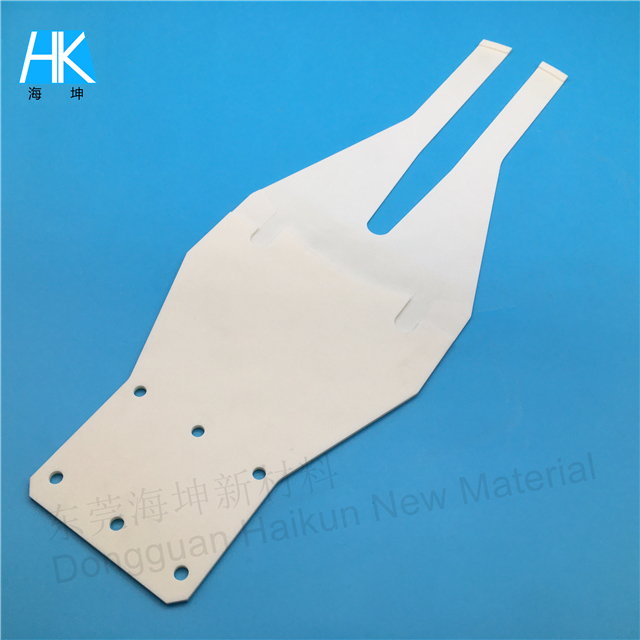
Wafer handling ceramic arm
Precision ceramic positioning pins
Ceramic guide rails and guide components
Ceramic structural components for test fixtures
Advantages:
Non-conductive
Non-polluting
Long-term stable accuracy
3. Why are ceramics more suitable for semiconductors than metals?
| Key Requirements | Metallic materials | Precision ceramics |
|---|---|---|
| Insulation | Difference | Excellent |
| cleanliness | Metal ions are easily precipitated | Highly inert |
| High temperature resistance | limited | 1000℃+ |
| Corrosion resistant | Easily corroded | Extremely strong |
| Dimensional stability | Easily deformed by heat | Very stable |
| Service life | medium | Extremely long |
In the semiconductor industry, “stability” is more important than “cheapness”.
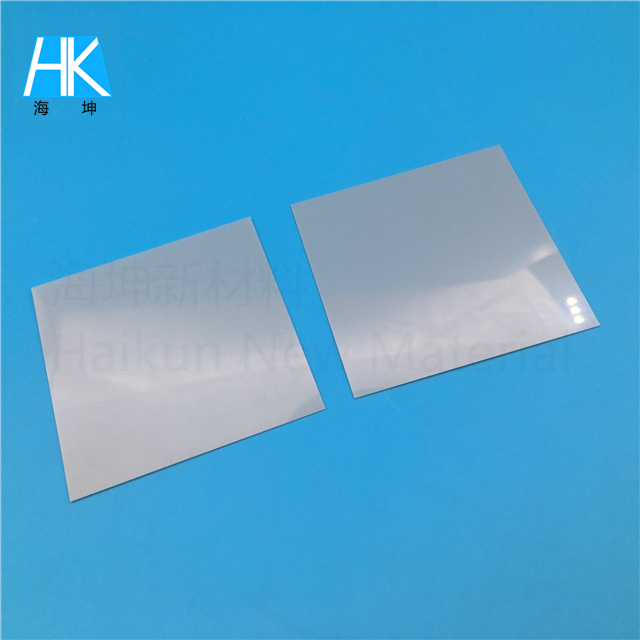
4. How do ceramic materials drive semiconductor upgrades?
As process nodes continue to shrink and power densities continue to increase, the semiconductor industry is placing higher demands on ceramics:
Higher purity
Lower particle release
Higher processing precision
More stable batch consistency
This has also driven the rapid development of precision ceramic processing technology:
Ultra-precision grinding and polishing
Laser precision machining
High-density sintering and surface treatment
Customized non-standard structures
5. Conclusion: Ceramics are an irreplaceable "basic material" in the semiconductor industry chain.
Semiconductors are the core of modern industry, and ceramics are one of the fundamental materials supporting the stable operation of semiconductors.
While they do not directly participate in computation, ceramics determine whether a chip can operate safely, efficiently, and for extended periods.
For semiconductor equipment and electronics companies,
choosing suitable ceramic materials and reliable processing partners is an investment in product stability.
Haikun supports customized precision ceramic structural components for semiconductors
Material selection · Structural optimization · High-precision machining
Relevant information