
information centre / Industry Information / What are some thermally conductive industrial ceramic materials used in automobiles?
What are some thermally conductive industrial ceramic materials used in automobiles?
Introduction
With the rapid development of new energy vehicles, electric drive systems, and high-power electronic technologies, the automotive industry is placing increasingly higher demands on material performance. Especially in battery, electronic control, motor, and high-temperature engine systems, “heat dissipation” has become a crucial factor affecting overall vehicle performance and lifespan. Against this backdrop, thermally conductive industrial ceramic materials are being adopted by an increasing number of automotive component manufacturers. So, what are some common thermally conductive industrial ceramic materials used in automobiles? And in which components are they applied? This article provides a comprehensive overview.
Quick Links
Contact Us
Live
E-mail:sales01@hkceramic.com
1. Why is the automotive industry paying more and more attention to thermally conductive ceramic materials?
While traditional metals offer good thermal conductivity, they also present significant drawbacks:
They conduct electricity, posing a risk of electrical hazards.
They are prone to oxidation and deformation at high temperatures.
Their long-term corrosion resistance is limited.
They are also relatively heavy, hindering weight reduction.
In contrast, thermally conductive industrial ceramic materials can achieve all of the following:
✔ Thermal conductivity
✔ Insulation
✔ High temperature resistance
✔ Corrosion resistance
✔ Lightweight
✔ Long lifespan and stable operation
Especially in the field of new energy vehicles, ceramic materials have gradually become an important component of high-end thermal management solutions.
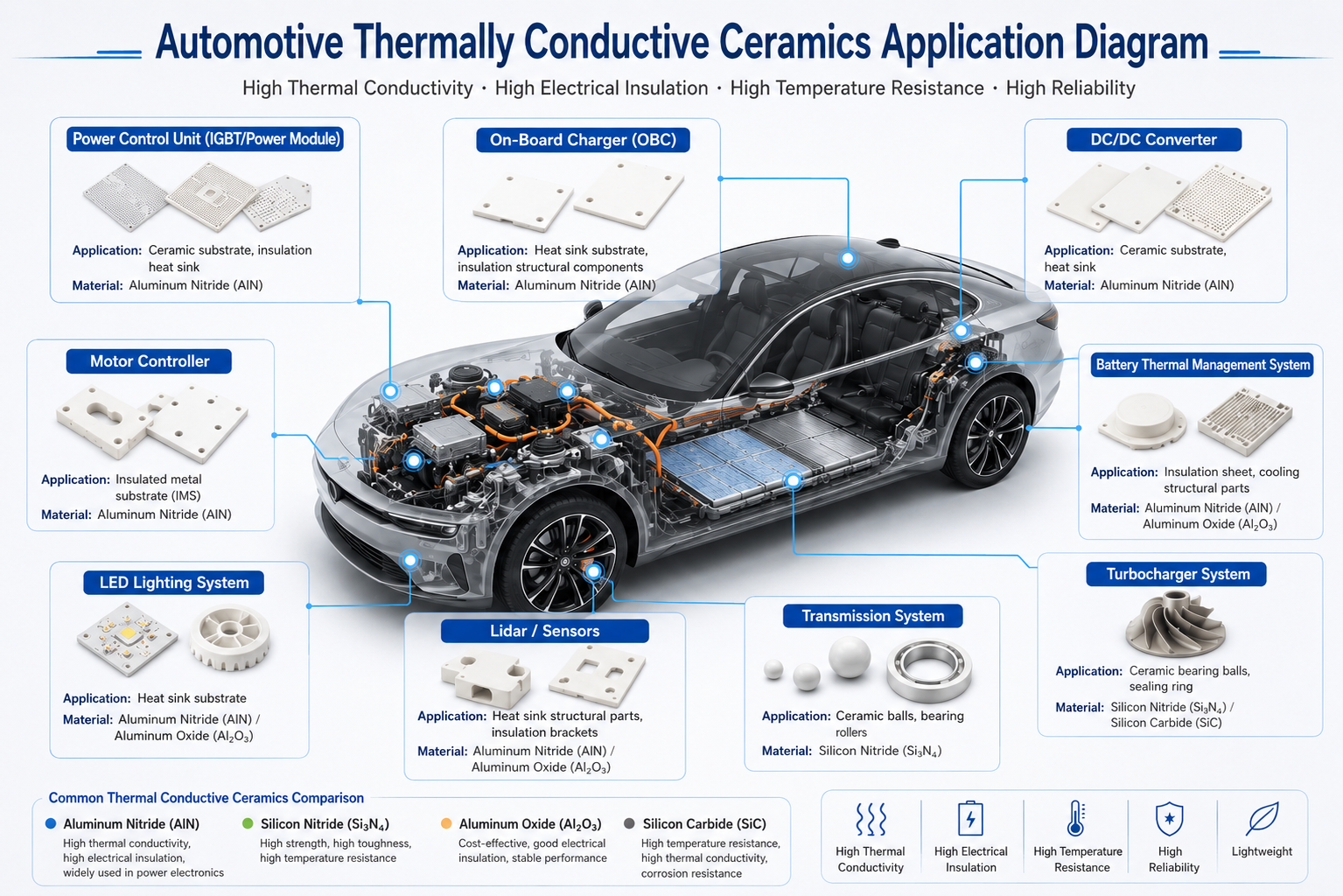
2. What are some commonly used thermally conductive industrial ceramic materials in automobiles?
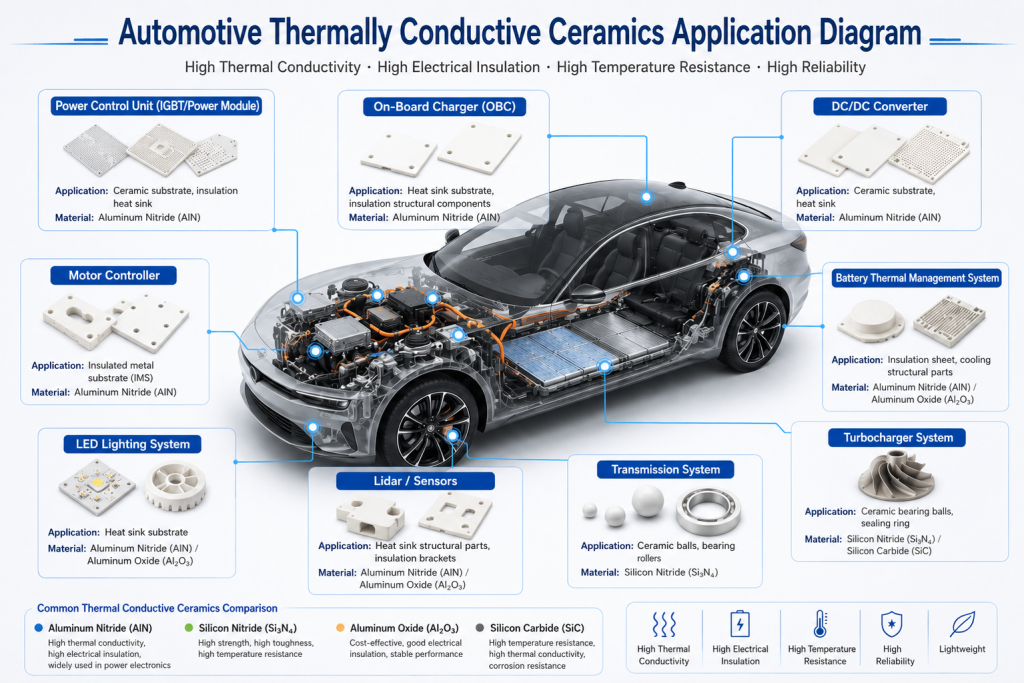
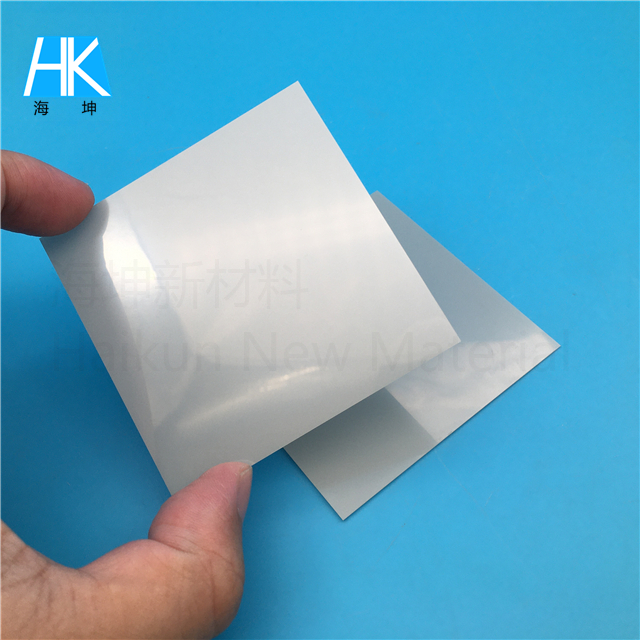
1. Aluminum nitride ceramic (AlN) – a core material for automotive electronic heat dissipation
Aluminum nitride is one of the most popular thermally conductive ceramics in the automotive electronics field.
Key Features:
High thermal conductivity: ≥170 W/(m·K)
Excellent electrical insulation performance
Coefficient of thermal expansion close to that of silicon chips
Strong high-temperature stability
Main Applications:
IGBT power module substrate
New energy vehicle electronic control systems
On-board chargers (OBC)
DC/DC modules
LiDAR heat dissipation components
👉 In new energy vehicles, aluminum nitride ceramic has become an important material for heat dissipation of high-power electronics.
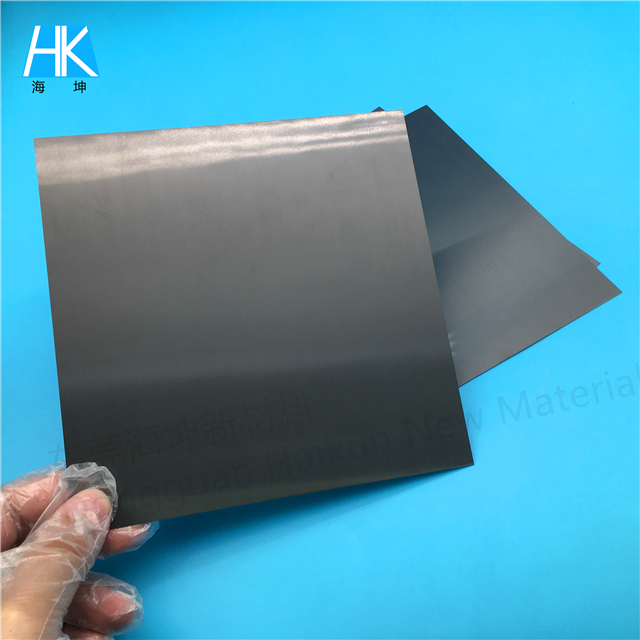
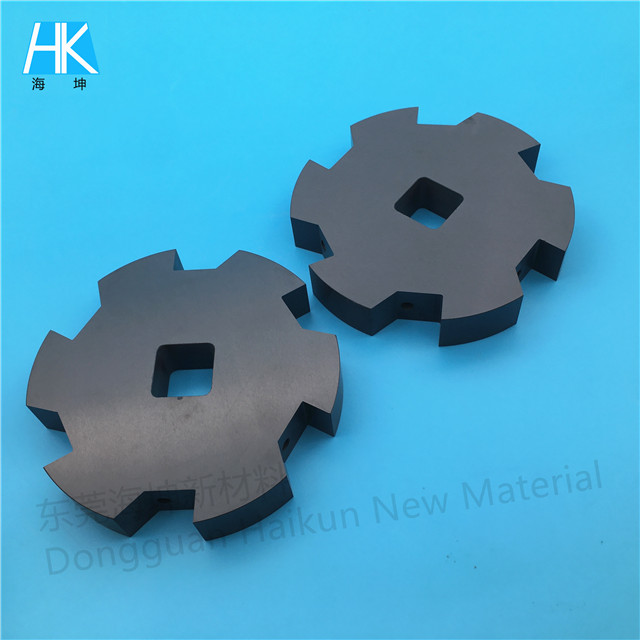
2. Silicon nitride ceramics (Si₃N₄) – high-strength thermally conductive structural ceramics
Silicon nitride possesses the following advantages:
High thermal conductivity
Ultra-high mechanical strength
Exceptional thermal shock resistance
Excellent overall performance
Main applications:
Turbocharger rotors
High-speed bearing balls
Electric drive system bearings
Power module substrates
High-temperature engine components
Compared to traditional metals:
👉 Silicon nitride is lighter, more wear-resistant, and more heat-resistant.
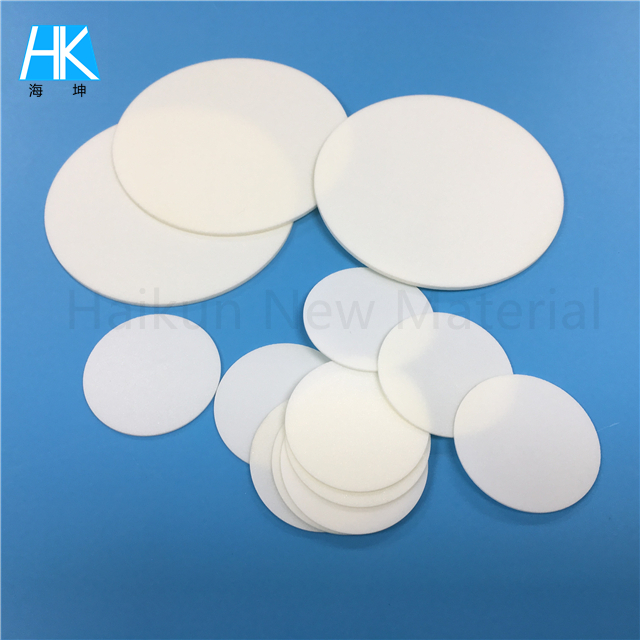
3. Alumina ceramics (Al₂O₃) – the most widely used thermally conductive and insulating ceramics.
Although alumina has a lower thermal conductivity than aluminum nitride, it offers extremely high overall cost-effectiveness.
Key Features:
Thermal Conductivity: 20–30 W/(m·K)
Good Electrical Insulation
Low Cost
Mature and Stable Manufacturing Process
Main Applications:
Automotive Electronic Ceramic Substrates
Ignition System Insulation Components
Sensor Structural Components
LED Automotive Lighting Heatsink Substrates
👉 Widely used in low-to-medium power automotive electronic systems.
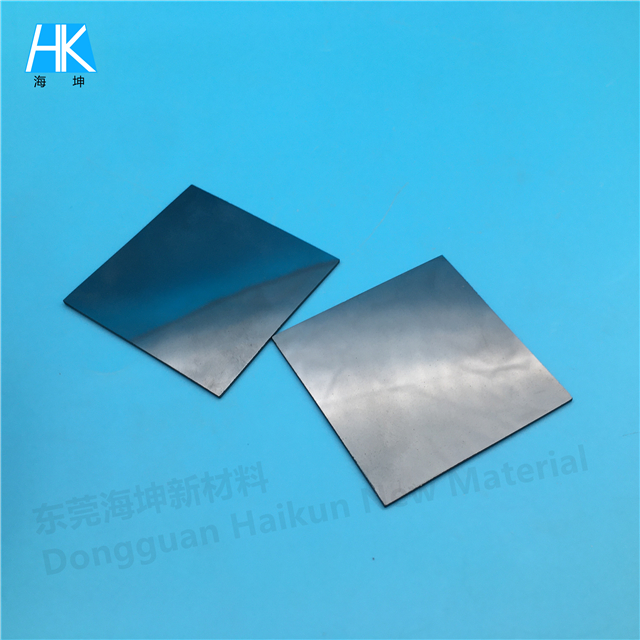
4. Silicon carbide ceramics (SiC) – a representative material for high-temperature and high-power applications.
Silicon carbide possesses the following characteristics:
Extremely high thermal conductivity ≥100W/(m·K)
Ultra-high temperature resistance
Strong wear and corrosion resistance
Main applications:
High-performance braking systems
High-temperature structural components
Electric drive cooling modules
Components related to silicon carbide power devices
Especially in the high-voltage platforms of new energy vehicles, silicon carbide-related materials are experiencing rapid growth.
3. Which automotive components are currently using thermally conductive ceramics extensively?
Currently, thermally conductive industrial ceramics have been widely used in the following automotive systems:
| Automotive Systems | Ceramic Applications |
|---|---|
| New energy power control system | Ceramic substrate, insulating heat sink |
| IGBT power modules | Aluminum nitride / aluminum oxide / silicon nitride substrate |
| Battery thermal management | Thermally conductive and insulating structural components |
| Vehicle radar | High-frequency electronic heat dissipation components |
| LED car lights | Ceramic heat dissipation substrate |
| High-speed bearings | silicon nitride ceramic balls |
| Turbocharging system | High-temperature ceramic rotor |
4. Why will future cars increasingly rely on thermally conductive ceramics?
As the automotive industry moves towards:
high power
high integration
high voltage
high speed
lightweighting
traditional metal materials are finding it increasingly difficult to simultaneously meet the following requirements:
“Heat dissipation + insulation + high temperature resistance + lightweight”
Industrial ceramics can solve these problems simultaneously.
Especially in the field of new energy vehicles:
👉 Thermally conductive ceramics are being upgraded from “auxiliary materials” to “core materials”.
5. Conclusion: Thermally conductive industrial ceramics are driving the upgrading of automotive materials.
From power modules to high-speed bearings, from heat sinks to electronic control systems, thermally conductive ceramics have become an indispensable material in modern automobiles.
In the future, high-performance thermally conductive ceramics will play an increasingly important role in:
New Energy Vehicles
Intelligent Vehicles
High-Power Electronics
Autonomous Driving Systems
We offer:
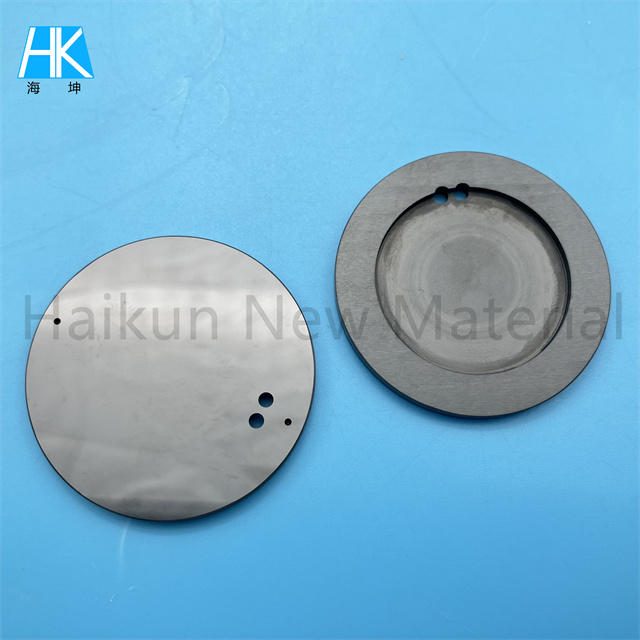
✔ Precision ceramic materials such as alumina, aluminum nitride, silicon nitride, and silicon carbide
✔ Precision machining of ceramic substrates
✔ Laser cutting and micro-hole processing
✔ High-precision grinding and polishing
✔ Customization based on provided drawings / Small-batch prototyping / Mass production
Widely used in new energy vehicles, power electronics, semiconductors, and industrial equipment.
Relevant information