
information centre / Industry Information / Why are more and more companies choosing ceramic plungers instead of metal ones?
Why are more and more companies choosing ceramic plungers instead of metal ones?
Introduction
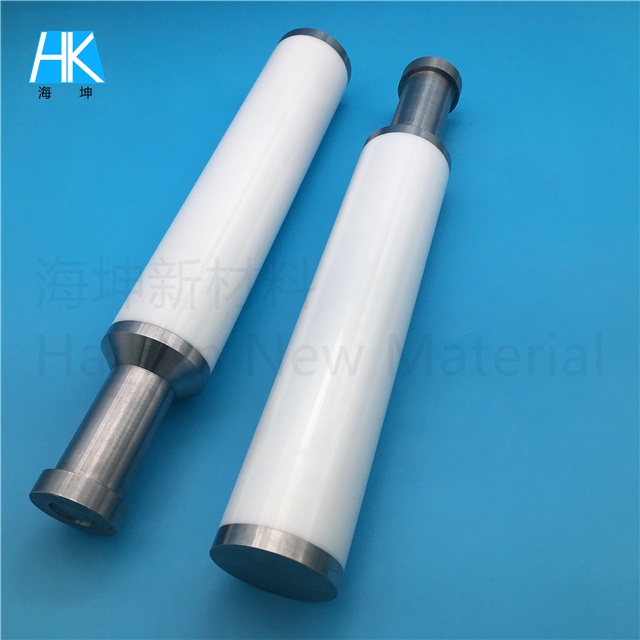
In industries such as hydraulics, electric spraying, metering pumps, high-pressure cleaning, and fluid transfer, plungers are core components, and their lifespan and stability directly affect the overall performance of the machine. In the past, metal plungers were widely used due to their mature manufacturing process and low cost. However, in recent years, more and more companies have begun to proactively upgrade their plungers to precision ceramic plungers. Why is this trend occurring? What industry pain points do ceramic plungers actually solve?
Quick Links
Contact Us
Live
E-mail:sales01@hkceramic.com
01 / The inherent weakness of metal plungers makes it difficult to meet the needs of high-end equipment.
When operating in high-pressure, high-speed, and corrosive fluid environments, metal plungers are prone to the following problems:
Rapid wear and surface scratches
Poor lubrication leads to frequent seizures
Corrosion pits and rust cause unstable seals
Long-term use results in decreased precision and reduced efficiency
As equipment performance requirements continue to increase, the performance bottleneck of metal materials becomes more and more obvious, and maintenance costs are also getting higher and higher.
02 / Why are ceramic plungers favored? Four major advantages that surpass metal plungers.
① Super wear-resistant: Lifespan increased by 3 to 10 times
Structural ceramics, such as zirconia and alumina, can achieve a hardness of:
Zirconia: 1200 HV
Alumina: 1600 HV
Reference: 《Comparison of Properties of Precision Ceramic Materials》
It far surpasses traditional metal materials.
During long-term high-speed reciprocating motion, ceramic plungers experience almost no wear, significantly reducing:
Replacement frequency
Downtime costs
Maintenance costs
The feedback from the industry is that lifespan has been increased by 3 to 10 times.
② It has strong self-lubricating properties and is not prone to seizing.
The ceramic surface can be precision polished (up to Ra0.02), has a low coefficient of friction, high compatibility with sealing components, and is not prone to dry grinding or seizing.
In application, it manifests as follows:
Lower starting resistance
Smoother equipment operation
Significantly reduced chance of high-pressure pump seizure
This advantage is of great value for equipment that operates continuously for long periods.
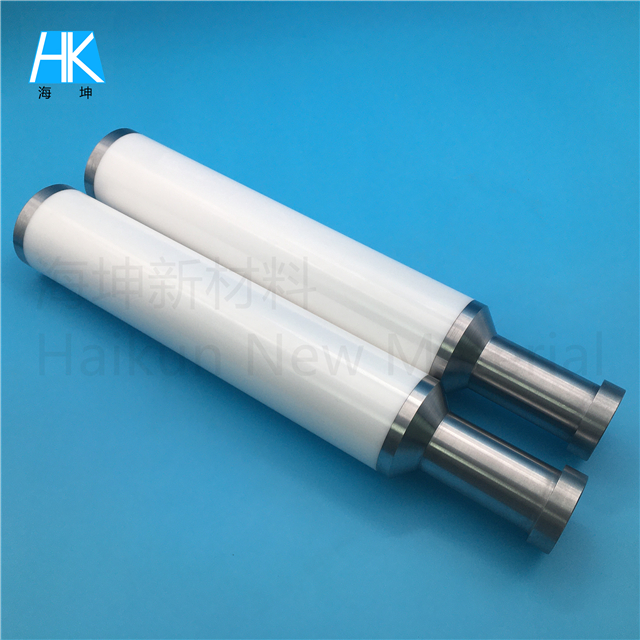
③ It has extremely strong corrosion resistance and is suitable for more complex working conditions.
Metals are prone to pitting or rusting when exposed to acids, alkalis, salt spray, or liquids with high water content.
Ceramic materials possess natural corrosion resistance:
Unaffected by acids and alkalis
Unaffected by salt water
Unaffected by cleaning agents and solvents
Will not rust
It is suitable for complex fluid environments in industries such as chemical, spraying, metering, food fluid, and pharmaceutical.
④ High strength, resistant to pressure and high temperature
Taking zirconia ceramic plungers as an example:
Bending strength can reach 800MPa
High fracture toughness (9MPa·m1/2)
Temperature resistance exceeds 800℃
It can still work stably under high pressure and high frequency impact, making it suitable as a replacement for metal in higher-level working conditions.
03 / Ceramic plungers are not just a "material upgrade," but a comprehensive improvement in equipment performance.
More stable output pressure
More durable sealing performance
More accurate metering
More suitable for long-term high-load operation
Significantly reduced equipment maintenance costs
Significantly improved overall machine reliability
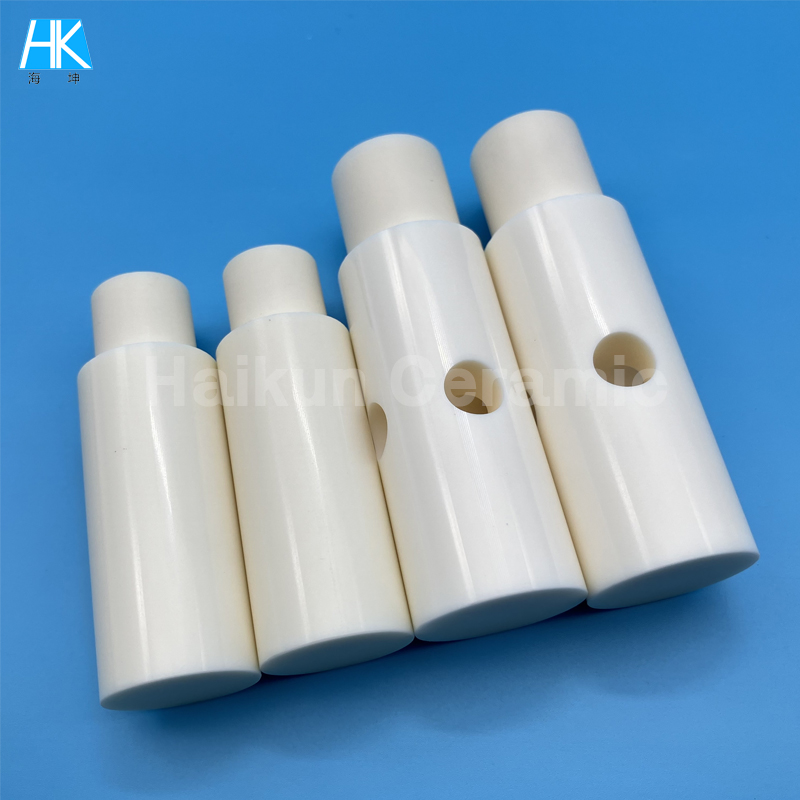
Many businesses have reported:
“After replacing the ceramic plunger, the equipment requires almost no maintenance for a year, and the customer complaint rate has dropped significantly.”
04 / Dongguan Haikun specializes in custom precision ceramic plungers
As a manufacturer of precision ceramic structural components, Haikun Precision Ceramics provides plungers for equipment manufacturers with the following characteristics:
Custom orders based on provided drawings or samples; dimensional tolerances controllable.
Mirror polishing.
Materials available: Zirconia, alumina, silicon nitride, etc.
Non-standard customization supported based on provided drawings or samples.
20 years of ceramic processing experience; 5000+ customer cases.
We can also provide material selection and structural optimization solutions based on equipment load, sealing method, and operating pressure.
Conclusion: Ceramic plungers are becoming an essential option for reducing failure rates in high-end equipment.
As equipment develops towards higher pressure, higher stability, and longer lifespan, ceramic plungers are no longer just “optional upgrades,” but rather key components for companies to enhance their product competitiveness.
Choosing a ceramic plunger today is an investment in the future reliability of your equipment.
For inquiries regarding ceramic plunger material selection, structural optimization, or sample processing, please feel free to contact Dongguan Haikun New Materials Co., Ltd.
Relevant information