
Industry Information

Welcome to the Advanced Precision Ceramics Industry Applications Overview Page! Here, you’ll explore the extensive applications and innovative solutions of advanced precision ceramics across various industries. Renowned for their exceptional wear resistance, high temperature tolerance, insulation, and chemical stability, advanced precision ceramics play a crucial role in electronics, chemical engineering, aerospace, automotive, and other fields.We showcase fascinating industry application cases, covering everything from wear-resistant components in high-temperature environments to insulation materials for electronic devices. Through our summary page, you’ll stay updated on the latest advancements in advanced precision ceramics technology, industry trends, and innovative application examples, helping you stay ahead in the industry and expand your business horizons.Whether you’re an industry professional, technical expert, or researcher, we look forward to sharing insights into the future applications of advanced precision ceramics and exploring new directions in industry development together. Let’s work hand in hand to create a smarter and sustainable future!

Classification
Alumina ceramic sintering process, alumina ceramic sintering methods
Category:Industry Information
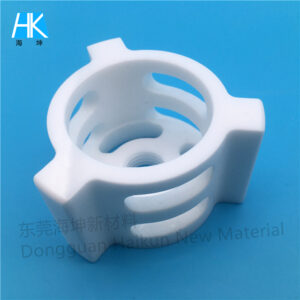
What are the conventional sintering methods for alumina ceramics? Conventional sintering methods cannot meet the requirements for producing transparent alumina ceramics. Common sintering methods for producing transparent ceramics include: a. atmosphere and vacuum sintering, b. hot isostatic pressing sintering, and c. spark plasma sintering. What are the conventional sintering methods for alumina ceramics?

The future choice of high-performance materials: zirconia ceramic parts
Category:Industry Information
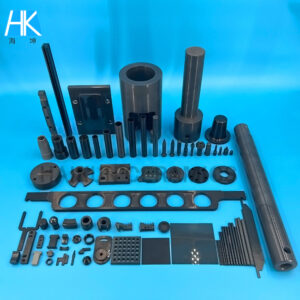
In high-end manufacturing, the performance of materials often determines the quality and reliability of products. In recent years, zirconia ceramic components have been widely used in many industrial fields due to their excellent mechanical properties, excellent corrosion resistance and outstanding wear resistance.

Silicon Nitride Ceramics: The Future Star Of High-performance Materials
Category:Industry Information
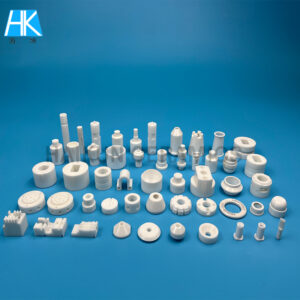
With the rapid development of industry and technology, the demand for high-performance materials is growing. Silicon nitride ceramics (Si₃N₄) have become a "star material" in the fields of aerospace, electronics, and medical due to their unique physical and chemical properties. This article will deeply analyze the characteristics, application scenarios, and market potential of silicon nitride ceramics to help you understand the core value of this material. Ingredients: The Al2O3 content is usually 75%~99.9%. The higher the purity, the better the performance (such as 99.6% high-purity alumina ceramics).Classification: According to the purity, it is divided into ordinary type (75%~95%) and high-purity type (≥99%).

Alumina Ceramics: Characteristics, Applications And Future Development Trends
Category:Ceramic material, Industry Information
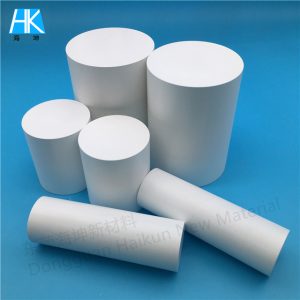
Alumina ceramics (Al2O3 ceramics) are inorganic non-metallic materials with α-alumina as the main crystal phase. Due to its high hardness, high temperature resistance, good insulation and other characteristics, it is widely used in electronics, machinery, chemical industry, medical and other fields. Ingredients: The Al2O3 content is usually 75%~99.9%. The higher the purity, the better the performance (such as 99.6% high-purity alumina ceramics). Classification: According to the purity, it is divided into ordinary type (75%~95%) and high-purity type (≥99%).

Boron Nitride Ceramics: Properties, Preparation and Application Prospects
Category:Industry Information
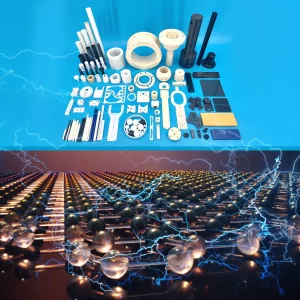
Boron Nitride (BN) ceramics are an advanced ceramic material with unique structure and excellent properties. Due to its high thermal conductivity, excellent electrical insulation, chemical stability and high temperature stability, boron nitride ceramics have shown broad application prospects in the fields of electronics, metallurgy, aerospace, etc. This paper reviews the structural characteristics, main properties, preparation process and application of boron nitride ceramics, and explores the future development direction.
Dielectric Constant and Insulation in Ceramic Parts

What is dielectric constant?
Does larger dielectric constant mean better insulation?
Category:Industry Information
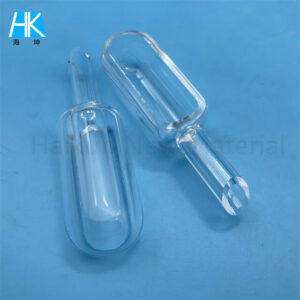
Explore the relationship between dielectric constant and insulation in ceramic parts. Learn why a higher dielectric constant doesn’t always guarantee better insulation, and discover the role of resistivity and defects in insulating materials.
Quartz Glass Boat

What are the differences between quartz glass and normal glass?
Category:Industry Information
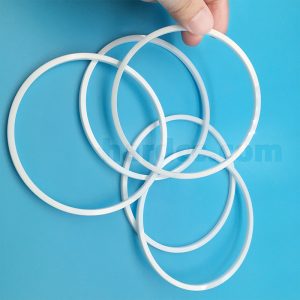
Quartz glass has higher purity (over 99.9% silica), offering better thermal stability, chemical resistance, and optical clarity, but is more brittle. Ordinary glass has lower purity and is less stable but more durable and versatile for everyday uses like construction and packaging.
zirconia ceramic sealing ring

Zirconia Ceramic Sealing Ring Characteristics

Category:Industry Information
Zirconia ceramic sealing rings find extensive use in petrochemicals, synthetic fibers, fertilizers, nuclear energy, aerospace, and mechanical manufacturing. They meet rigorous demands for mechanical seals, operating reliably under high speed, high pressure, extreme temperatures, corrosion, and solid particles.