
information centre / Industry Information / Are zirconia ceramic parts easy to machine? The key lies not in the material, but in the process.
Are zirconia ceramic parts easy to machine? The key lies not in the material, but in the process.
Introduction
In the field of precision ceramics, zirconia is often labeled with two tags: “excellent performance” and “difficult to process.” So the question arises—are zirconia ceramic parts actually easy to process? The answer is: 👉 The material itself is difficult, but with the right processing techniques, it’s not.
Quick Links
Contact Us
Live
E-mail:sales01@hkceramic.com

1. Why is zirconium oxide considered "difficult to process"?
Zirconia ceramics (ZrO₂) belong to the category of high-toughness engineering ceramics. Compared to alumina, it possesses the following characteristics:
High fracture toughness (less prone to chipping)
High hardness
High density
More sensitive to processing stress
These properties directly result in:
Inapplicable to conventional metal processing methods
Narrow processing window with high parameter requirements
Prone to cracking, deformation, and dimensional inconsistencies if not properly controlled
Therefore, “difficult to process” is more a test of processing capabilities than a material defect.
2. How do professional manufacturers solve the processing problems of zirconia?
① Consider processing from “before sintering”
Mature zirconia processing doesn’t start after sintering:
Allow sintering shrinkage based on part structure
Optimize forming methods to reduce post-processing
Design processing benchmarks for high-precision parts
The real challenge lies in the front-end design, not just on the grinding machine.
② Specialized precision machining processes are employed.
Zirconium oxide parts typically undergo the following machining processes:
Diamond grinding
Precision internal and external cylindrical grinding
Micro-hole machining / Fine grooving
Mirror polishing
Through shallow depth of cut, multi-pass machining, and low-stress processing, the following defects are effectively avoided:
Edge chipping
Microcracks
Hidden damage
③ Strict process control to ensure batch consistency
Zirconium oxide processing is not simply a matter of “doing one good job,” but rather:
Consistent dimensions
Stable performance
Controllable surface condition
This relies on:
Stable sintering process
Mature processing parameter database
Comprehensive testing system
3. What are the advantages of processed zirconia ceramic parts?
Once the processing technology matures, zirconia ceramic parts exhibit value unmatched by metals:
Smooth surface, low coefficient of friction
High wear resistance, high toughness, and less prone to brittleness
Long-term dimensional stability
Corrosion resistant and rust-free
Excellent insulation properties
Ideal for applications requiring high wear, high precision, and high reliability.
4. Which applications are more suitable for choosing zirconia ceramic parts?
Zirconia ceramic parts are widely used in:
precision bushings, bearing structural components
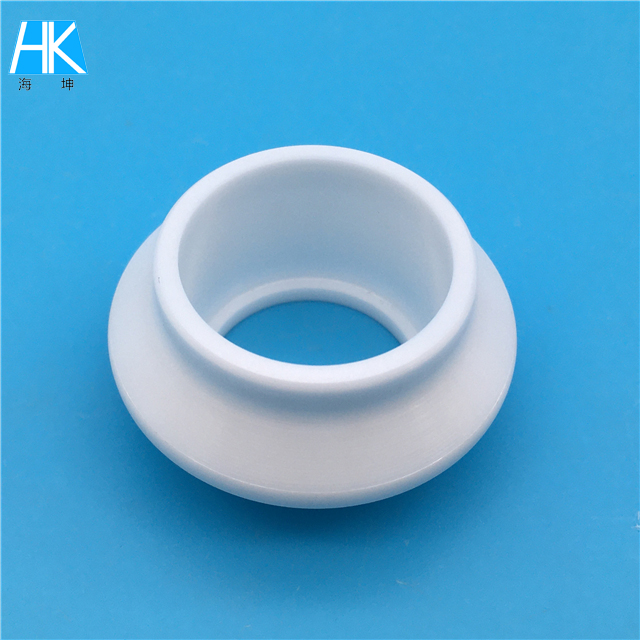
Ceramic plungers and seals
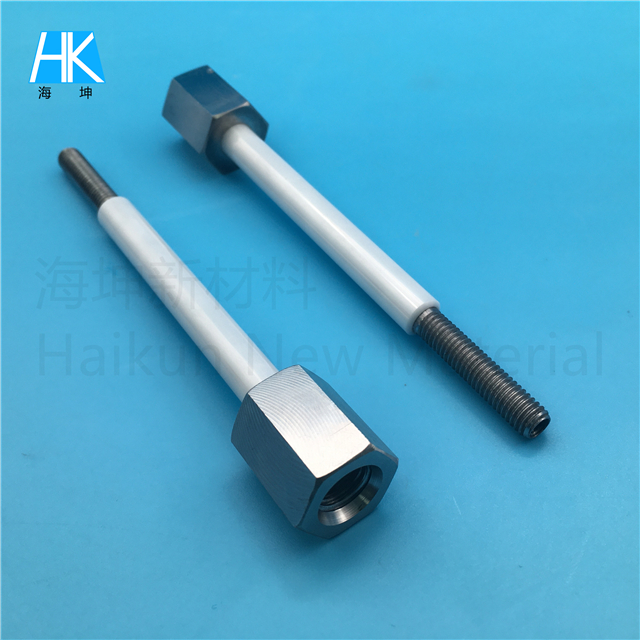
Ceramic components for medical equipment
Wear-resistant parts for automated equipment
Guiding and wear-resistant parts for fluid systems
Especially when replacing metal parts, zirconium oxide can often significantly improve the overall lifespan of the machine.
5. Conclusion: Whether zirconium oxide is "difficult to process" depends on who you hire to do it.
If you approach ceramics with a metalworking mindset,
zirconia would certainly be “difficult to process.”
However, if you consider the integration of material selection, structural design, sintering control, and precision machining,
zirconia ceramics can not only be processed, but processed very stably and beautifully.
The real barrier lies not in the materials, but in experience and the overall system.
Professional Zirconia Ceramic Parts Customization: Dongguan Haikun New Materials Co., Ltd.
Processing based on provided drawings/samples
Customized non-standard structures
High precision, high toughness, high consistency
Relevant information