
Comparison of Precision Ceramic Material Properties
Not sure which ceramic material suits your application?
Use our interactive ceramic material comparison chart to compare ceramic materials based on different material properties.
Use our interactive ceramic material comparison chart to compare ceramic materials based on different material properties.
Click the Property Button above to view the corresponding property comparison of precision ceramic materials
*The values in the table are typical material properties
Detailed specifications of common precision ceramic materials
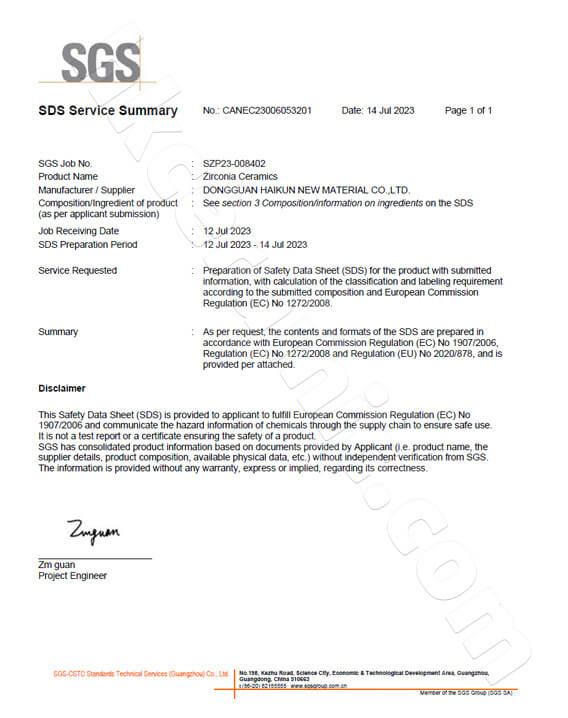
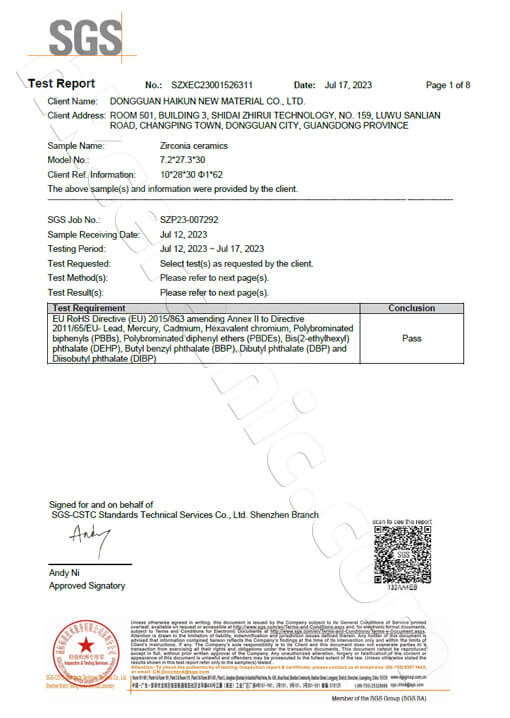
Zirconia(ZrO2) ceramics
*Some content and parameters are for reference only; our company can customize ceramic properties and processing according to customer requirements.
Primary characteristics
| Type | Unit | Zirconia | Zirconia(ZrO2-MgO) | ||
| Material | \ | 94.4% ZrO2-Y2O3 |
94% ZrO2-Y2O3 |
94% ZrO2-Y2O3 |
94.4% ZrO2-MgO |
| Colour | \ | White | Black | Blue | Yellow |
| Density | g/cm3 | 6 | 5.6 | 6 | 5.7 |
Mechanical properties
| Type | Unit | Zirconia | Zirconia(ZrO2-MgO) | ||
| Material | \ | 94.4% ZrO2-Y2O3 |
94% ZrO2-Y2O3 |
94% ZrO2-Y2O3 |
94.4% ZrO2-MgO |
| Colour | \ | White | Black | Blue | Yellow |
| Flexural Strength(20℃) | Mpa | 800 | 710 | 900 | 500 |
| Compressive Strength(20℃) | Mpa | 2000 | 2000 | 2000 | 2500 |
| Modulus of Elastic(young)(20℃) | Gpa | 200 | 210 | 220 | 250 |
| Tracture Toughness(20℃) | MPam½ | 9 | 8 | 8 | 6 |
| Poi sion’s Ratio(20℃) | \ | 0.3 | 0.3 | 0.3 | |
| Hardness HRA(20℃) | HRA | 88 | 85 | 90 | |
| Vickers Hardness(HV1) | kg/mm2 | 1175 | 1100 | 1220 | 1100 |
| Rockwell Hardness(45N) | R45N | 78 | 75 | 78 | |
Thermal properties
| Type | Unit | Zirconia | Zirconia(ZrO2-MgO) | ||
| Material | \ | 94.4% ZrO2-Y2O3 |
94% ZrO2-Y2O3 |
94% ZrO2-Y2O3 |
94.4% ZrO2-MgO |
| Colour | \ | White | Black | Blue | Yellow |
| Thermal Expansion Coefficient | 10-6K-1 | 9.6 | 9.5 | 10 | 10 |
| Thermal Conductivity | W/mk | 2.5 | 3 | 3 | 3 |
| Thermal Shock Resistance | △T.℃ | 250 | 300 | 300 | 450 |
| Specific Heat Capacity | J/g·k | 0.46 | 0.48 | 0.46 | |
| Max working Temperature(In Oxidizing) | ℃ | 800 | 800 | 800 | 2100 |
Electrical properties
| Type | Unit | Zirconia | Zirconia(ZrO2-MgO) | ||
| Material | \ | 94.4% ZrO2-Y2O3 |
94% ZrO2-Y2O3 |
94% ZrO2-Y2O3 |
94.4% ZrO2-MgO |
| Colour | \ | White | Black | Blue | Yellow |
| Vol une Resistivity at 20℃ | Ωcm | 1014 | 1010 | 1014 | 1014 |
| Dielectric Strength | KV/mm | 13 | 13 | 13 | 13 |
| Dielectric Constant | \ | 28 | 28 | 28 | 28 |
| Dielectric LossAngle at 20℃,1MHz20℃ | tanδ | 17*10-4 | 17*10-4 | 17*10-4 | 17*10-4 |
Alumina(Al2O3) ceramics
*Some content and parameters are for reference only; our company can customize ceramic properties and processing according to customer requirements.
Primary characteristics
| Type | Unit | Alumina | ||||
| Material | \ | 95% Al2O3 |
96% Al2O3 |
99% Al2O3 |
99.5% Al2O3 |
99.7% Al2O3 |
| Colour | \ | White | White | Ivory White | Ivory White | Ivory White |
| Density | g/cm3 | 3.7 | 3.7 | 3.85 | 3.9 | 3.9 |
Mechanical properties
| Type | Unit | Alumina | ||||
| Material | \ | 95% Al2O3 |
96% Al2O3 |
99% Al2O3 |
99.5% Al2O3 |
99.7% Al2O3 |
| Colour | \ | White | White | Ivory White | Ivory White | Ivory White |
| Flexural Strength(20℃) | Mpa | 300 | 300 | 330 | 360 | 380 |
| Compressive Strength(20℃) | Mpa | 2000 | 2000 | 2000 | 2350 | |
| Modulus of Elastic(young)(20℃) | Gpa | 270 | 275 | 370 | 370 | 380 |
| Tracture Toughness(20℃) | MPam½ | 3.5 | 3.5 | 4 | 4 | |
| Poi sion’s Ratio(20℃) | \ | 0.2 | 0.22 | 0.22 | ||
| Hardness HRA(20℃) | HRA | 90 | 90 | 90 | ||
| Vickers Hardness(HV1) | kg/mm2 | 1600 | 1600 | 1600 | 1650 | 1750 |
| Rockwell Hardness(45N) | R45N | 83.5 | 83.5 | 83.5 | ||
Thermal properties
| Type | Unit | Alumina | ||||
| Material | \ | 95% Al2O3 |
96% Al2O3 |
99% Al2O3 |
99.5% Al2O3 |
99.7% Al2O3 |
| Colour | \ | White | White | Ivory White | Ivory White | Ivory White |
| Thermal Expansion Coefficient | 10-6K-1 | 6.5 | 6.5 | 7.6 | 7.2 | 7.2 |
| Thermal Conductivity | W/mk | 20 | 25 | 27.5 | 32 | 32 |
| Thermal Shock Resistance | △T.℃ | 200 | 200 | 200 | 250 | |
| Specific Heat Capacity | J/g·k | 0.79 | 0.78 | 0.79 | ||
| Max working Temperature(In Oxidizing) | ℃ | 1600 | 1600 | 1650 | 1650 | |
Electrical properties
| Type | Unit | Alumina | ||||
| Material | \ | 95% Al2O3 |
96% Al2O3 |
99% Al2O3 |
99.5% Al2O3 |
99.7% Al2O3 |
| Colour | \ | White | White | Ivory White | Ivory White | Ivory White |
| Vol une Resistivity at 20℃ | Ωcm | 1014 | 1014 | 1014 | 1014 | 1014 |
| Dielectric Strength | KV/mm | 10 | 10 | 10 | 15 | 15 |
| Dielectric Constant | \ | 9 | 9 | 9.1 | 9.9 | 9.9 |
| Dielectric LossAngle at 20℃,1MHz20℃ | tanδ | 3*10-4 | 2*10-4 | 3*10-4 | 1*10-4 | 1*10-4 |
Silicon nitride(Si3N4) ceramic
*Some content and parameters are for reference only; our company can customize ceramic properties and processing according to customer requirements.
Physical properties
| Material Properties & Physical Performance | Units | Typical Values |
| Density | g/cm3 | >3.2 |
| Hardness | HRA90 | |
| Vickers Hardness (Hv50) | HV0.5 | >1550 |
| Modulus of Elasticity | Gpa | 290 |
| Flexural Strength | Mpa | >600 |
| Compressive Strength | Mpa | 2500 |
| racture toughness | Mpam1/2 | >6.0 |
Thermal properties
| The rmodynamic property | Units | Typical Values |
| Maximum Use Temperature | ℃ | 1200 |
| Thermal Conductivity | W/(m·K) | 15-20 |
| Thermal Expansion Coefficient | 10-6/℃ | >3.1 |
| Thermal Shock Resistance | △T℃ | 500 |
| Specific Heat Capacity | KJ/kg.K | 700 |
Electrical properties
| Electricl Protperties | Units | Typical Values |
| Dielectric Strength | KV/mm | 1 |
| Dielectric Constant | ||
| Volume Resistivity at 20°C | Ω.cm | 1.0×10¹² |
Aluminum nitride(AlN) ceramic
*Some content and parameters are for reference only; our company can customize ceramic properties and processing according to customer requirements.
Primary characteristics
| Type | Unit | Aluminum Nitride |
| Material | \ | ALN |
| Colour | \ | Gray |
| Density | g/cm3 | 3.3 |
Mechanical properties
| Type | Unit | Aluminum Nitride |
| Flexural Strength(20℃) | Mpa | 470 |
| Compressive Strength(20℃) | Mpa | 2100 |
| Modulus of Elastic(young)(20℃) | Gpa | 320 |
| Tracture Toughness(20℃) | MPam½ | 2.6 |
| Poi sion’s Ratio(20℃) | \ | 0.24 |
| Hardness HRA(20℃) | HRA | 87 |
| Vickers Hardness(HV1) | Gpa(kg/mm2) | 1122 |
| Rockwell Hardness(45N) | R45N | 78.5 |
Thermal properties
| Type | Unit | Aluminum Nitride |
| Thermal Expansion Coefficient | 10-6K-1 | 4.6 |
| Thermal Conductivity(20℃) | W/mk | 170 |
| Thermal Shock Resistance | △T.℃ | 400 |
| Specific Heat Capacity | J/g·k | 0.72 |
| Max working Temperature(In Oxidizing) | ℃ | 1000 |
Electrical properties
| Type | Unit | Aluminum Nitride |
| Vol une Resistivity at 20℃ | Ωcm | 2.75*1014 |
| Dielectric Strength | KV/mm | 17 |
| Dielectric Constant | \ | 8.38 |
| Dielectric LossAngle at 20℃,1MHz20℃ | tanδ | 3*10-3 |
Silicon Carbide(SiC) Ceramic
*Some content and parameters are for reference only; our company can customize ceramic properties and processing according to customer requirements.
Primary characteristics
| Type | Unit | Silicon Carbide |
| Material | \ | SiC |
| Colour | \ | Black |
| Density | g/cm3 | 3.1 |
Mechanical properties
| Type | Unit | Silicon Carbide |
| Material | \ | SiC |
| Colour | \ | Black |
| Flexural Strength(20℃) | Mpa | 400 |
| Compressive Strength(20℃) | Mpa | 2600 |
| Modulus of Elastic(young)(20℃) | Gpa | 410 |
| Tracture Toughness(20℃) | MPam½ | 4 |
| Poi sion’s Ratio(20℃) | \ | 0.16 |
| Vickers Hardness(HV1) | Gpa(kg/mm2) | 2100 |
| Rockwell Hardness(45N) | R45N | 88 |
Thermal properties
| Type | Unit | Silicon Carbide |
| Material | \ | SiC |
| Colour | \ | Black |
| Thermal Expansion Coefficient | 10-6K-1 | 4 |
| Thermal Conductivity | W/mk | 100 |
| Thermal Shock Resistance | △T.℃ | 400 |
| Specific Heat Capacity | J/g·k | 0.67 |
| Max working Temperature(In Oxidizing) | ℃ | 1600 |
Electrical properties
| Type | Unit | Silicon Carbide |
| Material | \ | SiC |
| Colour | \ | Black |
| Vol une Resistivity at 20℃ | Ωcm | 105 |
Macor Ceramic
*Some content and parameters are for reference only; our company can customize ceramic properties and processing according to customer requirements.
Physical properties
| Material Properties & Physical Performance | Units | Typical Values |
| Colour | white | |
| Density | g/cm3 | 2.6 |
| Gas permeability | 0 | |
| Water Absorption | % | 0.00% |
| Hardness | R45N | 40 |
| Vickers Hardness (Load 500g) | Gpa(Kg/mm²) | 11.5(1175) |
| Modulus of Elasticity(25℃) | Gpa | 65 |
| Flexural Strength(20℃) | Mpa | 108 |
| Compressive Strength(20℃) | Mpa | 488 |
Thermal properties
| The rmodynamic property | Units | Typical Values |
| Maximum Use Temperature | ℃ | 800 |
| Thermal Conductivity(25℃) | W/(m·K) | 1.71 |
| Thermal Expansion Coefficient | 10-6/℃ | 7.2 |
| Thermal Shock Resistance | △T℃ | 200 |
Electrical properties
| Electricl Protperties | Units | Typical Values |
| Dielectric Strength | KV/mm | 30 |
| Volume Resistivity at 20°C | Ω.cm | 1016 |
Boron Nitride Ceramic
*Some content and parameters are for reference only; our company can customize ceramic properties and processing according to customer requirements.
Physical properties
| Material Properties & Physical Performance | Units | Typical Values |
| Colour | white | |
| Density | g/cm3 | 1.95±0.05 |
| BN Puriy | % | 99.5 |
| Hardness | Kg/mm² | 4 |
| Porosity | % | 15 |
| Flexural Strength(20℃) | Mpa | 22 |
Thermal properties
| The rmodynamic property | Units | Typical Values |
| Maximum Use Temperature | Oxygen-rich environment | 850℃ |
| 2000℃ | ||
| Thermal Conductivity(25℃) | W/(m·K) | 50-70 |
| Thermal Expansion Coefficient(25℃-1900℃) | 10-6/K | 1-1.2 |
Electrical properties
| Electricl Protperties | Units | Typical Values |
| RT Resistivity | Ω.cm | 1416 |
Guiding Questions for Material Selection
For your application in choosing the most suitable material, you may need to consider the following questions:
- What is the importance of mechanical performance?
- Will the parts experience wear, friction, or impact?
- How many units of the initial production batch are desired?
- Will the parts operate in an inert or oxidizing environment?
- What is the maximum operating temperature for the components?
- Will the components be subject to thermal shock?
- Is electrical insulation critical?
- How important is thermal conductivity?
- What is the significance of tolerances and surface finish?
Having trouble deciding? You can chat with us online or send us an email.
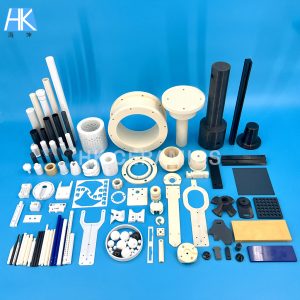
Six common industrial ceramic materials and their applications
With the rapid development of the automobile manufacturing, semiconductor, new energy, and high-end equipment industries, industrial ceramic materials, due to their outstanding properties in high temperature resistance, wear resistance, corrosion resistance, and electrical insulation, are gradually replacing traditional metal materials and becoming an important basic material for modern industry. The following are six common industrial…
Alumina Ceramics: Characteristics, Applications And Future Development Trends
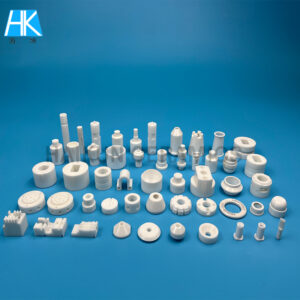
Alumina ceramics (Al2O3 ceramics) are inorganic non-metallic materials with α-alumina as the main crystal phase. Due to its high hardness, high temperature resistance, good insulation and other characteristics, it is widely used in electronics, machinery, chemical industry, medical and other fields. Ingredients: The Al2O3 content is usually 75%~99.9%. The higher the purity, the better the…
Introduction to Zirconia Ceramic Materials
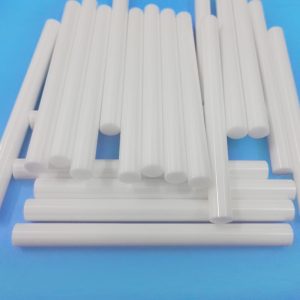
Zirconia, a precision ceramic material with high mechanical strength and fracture toughness, is used in blades, shears, cutting tools, and pump components. Its thermal and chemical stability makes it essential for high-temperature and corrosive environments in aerospace, automotive, and electronics industries.
Introduction of Alumina Ceramic Materials
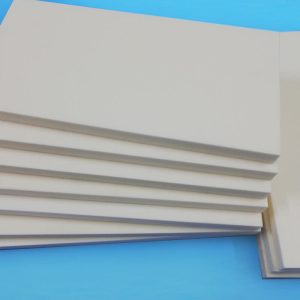
Alumina, a precision ceramic material, offers high hardness, chemical stability, temperature resistance, and electrical insulation. It's vital for wear-resistant components, chemical vessels, high-temperature elements, electronic insulators, and precision parts.
Introduction of Silicon Nitride Ceramic Materials
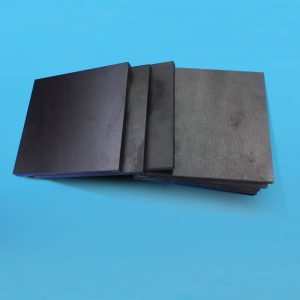
Silicon nitride (Si3N4) offers excellent thermal shock resistance and high temperature strength, ideal for automotive engines, gas turbines, and aerospace applications. It's used in turbocharger rotors, diesel engine glow plugs, and electrical connectors, providing long-term stability in high-temperature and high-pressure conditions.
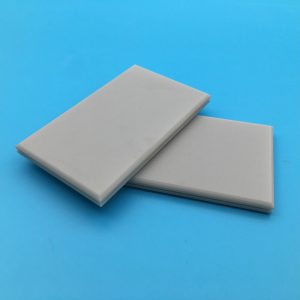
Introduction of Aluminum Nitride Ceramic Materials
Aluminum nitride is a high-performance ceramic with excellent electrical insulation and thermal conductivity, ideal for heat dissipation in semiconductor processing equipment. Its plasma resistance and mechanical strength make it crucial in optoelectronics and high-temperature components.
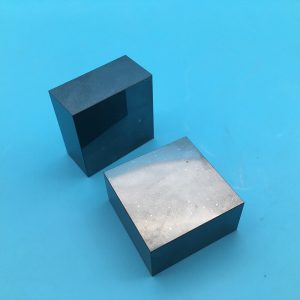
Introduction of Silicon Carbide Ceramic Materials
Silicon carbide (SiC) is a corrosion-resistant ceramic used in mechanical seals and pump components, maintaining strength up to 1400°C. It's ideal for high-temperature parts in petrochemicals, aerospace, and automotive industries, driving technological advancements.
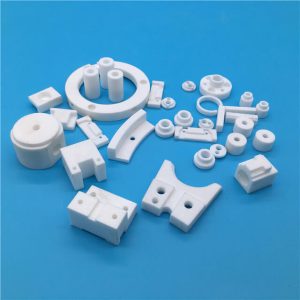
Introduction to Macor Ceramic materials
Macor ceramic is versatile with high hardness, strength, and elastic modulus, ideal for industrial applications. Its temperature stability, low thermal conductivity, and thermal shock resistance suit thermal insulation, while excellent electrical insulation benefits electronic and electrical applications.